Apps Like Thumbtack: 10 Best Alternatives for Pros in 2026

Thumbtack is one of the largest local services marketplaces in the US, matching customers with pros in hundreds of categories, from plumbing and house cleaning to photography and tutoring. But it isn't the right fit for every business. Pros pay for leads whether or not they win the job, lead prices vary by category and location, and popular trades can be crowded with competing pros.
If you're searching for apps like Thumbtack, you probably want one of three things: better-qualified leads, a cost model that fits your margins, or a platform built around your trade. This guide compares the 10 best Thumbtack alternatives in 2026: how each one works, how pros pay, and who it suits best. You'll also find a side-by-side comparison table and a simple way to compare lead costs. And if you're a founder, the same weaknesses that push pros away from Thumbtack are your opening to build a service marketplace around one trade, one region or one customer segment.
How Thumbtack Works (and Why Pros Look for Alternatives)

Customers describe the job they need done, and Thumbtack either matches them with pros automatically or lets pros respond to the request. Thumbtack uses a pay-per-lead model: you're charged when you're matched with a lead or choose to contact a customer, not when you're hired. There's no monthly subscription for pros. Instead, you set a weekly budget and can cap the price you're willing to pay per lead. Thumbtack doesn't publish a fixed price list; lead costs depend on the category, location and job.
That model works well for many pros, but it's also the main reason people start looking for apps like Thumbtack:
- Paying for leads that don't convert. You pay for the lead even if the customer never replies or hires someone else, so a low close rate quickly drives up your cost per job.
- Unpredictable lead prices. Prices vary by trade, location and job size, which makes monthly marketing spend hard to plan.
- Competition on the same request. Customers often hear from several pros, so speed and price pressure matter.
- Trade fit. Emergency trades often get better leads where customers search first (Google), while design-led businesses win on portfolios rather than quick quotes.
Pay-per-lead is the mirror image of a marketplace commission model, where the platform only earns when a job is completed. On Thumbtack, the pro carries the risk of a lead going nowhere; on commission-based apps, the platform does. That single difference explains why the alternatives below feel so different to use.
10 Best Apps Like Thumbtack in 2026
These Thumbtack competitors are ranked by how often they serve as a practical replacement or complement for local service pros. Each one charges pros differently, so the "best" choice depends on your trade, close rate and how much control you want over pricing.
1. Angi (and HomeAdvisor)
Angi is Thumbtack's most direct competitor. Angi Inc. runs both the Angi and HomeAdvisor brands, and HomeAdvisor's contractor product was renamed Angi Leads in 2021. Homeowners submit a service request and are matched with several pros (Angi announced it would raise the maximum from four to five matched pros per request). Angi's long-standing review database helps well-rated contractors stand out.
- How pros pay: per lead; third-party reviews also report an annual membership fee on top of lead costs.
- Best for: remodelers, roofers, HVAC, plumbing and electrical contractors with the capacity to respond fast.
- Keep in mind: leads are shared with other pros, and agreements can run for 12 months, so read the terms before signing.

2. TaskRabbit
TaskRabbit connects customers with "Taskers" for small, hourly jobs such as mounting TVs, assembling furniture, moving help and yard work. Unlike Thumbtack, Taskers don't pay for leads. The client pays a TaskRabbit service fee on top of the Tasker's hourly rate, and Taskers keep their rate plus tips. Many locations charge a one-time registration fee to join.
- How pros pay: no lead fees; the platform earns a service fee charged to the client.
- Best for: individual handymen and small crews who want booked jobs without upfront marketing spend.
- Keep in mind: it's built for hourly tasks, not large projects, and the platform owns the customer relationship.
Because TaskRabbit only earns on completed bookings, its product is built around upfront hourly pricing, instant booking and in-app payment, the same building blocks founders prioritize when they set out to build a marketplace like TaskRabbit.

3. Google Local Services Ads
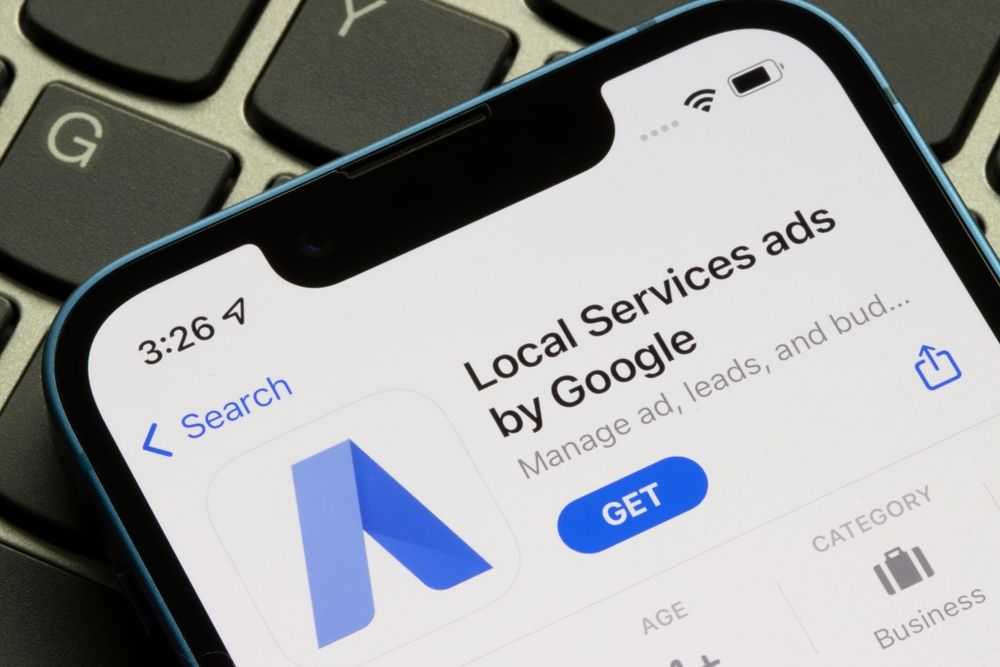
Google Local Services Ads (LSA) isn't a marketplace in the traditional sense. It's an ad format that appears at the top of Google Search results for local service queries, with a Google verification badge. Customers call or message your business directly, and you pay per lead rather than per click. Before you can run ads, Google checks your business, licences and insurance, depending on your trade and location.
- How pros pay: per lead (calls, messages or bookings); you can request credit for leads that don't qualify.
- Best for: plumbers, HVAC technicians, electricians, locksmiths and roofers, whose customers search when they're ready to hire.
- Keep in mind: verification takes time, lead prices can be high in competitive cities, and reviews strongly affect your ranking.
4. Bark
Bark works much like Thumbtack but operates in several countries, including the US, UK, Canada and Australia, and covers professional services such as accounting, coaching, web design and event services alongside home trades. Pros buy credits and spend them to respond to leads. At the time of writing, Bark's help center lists a US price of $2.35 per credit, and each lead costs a variable number of credits depending on the service, job size and location.
- How pros pay: credit packs, spent per lead you respond to.
- Best for: consultants, freelancers and service businesses outside the US or outside traditional home services.
- Keep in mind: credits bought since November 2025 expire after three months, unused credits aren't refundable, and several pros can contact the same customer.
5. Houzz Pro
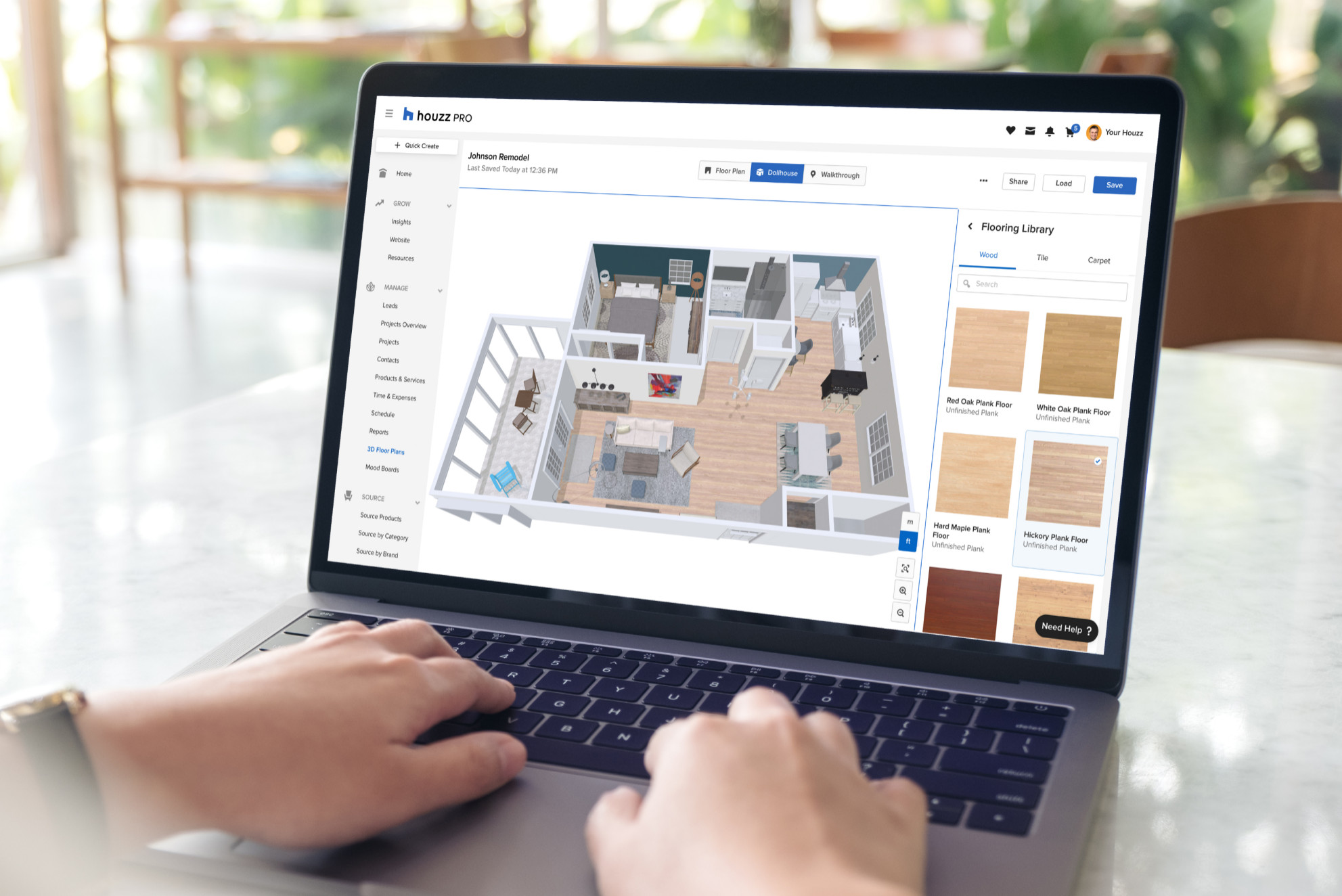
Houzz is a home design inspiration platform with a large homeowner audience. Houzz Pro is its software and marketing subscription for professionals, combining a profile and portfolio with lead generation, CRM, estimates, invoicing and a 3D floor planner. Instead of bidding on individual requests, you attract homeowners who are already browsing projects like yours.
- How pros pay: a free plan with basic tools, plus paid monthly plans that vary by tier and market (check current pricing with Houzz).
- Best for: design-led businesses whose work sells on photos and reviews.
- Keep in mind: you pay the subscription whatever your lead volume, so a strong portfolio is essential for ROI.
6. Handy
Handy, owned by Angi, books customers for house cleaning, handyman services and installations, then assigns those jobs to independent pros. Handy sets the customer price and pays pros per completed job, so there's no lead buying or quoting.
- How pros pay: no lead fees; pros are paid per job at rates set by the platform.
- Best for: cleaners and handymen who want a steady schedule without doing their own marketing.
- Keep in mind: you have little control over pricing, and ratings and reliability affect access to jobs.
This is a managed marketplace: the platform controls price, quality and dispatch, while pros simply accept jobs. Anyone planning a marketplace like Handy ends up spending more effort on supply operations than on lead generation.
7. Yelp
Yelp lets any local business create a free page, collect reviews and receive quote requests from customers. Paid Yelp Ads raise your visibility in search results on a pay-per-click basis. For many service businesses, strong Yelp reviews also support visibility across the wider web.
- How pros pay: free listing; optional pay-per-click advertising.
- Best for: established local businesses with happy customers who leave reviews.
- Keep in mind: you can't control which reviews are shown, and ad costs can climb in competitive categories.
8. Nextdoor
Nextdoor is a neighborhood social network where residents ask for and share recommendations. A free business page lets neighbors recommend you, and optional paid ads can target nearby households. It's less structured than Thumbtack, but recommendations from neighbors carry a lot of trust.
- How pros pay: free business page; optional local ads.
- Best for: new pros, cleaners, lawn care and handyman businesses serving a defined area.
- Keep in mind: there's no steady lead flow; results depend on reputation and community activity.

9. Fiverr
If your service can be delivered online, such as graphic design, writing, video editing or marketing, Fiverr is a better match than local marketplaces. You publish packaged "gigs" with set prices, and buyers order directly. Fiverr keeps 20% of each order.
- How pros pay: a 20% commission on each order.
- Best for: freelancers selling productized, remote services.
- Keep in mind: heavy price competition and no fit for in-person local work.

10. Upwork
Upwork connects freelancers and agencies with clients for longer-term and higher-value projects. Clients post jobs, and freelancers send proposals using "Connects," the platform's paid bidding tokens. Upwork deducts a service fee from freelancer earnings.
- How pros pay: a service fee on earnings, plus Connects to submit proposals.
- Best for: consultants, developers and B2B service providers who want repeat clients.
- Keep in mind: proposals cost Connects whether or not you win, and fee structures change, so check Upwork's current fee schedule.
Thumbtack Alternatives Compared
Here's how the leading apps like Thumbtack compare on pricing model, lead type and best fit.
Which Thumbtack Alternative Is Best for Your Trade?
The best Thumbtack alternative depends less on the platform and more on how your customers search and buy. Use this as a starting point:
- Plumbing, HVAC, electrical and roofing: Google Local Services Ads for urgent, high-intent calls, plus Angi for volume.
- Remodeling and interior design: Houzz Pro for portfolio-led leads, plus Angi for project requests.
- Handyman, furniture assembly and moving help: TaskRabbit or Handy for booked jobs, plus Nextdoor for local referrals.
- Cleaning and lawn care: Handy, Nextdoor and Yelp to build a base of repeat local customers.
- Professional and digital services: Bark for local and international requests, Fiverr for packaged services, Upwork for ongoing contracts.
How to Compare Lead Costs Across Platforms
Comparing lead prices alone is misleading. What matters is your cost per job won:
Cost per job won = cost per lead ÷ close rate
For example, a $40 lead that you win one time in five costs you $200 per job. A cheaper $25 lead that you win one time in ten costs $250 per job. The "expensive" platform is actually cheaper. (These figures are illustrative; plug in your own numbers.)
To make a fair comparison:
- Test one platform at a time for 30 to 60 days, so you know which channel produced which jobs.
- Track four numbers: leads received, response time, close rate and average job value.
- Respond fast. On shared-lead platforms, the first pros to reply usually win the job.
- Diversify. Most successful pros use two or three channels, so a fee increase or algorithm change on one platform doesn't stall the business.
Want to Build an App Like Thumbtack? What Founders Need to Know
The complaints pros have about Thumbtack (lead costs, shared leads, generic categories) are also the biggest opportunities for new platforms. Thumbtack and its competitors have proven the demand, but they're broad, horizontal marketplaces. That leaves room for niche platforms focused on one trade, one region or one customer segment, such as commercial facilities, property managers, renters or markets outside the US. Demand for local services keeps shifting online, which is a big part of why service marketplaces are thriving even in categories Thumbtack already covers.

Choose a Monetization Model Pros Will Accept
Your revenue model is your positioning. Per-lead pricing (Thumbtack, Angi, Bark), commission on completed jobs (TaskRabbit, Fiverr), subscriptions (Houzz Pro) and platform-set pricing (Handy) each attract different pros. Many new entrants win providers simply by charging only when a job is completed. That model only works if you secure payments on your marketplace with held funds, split payouts and clear refund rules, so customers can't take the job off-platform.
Solve Liquidity Before You Scale
Every new service platform runs into the chicken-and-egg problem: pros won't join without customers, and customers leave if no pro responds. Start narrow (one trade, one city), recruit supply by hand before launch, and watch fill rate and response time closely. Those two numbers tell you faster than anything else whether you're improving marketplace liquidity or just adding listings.
Build the Core Features of a Service Marketplace
Apps like Thumbtack share a common feature set:
- Request forms with smart questions that qualify each job
- Matching logic based on category, location, availability and ratings
- Quotes, in-app messaging and booking or scheduling
- Payments, deposits, payouts and refunds
- Pro onboarding, verification and background checks
- Reviews, ratings and dispute handling
- Mobile apps for both customers and pros
These features make up most of the work in service marketplace app development. Urgent categories such as locksmiths or appliance repair add real-time availability and dispatch on top, which is what sets apart an on-demand service marketplace from a quote-based one. Pros manage their whole business from their phones, so UI/UX design for the provider app deserves as much attention as the customer journey.
Pick the Right Build Approach and Budget
Thumbtack took years to reach its current feature set, so a challenger shouldn't try to match it on day one. A focused marketplace MVP that handles one trade's request, quote and payment flow well is enough to prove that pros prefer your model. Native iOS and Android apps usually follow once both sides are active, so plan marketplace app development into the roadmap early and budget with realistic figures for the cost to develop a marketplace mobile app.
Ship Customer and Pro Apps From One Flutter Codebase
A Thumbtack-style platform really runs on two apps. Customers need to post a request, compare quotes and pay in a few taps, while pros need instant lead alerts, quoting, chat, a job calendar and payouts on the go. Because response speed decides who wins a job, push notifications and a fast pro app are core features, not extras.
Building and maintaining separate native apps for iOS and Android doubles that work. With Flutter mobile app development, both platforms share one codebase, so new features such as lead filters or instant booking reach every user at the same time and maintenance stays simpler. Booking-heavy categories like cleaning or lawn care can follow the same patterns as a Flutter booking app, with real-time availability, reminders and rescheduling built in. If the marketplace runs on Sharetribe, a Flutter app can connect to the existing backend, so listings, messaging, bookings and payments work on mobile without rebuilding the platform. Scope and integrations drive the budget, and the Flutter app development cost is typically lower than funding two separate native builds of the same scope.
Plan Growth From Day One
Thumbtack relies heavily on organic search, with category and city pages such as "plumbers in Austin" capturing customers at the moment they need help. A challenger needs the same engine, built on a marketplace SEO structure that scales across every trade and location it serves. Paid acquisition alone rarely covers both sides of a marketplace profitably, which is why SEO for marketplaces and marketplace marketing that recruits pros as well as customers should be planned alongside the product, not after launch.
Why Journeyhorizon Is the Leading Partner for Building Apps Like Thumbtack
Launching a Thumbtack competitor is a marketplace problem first and a software problem second. Journeyhorizon has specialized in two-sided marketplaces since 2018, with 200+ projects delivered, nearly 60 specialists and clients across 20+ countries. As a Sharetribe Partner, the team has built service, rental and B2B marketplaces for founders who need a platform that pros and customers both trust.
Marketplace Specialists, Not Generic Developers
Every project starts with the transaction: how customers request a service, how pros are matched and paid, where the platform earns and how disputes are resolved. Request flows, lead or commission pricing, availability, payouts, reviews and provider vetting are designed together, which is exactly where most Thumbtack-style projects go wrong.
The Right Foundation for Your Stage
Founders who need to validate quickly can launch on Sharetribe with Sharetribe developers who extend it with custom matching, quote and payment logic, plus ready-made Sharetribe plugins. A Sharetribe mobile app template puts iOS and Android apps in the hands of pros and customers from day one. When the model needs unique logic or deep integrations, custom marketplace development gives full architectural control, and a hybrid approach lets you keep a proven core while customizing what differentiates you.
Web and Mobile Apps Built With Flutter
Pros run their businesses from their phones, so mobile can't be an afterthought. Journeyhorizon's Flutter app development services cover mobile UI/UX, backend and payment integrations, App Store and Google Play release and long-term support. Suitable projects start from a proven Flutter foundation with login, profiles, search, messaging, bookings and payments already in place. That foundation helped Kifaayat, an Australian fashion marketplace, launch on iOS and Android in roughly 1 to 1.5 months and rank among the top 100 shopping apps on Google Play.
Development and Growth in One Team
Liquidity is what separates a live marketplace from a launched one. Journeyhorizon plans category and location SEO, provider pages, analytics and acquisition funnels during the build, then supports supply and demand growth after launch, so you aren't handing the platform to a separate agency and starting over.
Long-Term Support After Launch
Service marketplaces evolve quickly once real transactions start. Ongoing marketplace support and maintenance covers new features, integrations, conversion improvements and platform stability as you expand into new trades and cities.
If you're planning a niche alternative to Thumbtack, book a discovery call with Journeyhorizon to map your transaction model, MVP scope and launch plan.
Frequently Asked Questions About Apps Like Thumbtack
What is the best alternative to Thumbtack?
For most home service contractors, Angi is the closest alternative because it uses a similar request-and-match model. For emergency trades, Google Local Services Ads often delivers higher-intent leads. For hourly handyman work, TaskRabbit is a strong fit because pros don't pay for leads.
Are there free alternatives to Thumbtack?
Yes. Nextdoor and Yelp both offer free business pages, and a free Google Business Profile helps you appear in local search results. TaskRabbit and Handy don't charge pros for leads either, although they earn money from service fees or by setting job prices.
Is Angi better than Thumbtack?
It depends on your trade. Angi has strong brand recognition among homeowners and a long-established review base, which suits home improvement contractors. Thumbtack has no pro subscription and covers a wider range of categories, which suits smaller or less traditional service businesses. Both charge per lead, so compare your cost per job won on each.
Is TaskRabbit better than Thumbtack for handymen?
For small hourly jobs, often yes. TaskRabbit customers book and pay through the platform, and Taskers keep their hourly rate plus tips, so you don't risk money on leads that never convert. Thumbtack is better for larger projects where you quote a fixed price.
Can I use multiple Thumbtack alternatives at the same time?
Yes, and most successful pros do. A common setup is one paid lead source (Thumbtack, Angi or Google Local Services Ads) plus one reputation channel (Yelp, Nextdoor or Houzz). Just make sure you can respond quickly to leads from every channel.
How much does it cost to build an app like Thumbtack?
It depends on scope. A focused MVP built on a marketplace platform such as Sharetribe costs far less and launches faster than a fully custom platform with native mobile apps, advanced matching and integrations. The biggest cost drivers are matching logic, payments and mobile apps, so scope only what your two-sided marketplace needs to complete its first transactions, then expand.
Should an app like Thumbtack be built with Flutter or native code?
For most service marketplaces, Flutter is the practical choice. The customer app and the pro app share one codebase for iOS and Android, which shortens time to launch and keeps both platforms in sync as features are added. Fully native development makes sense mainly when an app depends heavily on platform-specific hardware or operating-system features.