Webflow Issues: Real Problems and Strategic Solutions for Growth

Building a modern web presence often means grappling with the limitations of your platform. For marketplace founders, SaaS teams, and growing businesses, choosing the right website platform is foundational to organic growth. Webflow has become the default choice for many digital businesses that reject the constraints of WordPress or rigid legacy systems. Yet Webflow issues are real, and understanding them upfront helps you implement the platform effectively rather than running into problems mid-project.
The truth is that Webflow itself is stable. The issues that founders and executives face are usually about implementation, scalability, and knowing when Webflow is the right fit. Journeyhorizon works with marketplace operators and digital businesses who need to make informed decisions about their technology stack. This article covers the most common webflow issues you'll encounter and how to navigate them strategically.
Understanding the Real Webflow Issues That Affect Growth
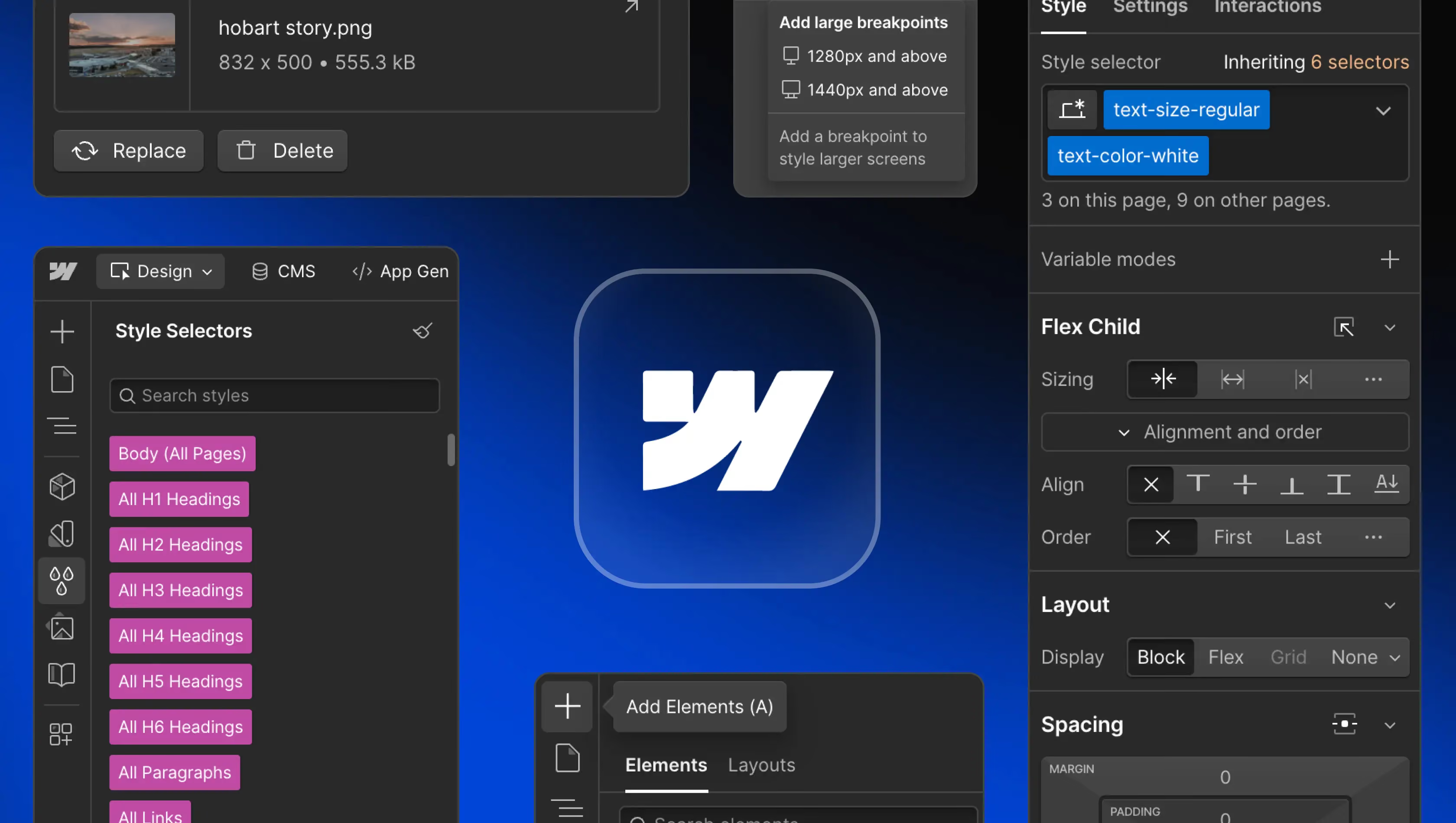
Webflow works remarkably well for what it's designed to do: enable non-developers and designers to build visually sophisticated, responsive websites at speed. But when businesses scale beyond the typical use case, friction emerges.
The most common Webflow issues fall into a few categories. Performance can degrade on large sites with hundreds of pages and complex interactions. Custom integrations with third-party tools sometimes require workarounds because Webflow's API has limitations. SEO implementation, while possible, requires manual setup that many marketing teams struggle with. And for teams that need rapid content updates or complex automation, Webflow's learning curve and visual interface can feel constraining.
For marketplace founders specifically, there's an additional layer: Webflow is excellent as a marketing site, but it doesn't handle marketplace functionality. Your actual platform runs elsewhere (Sharetribe, custom-built, or another solution), and your Webflow site serves as the content hub and growth engine. Understanding this separation upfront prevents confusion and misaligned expectations.
Performance and Scale: Where Webflow Hits Its Limits
Webflow sites generally load quickly out of the box. But performance degrades predictably as complexity increases. Large sites with hundreds of pages, heavy custom interactions, or unoptimized images start to slow down. This matters more for marketplaces than for traditional businesses, because marketplace founders typically prioritise SEO visibility as a core growth channel. A slow site doesn't just frustrate visitors, it crushes rankings.
The other performance issue is custom code. If your team writes a lot of custom JavaScript or CSS, performance can suffer further. This is particularly relevant if you're trying to build sophisticated tracking, dynamic content, or third-party integrations directly into Webflow.
The solution isn't to abandon Webflow. It's to implement smart architecture from the start. Use Webflow for the marketing site and content hub. Keep pages focused and interactions minimal. Offload heavy logic to serverless functions or dedicated tools. This is where many marketplace founders and C-level executives benefit from expert guidance. A team with deep Webflow experience knows which patterns scale and which don't.
Integration Limitations and the Case for Middleware
Webflow issues often emerge when you try to connect it to your wider tech stack. You might want to sync data between your marketplace platform and your Webflow content hub. Or integrate advanced analytics, custom CRM tools, or automation workflows. Webflow's API and integrations cover common scenarios but can be limiting for unique business needs.
For a B2B marketplace or SaaS company, this often means building middleware or using integration platforms like Zapier or Make. These workarounds add cost and complexity. They also introduce latency and potential failure points if the integration breaks.
This is where the difference between a DIY approach and partnering with experts becomes critical. Marketplace App Development teams understand both the Webflow side and the backend integrations. They can architect solutions that feel seamless to your users and marketing team while remaining maintainable and scalable.
SEO Implementation: Why Webflow Requires Strategic Thinking
Webflow is technically capable for SEO. It generates clean HTML, supports structured data, and allows control over metadata. But SEO with Webflow requires intentionality. Many teams build beautiful Webflow sites that simply aren't optimised for search because they treat SEO as an afterthought.
Common webflow issues in this area include poor internal linking structure, missing meta descriptions, duplicate content across pages, and inadequate structured data. For marketplaces, there's an additional layer: category pages, filtering, and faceted navigation can create indexation problems if not handled carefully. You can quickly end up with thousands of low-value pages that confuse Google and dilute your authority.
The fix involves planning your information architecture, implementing proper canonical tags, controlling pagination and filtering parameters, and building a content strategy that actually drives traffic. This requires SEO expertise integrated into the design phase, not bolted on afterward. Webflow SEO development that combines technical implementation with strategic thinking is what separates sites that rank from sites that don't.
Migration and Compatibility: The Cost of Switching Platforms
Many businesses encounter webflow issues when migrating from legacy platforms. You have an existing site with traffic and rankings. You want to move to Webflow for its design flexibility and developer experience. But migrate incorrectly and you lose organic visibility.
Migration issues include broken redirects, lost metadata, changed URL structures, and de-indexed content. Some of these issues are temporary and resolve within weeks. Others are permanent if not handled carefully. The stakes are high for established businesses that rely on organic traffic.
The solution is a structured migration process: redirect mapping, canonical tag management, content audits, and Google Search Console validation. This requires technical expertise and patience. Rushing a migration to Webflow is a common source of regret.
Webflow for Marketplace Marketing: A Strategic Fit
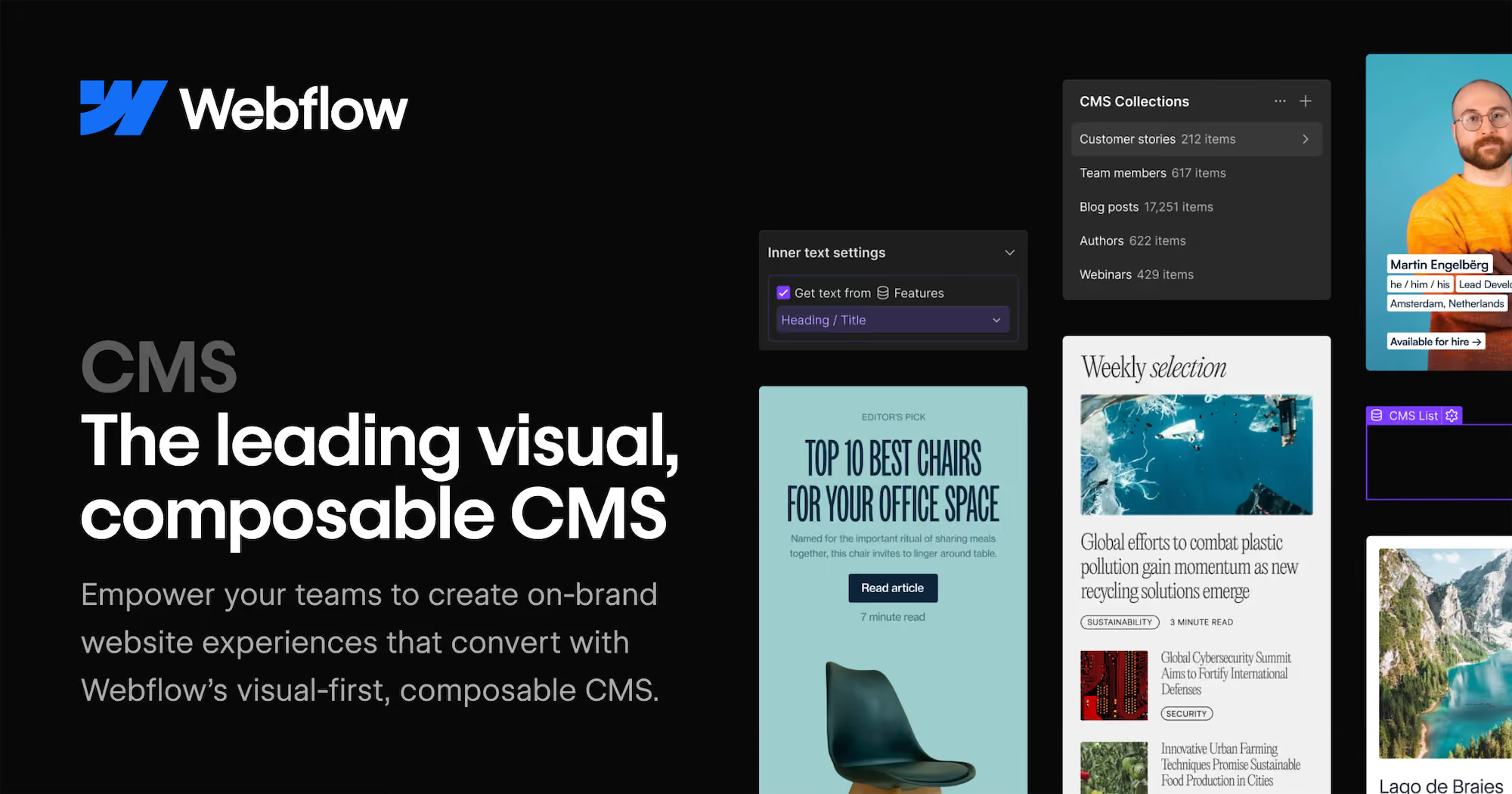
Marketplace founders often ask whether Webflow is the right choice. The answer is nuanced. Webflow is excellent for your marketing site if you understand its role clearly. It's not the platform where your marketplace transactions happen. It's where your brand lives, your SEO strategy plays out, and your content builds authority.
A well-implemented Webflow site for a marketplace includes a strong homepage, category pages that rank for informational keywords, a blog that drives organic traffic, and conversion-optimised landing pages. Your actual marketplace platform handles the core functionality: user profiles, transactions, reputation, payments. These are two separate systems working in concert.
This separation can actually be an advantage. Your marketplace infrastructure can be optimised for transactions and user experience. Your Webflow site can be optimised for content and conversion. Many scaling marketplaces use exactly this architecture, with platforms like Sharetribe handling the marketplace and Webflow handling growth.
The key to avoiding webflow issues is clarity about this separation from day one. Many teams get confused, trying to build marketplace functionality directly into Webflow or failing to integrate the two systems properly. With clear architecture and expert implementation, this model works beautifully.
Building for Scale: When to Customise Webflow
Webflow offers Custom app development options through its API and advanced features. You can build sophisticated automations, custom data structures, and integrations. But you need to understand when this is worth the investment.
Custom Webflow implementations make sense when you have unique requirements that the standard platform can't meet, and when the ROI justifies the development cost. For most marketplace founders, this threshold is lower than you might think. A small amount of custom development can unlock significant growth advantages.
The trap is over-engineering. Some teams build complex, custom solutions when a simpler, off-the-shelf approach would work better. This is where strategic guidance helps. Experienced teams know which customisations create lasting value and which become technical debt.
Getting It Right: Strategic Implementation Matters
Webflow issues are often not really Webflow's fault. They're the result of unclear strategy, poor planning, or misaligned expectations about what the platform does. A stable, high-performing Webflow site that drives real growth comes from thoughtful architecture, experienced implementation, and ongoing optimisation.
For marketplace founders and digital businesses, this is where partnership becomes valuable. Rather than learning the hard way what works and what doesn't, working with teams that specialise in marketplace growth, SEO, and Webflow implementation saves time and money. Journeyhorizon brings together the technical expertise, marketplace knowledge, and strategic thinking needed to build Webflow sites that don't just look good but actually drive growth.
The core lesson is simple: Webflow is powerful, but it requires a clear vision of what you're building, who it's for, and how it fits into your larger growth strategy. When you approach it strategically, the platform delivers remarkable results.

.avif)