Designer web freelance: Advantages and disadvantages explained
.avif)
Hiring a designer web freelance is often seen as the fastest way to get a website live. Lower cost, faster turnaround, and direct collaboration make it an attractive option for startups, SaaS teams, and growing businesses.
But the reality is more nuanced. What looks efficient at the beginning can become a bottleneck later if the project lacks structure, scalability, or strategic thinking. At Journeyhorizon, during 7 years of build and scale for global organisations, we frequently see businesses rebuilding their websites within 6-12 months because the initial freelance setup could not support growth.
The real question is not whether hiring a freelance web designer is good or bad. It is when it works, when it fails, and how to make the right call based on your stage.
Designer web freelance: understanding the advantages
A designer web freelance can be a highly effective choice when the project scope is clear and execution is the priority.
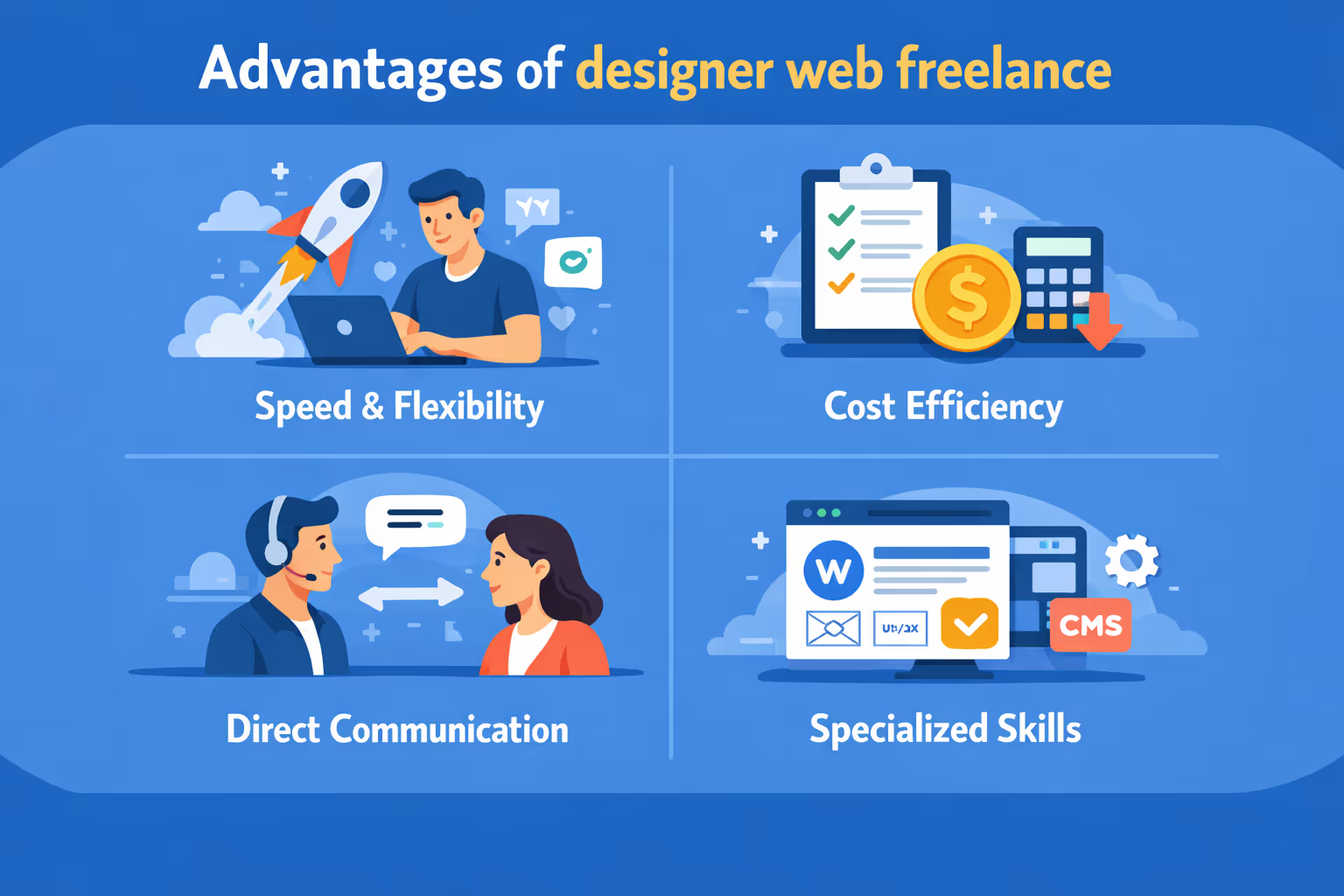
Speed and flexibility
Freelancers typically operate with minimal overhead. This allows them to:
- start projects quickly
- iterate faster
- respond directly to feedback
- avoid long agency timelines
For businesses that need to launch fast, this is a major advantage.
Cost efficiency
Compared to agencies, freelance designers often offer:
- lower upfront costs
- flexible pricing models
- project-based or hourly engagement
This makes them accessible for early-stage companies or teams with limited budgets.
Direct communication
Working with a freelancer means:
- no account managers
- no communication layers
- faster decision cycles
You collaborate directly with the person building your site, which can improve clarity and reduce friction.
Specialized skill sets
Many freelance designers focus deeply on specific tools or niches such as:
- Webflow development
- landing page design
- UI/UX optimization
- CMS structuring
If your need is narrow and well-defined, a specialist freelancer can outperform a generalist team.
The disadvantages of hiring a freelance web designer
The same factors that make freelancers efficient can also introduce risk, especially as your business grows.
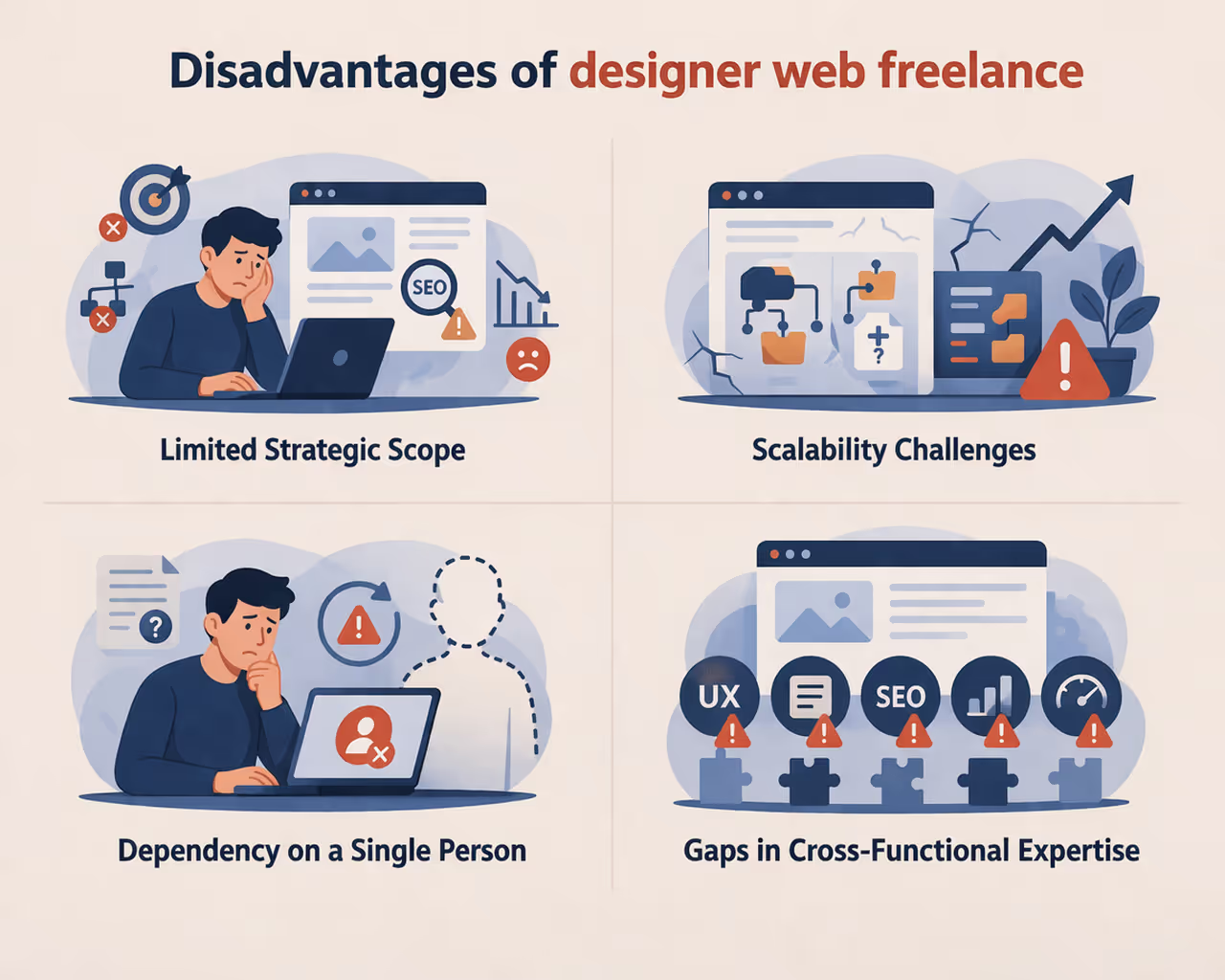
Limited strategic scope
Most freelancers are execution-focused. That means:
- limited involvement in positioning
- weak content architecture
- minimal SEO planning
- no clear conversion strategy
The result is often a site that looks good but does not perform.
This is one of the most common issues we see: traffic comes in, but conversion stays low.
Scalability challenges
A freelance-built website may not be designed for long-term growth.
Common issues include:
- inconsistent CMS structure
- difficulty adding new pages
- lack of reusable components
- messy content hierarchy
This becomes a serious problem when businesses try to scale SEO, content, or landing pages.
Dependency on a single person
When one freelancer handles everything:
- knowledge is not documented
- handover is often limited
- future changes depend on the same person
If the freelancer becomes unavailable, your team may struggle to maintain the site.
Gaps in cross-functional expertise
A website today is not just design. It involves:
- UX
- content strategy
- SEO
- analytics
- performance optimization
Freelancers rarely cover all these areas at a high level. This creates gaps that can affect long-term results.
When hiring a designer web freelance works best
To use a freelancer effectively, the context needs to be right.
A designer web freelance is a strong choice when:
- you have a clear scope and structure already defined
- your team owns content and strategy internally
- the site is relatively simple or focused
- you need fast execution over long-term systems
- you are working on a specific platform like Webflow
In this scenario, the freelancer acts as an executor, not a strategist.
When it becomes a risky decision
Hiring a freelancer becomes risky when the website plays a critical role in growth.
Be cautious if:
- your website is a core acquisition channel
- you plan to invest in SEO or content scaling
- your business requires complex user journeys
- your team lacks internal marketing or product thinking
- you need a system that evolves over time
In these cases, the problem is not design. It is system design.
The real trade-off: speed vs scalability
This is the key strategic lens most businesses miss.
Hiring a freelance web designer often optimizes for:
- speed
- cost
- simplicity
But building a high-performing website requires:
- structure
- scalability
- integration with growth channels
- long-term maintainability
If you optimize only for the first group, you often pay later in:
- rebuild costs
- SEO limitations
- conversion inefficiencies
- internal frustration
The better approach is to decide which stage your business is in, and align your hiring decision accordingly.
How to reduce risk when working with a freelancer
If you decide to hire a designer web freelance, you can still avoid common pitfalls.
Define structure before design
Do not start with visuals. Start with:
- page hierarchy
- content flow
- user journeys
- conversion goals
This ensures the design supports function, not the other way around.
Separate strategy from execution
If your freelancer is not strong in strategy:
- bring in external support
- define SEO and content direction early
- align on long-term site goals
This prevents expensive redesigns later.
Ask about scalability upfront
Before starting, clarify:
- how CMS is structured
- how new pages will be added
- how reusable components are built
- how the site can evolve
This is where most freelance projects fail.
Why Journeyhorizon helps businesses go beyond freelance limitations
If you are evaluating a designer web freelance, it usually means you are trying to balance cost, speed, and quality.
The challenge is that websites today are not just design deliverables. They are part of a larger growth system.

Journeyhorizon professional web designer experts can give you better solutions with excellent works that need more than execution:
- Webflow development design services aligned with growth goals, not just visual output
- Technical SEO services that ensure your site can scale traffic and visibility
- Webflow integration services into current platforms for content, landing pages, and long-term performance
Instead of choosing between freelancer or agency, many companies benefit from a strategic partner model that combines execution with growth thinking.
If your goal is not just to launch but to scale, this distinction becomes critical.
Explore our full UX/UI website design services here!
Conclusion
A designer web freelance can be the right choice or the wrong one depending entirely on your business context. The advantages are clear: speed, cost, and flexibility. The disadvantages are equally important: limited strategy, scalability issues, and long-term constraints.
The smartest decision is not choosing the cheapest or fastest option. It is choosing the approach that aligns with how your business plans to grow.
If your website needs to do more than exist, if it needs to generate traffic, convert users, and scale over time, then Journeyhorizon will be your trusted designer web freelance agency.
Visit our portfolio here!
FAQ
Is hiring a freelance web designer cheaper than an agency?
Yes, in most cases. However, lower upfront cost can lead to higher long-term costs if the site needs to be rebuilt or restructured later.
Can a freelancer build a scalable Webflow site?
Some can, especially experienced Webflow specialists. But many focus on design rather than system architecture, so scalability should be validated early.
How do I know if a freelancer is good for my project?
Look beyond portfolio visuals. Evaluate their thinking around structure, CMS, SEO, and how the site will evolve over time.
Should I hire a freelancer for an SEO-driven website?
Only if SEO strategy is already defined elsewhere. Otherwise, you risk building a site that is difficult to optimize later.
What is the biggest risk of hiring a freelance web designer?
The biggest risk is building a site that looks good but cannot support growth, especially in SEO, content, and conversion.
.avif)
.avif)