Apps Like Depop: Building Scalable Marketplace Platforms

The secondhand marketplace space has exploded over the past decade, with apps like Depop demonstrating how social commerce and peer-to-peer selling can build billion-dollar platforms. If you're a marketplace founder or digital business operator considering launching your own platform, it's worth understanding not just the surface-level alternatives, but the underlying business model that powers these successful apps. The opportunity isn't limited to fashion resale, either. The same mechanics that make apps like Depop work apply across countless vertical markets: electronics, collectibles, sustainable goods, luxury items, and niche categories that larger platforms ignore.
Journeyhorizon, a marketplace development specialist, works with founders who recognise this opportunity and want to build sustainable, scalable platforms that compete effectively in their category. Whether you're evaluating existing platforms to understand the market or planning to develop your own solution, understanding what makes platforms like Depop succeed is the first step toward building something better.
Understanding the Depop Marketplace Model
Depop's success isn't accidental. It combines social engagement with transaction mechanics in a way that keeps users returning. The platform allows individual sellers to list items, interact with buyers through messaging, and build reputation through reviews and social following. This creates stickiness that traditional e-commerce sites struggle to achieve.
What other platforms have replicated this model? Poshmark, Vinted, Mercari, and numerous regional players all borrowed elements from the Depop playbook. They recognised that successful marketplaces need more than just a listing mechanism. They require community features, trust signals, and incentives for repeated engagement. When evaluating apps similar to Depop, you'll notice a common pattern: the most successful ones have invested heavily in social features, seller verification, and buyer protection. This isn't incidental. It's core business infrastructure that drives both user retention and transaction volume.

Top 10 Apps Like Depop to Buy and Sell Secondhand Clothes
Vinted and Poshmark are the best places to start if you want an app like Depop for everyday secondhand fashion. Try Vinted for a closet clear-out or Poshmark if you like selling through offers and bundles. For designer streetwear, look at Grailed. For luxury, compare Vestiaire Collective and The RealReal. And if you have a whole box of clothes you’d rather send off in one go, try ThredUp.
The right app often comes down to the item. A $15 Zara top, a discontinued Carhartt jacket, and a designer handbag attract different buyers. Where you list also determines what you keep from the sale and how much work you do to get the item to its next owner.
1. Vinted for everyday secondhand clothes
Vinted is a good first stop if you’re selling the jeans, jumpers, and jackets you already own. It’s especially worth considering for lower-priced items because a standard sale carries no seller fee. Buyers pay a platform fee at checkout, so compare the delivered price when shopping. A cheap top can make more sense as part of a bundle from the same seller.
Try it for a closet clear-out or affordable everyday basics.

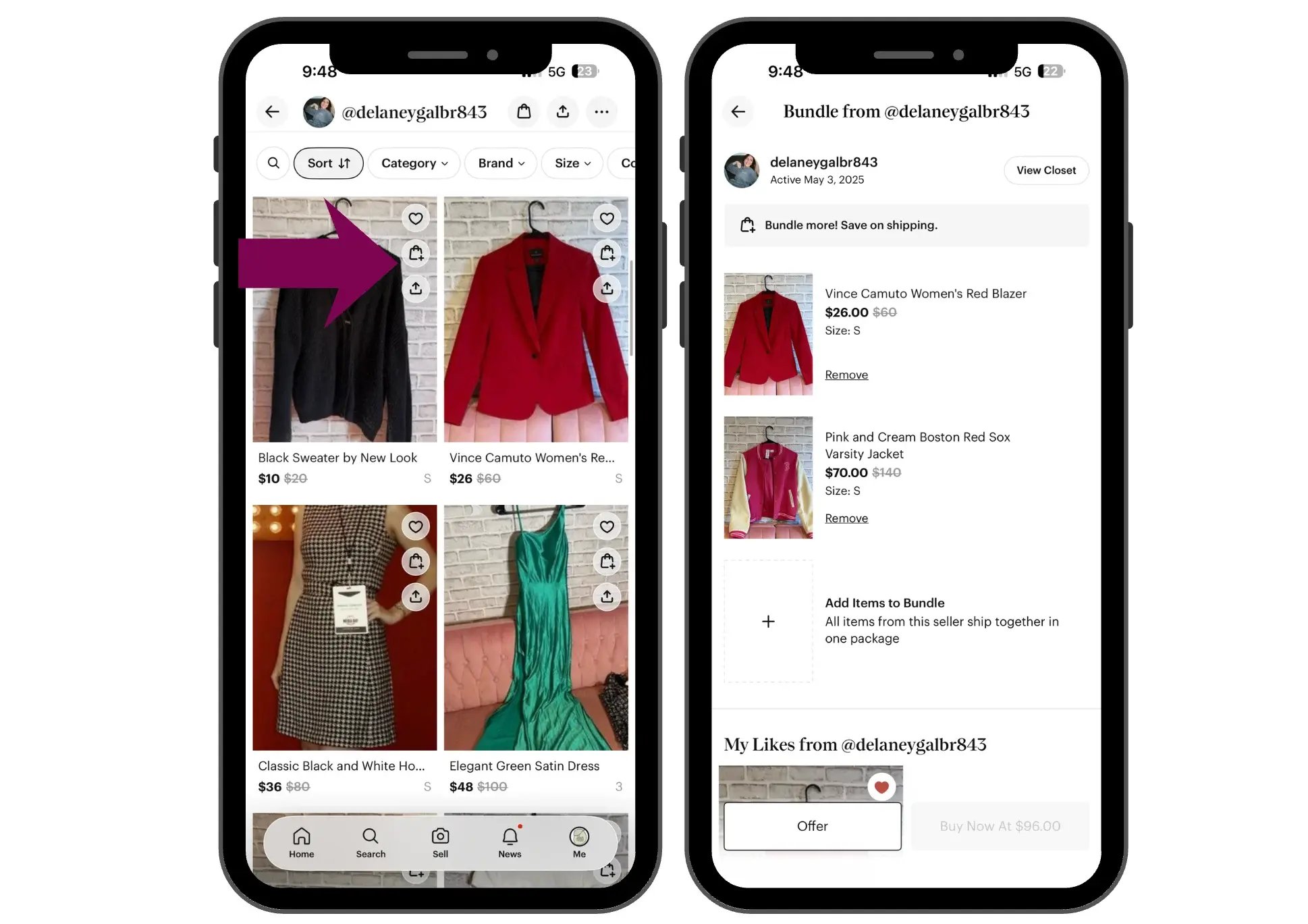
2. Poshmark for branded clothes and bundles
Poshmark comes closest to the social side of Depop. Sellers can share listings and send offers, and buyers can bundle pieces from the same closet. If someone likes two items from your closet, you can send one offer for both and optionally include a shipping discount. The US fee makes it worth checking your earnings before accepting an offer, especially on a low-priced single item.
Try it for contemporary brands, activewear, or a closet with several pieces that appeal to the same buyer.
3. Grailed for streetwear and designer menswear
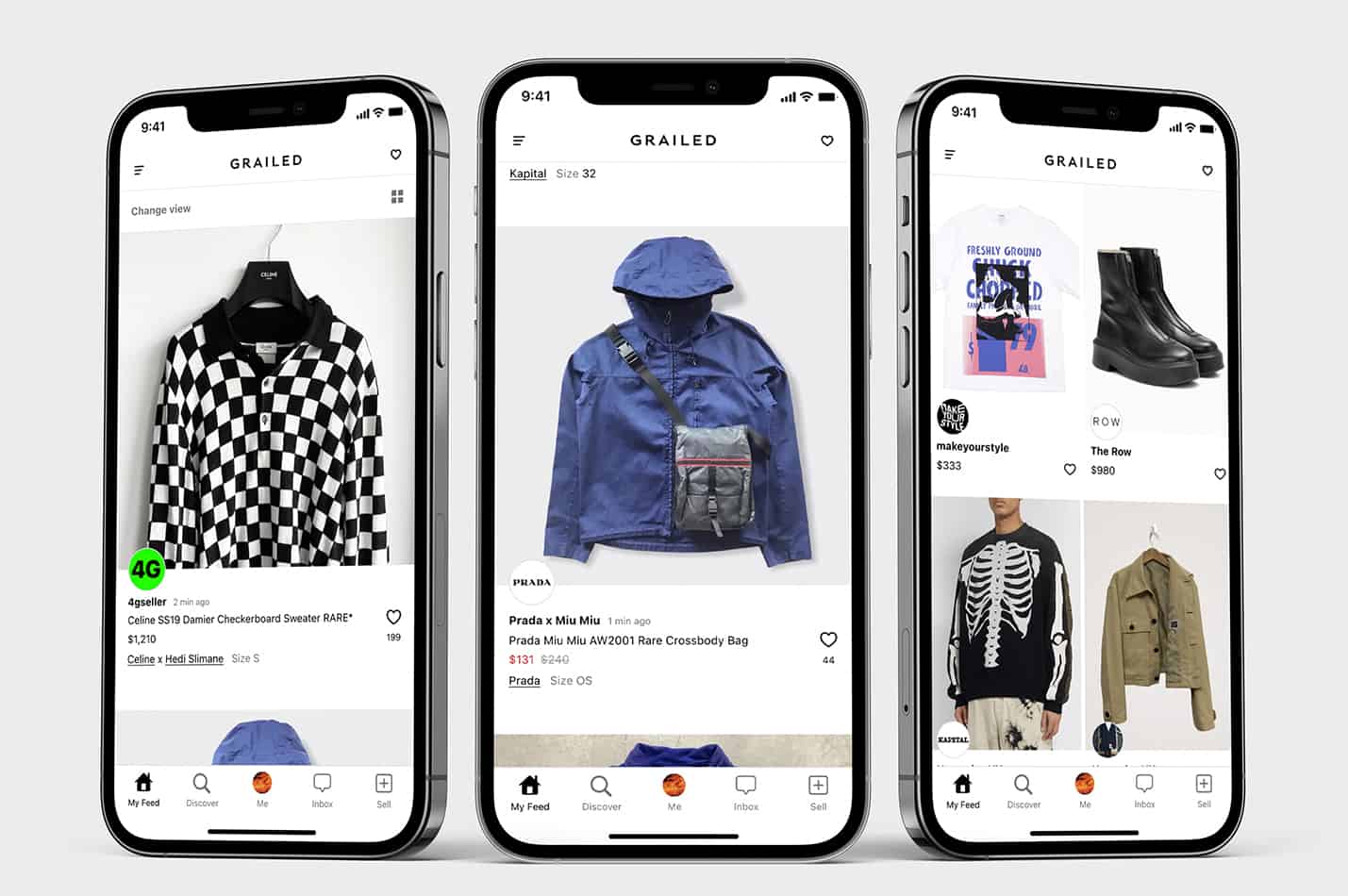
Grailed is a better fit for a discontinued hoodie, an archive jacket, or a piece from a designer people search for by collection. Give buyers the tagged size, actual measurements, condition, and any identifying details you can verify. Grailed digitally reviews eligible listings before they go live. Its current commission is 6% on sales below $120, subject to a $1.99 minimum, and 9% from $120, with payment processing charged separately.
Try it for streetwear, designer menswear, and pieces that appeal to collectors.
4. eBay for rare pieces and exact searches
eBay works well when buyers know exactly what they want. Think Levi’s jeans in a particular cut and wash or a discontinued jacket in a specific size. Search sold listings for comparable items before pricing yours. A fixed price works well when comparable sales give you a clear range. An auction is worth considering when the piece is hard to price and you expect several interested buyers.
Try it for specific models, collectible fashion, and vintage pieces with identifiable labels or details.

5. Mercari for selling clothes and other used items
Mercari makes sense when your clear-out includes clothes, shoes, home goods, and collectibles. You can manage them in one place. In the US, Mercari charges sellers 10% of the item price plus buyer-paid shipping. Buyers also pay a 3.6% Buyer Protection fee on that same amount, so both sides should check the order breakdown.
Try it for a mixed clear-out where fashion is one of several categories you’re selling.

6. Vestiaire Collective for designer resale
Vestiaire Collective gives sellers control over the asking price and offers authentication workflows for luxury resale. If you’re buying a designer bag or shoes, check the shipping and authentication options shown for that order. If you’re selling, check the fee band before settling on a price. A new US listing priced at $300 falls into the 17% selling fee band, plus 3% payment processing.
Try it for designer pieces you want to price and list yourself.
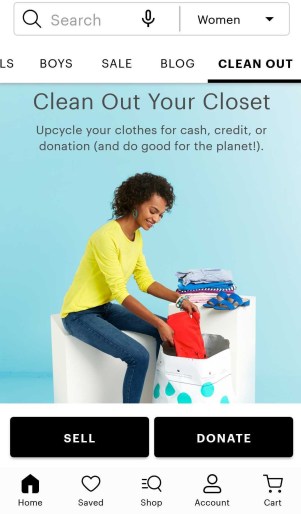
7. ThredUp for a hands-off closet cleanout
When you have a box of clothes and little time to photograph them, ThredUp’s Clean Out service lets you send them in together. The platform selects what it will list and handles the sale and shipping. Before sending anything you might want back, check the terms for unlisted and unsold items. They vary by service, and reclaiming an unsold item can cost extra.
Try it for selling in bulk when saving time matters more than setting the price of every item.
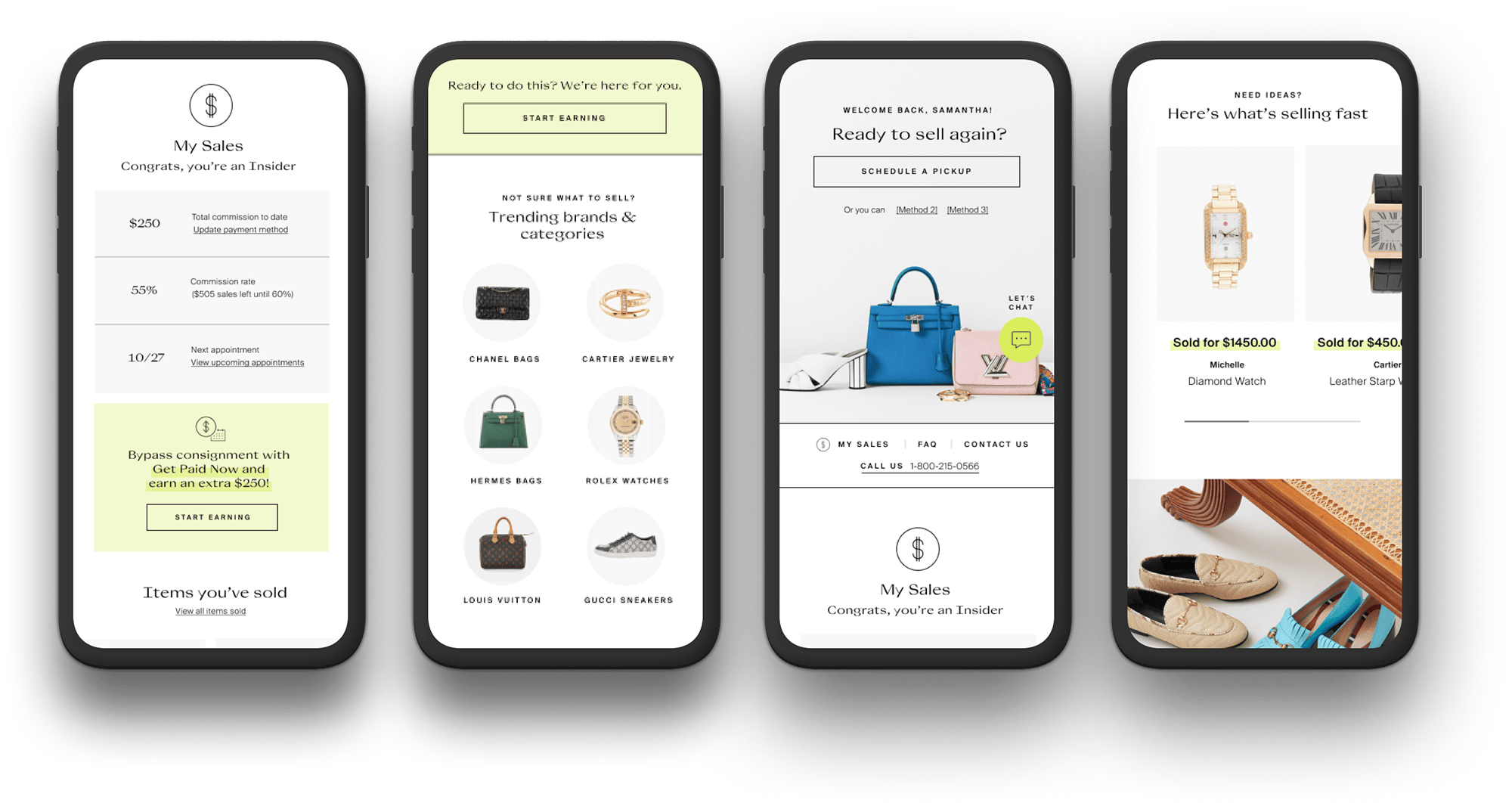
8. The RealReal for luxury consignment
The RealReal assesses accepted luxury items for authenticity, condition, and value, then manages the sale. It suits sellers who want help moving a designer bag, fine jewelry, or a wardrobe of high-end pieces. Check the earnings guide for your item’s category and expected sale price. A lower-priced garment can earn you a different percentage than a premium handbag.
Try it for luxury items you’d prefer to consign through a specialist.
9. Etsy for genuine vintage and upcycled pieces
Etsy is worth considering if you can build a shop around a recognizable style, such as ’90s partywear or denim you’ve visibly reworked. Etsy requires items sold as vintage to be at least 20 years old. Upcycled pieces need to meet its Creativity Standards. That makes it a good fit for a curated shop with documented vintage or eligible alterations.
Try it for dated vintage collections and clothing you’ve meaningfully altered yourself.

10. Curtsy for US women’s fashion
Curtsy focuses on women’s fashion, with categories for activewear, dresses, occasionwear, and trend-led styles. That gives buyers a useful starting point if they’re shopping for a specific event or aesthetic. Sellers can see estimated earnings when they create a listing. Curtsy is currently available for shopping and selling in the US.
Try it for selling contemporary women’s clothing, especially activewear, dresses, and going-out pieces.

10 Apps Like Depop Comparision Table
Key Features That Drive Marketplace Performance
If you're assessing the competitive landscape of apps like Depop, pay attention to the mechanics beneath the surface. Several essential fashion marketplace features consistently appear across high-performing platforms.
Social commerce integration is now table stakes. Buyers expect to follow sellers, view their activity, and make purchasing decisions partly based on seller personality and brand. Vinted and Poshmark both emphasise seller engagement through live shopping events and seller communities. This transforms the marketplace from a transaction medium into a social destination.
Trust mechanisms matter tremendously. Reputation systems, verified badges, buyer protection guarantees, and dispute resolution processes directly influence transaction confidence. Platforms that streamline these elements see higher conversion rates and lower churn. Transaction safety, from secure marketplace payments to clear refund rules, is no longer a competitive advantage, it's a requirement.
Listing mechanics and category structure shape the user experience significantly. Flexible tagging, advanced search filters, and well-designed category hierarchies help buyers find what they want and help sellers reach the right audience. The friction of posting an item should be minimal, yet the richness of product data should be comprehensive.
Shipping and logistics integration has become increasingly important. Whether the platform handles shipping directly, partners with carriers, or leaves it to sellers affects user satisfaction and repeat transactions. The complexity of managing marketplace shipping is underestimated by founders who haven't built a marketplace before.
Popular Alternatives and Their Strategic Positioning
A quick survey of apps like Depop reveals different bets on target audiences and business models. Poshmark positions itself as a social selling platform with emphasis on community and live events. Vinted focuses on simplicity and zero seller fees (charging buyers instead), which appeals to casual sellers. Mercari expanded beyond fashion into general secondhand goods, capturing garage sale and decluttering use cases. Grailed carved a luxury menswear niche, demonstrating that specialisation within secondhand can command premium positioning.
Each platform made different trade-offs. Some prioritised seller ease-of-use over feature richness. Others invested in algorithmic discovery and recommendations. A few positioned themselves as logistics-light (buyer or seller handles shipping) whilst others centralised fulfilment. There's no single "right" model, which is precisely why the category remains competitive and fragmented.
For founders, the lesson is clear: identifying your unique angle matters more than copying Depop feature-for-feature. The second-order movers who succeeded did so by finding an underserved segment, simplifying specific workflows, or building deeper integrations with related services.
The Marketplace Opportunity for Founders
The success of apps like Depop points to a broader business reality: vertical-specific marketplaces outperform horizontal ones. A platform built specifically for antique collectors will almost always beat a general secondhand marketplace at serving collectors. A niche marketplace for sustainable fashion will attract sellers and buyers with different motivations than a volume-focused platform.
This creates substantial opportunity for new market entrants. Most existing apps similar to Depop are either venture-backed with growth-at-all-costs mandates, or they're operated by larger retail groups seeking portfolio diversification. Few of them are optimised for specific verticals, communities, or regional markets. This leaves room for founders who understand their niche deeply and can build an ecommerce marketplace purpose-built for it.
The revenue models across the category are predictable: take a commission on each transaction, charge listing fees, add premium seller features, or introduce marketplace services like shipping or insurance. These aren't novel, but they're proven. The key is matching the model to your audience. If your sellers are price-sensitive, take rates below Depop's 10-20%. If your buyers are willing to pay premium prices for curated inventory, you can charge listing fees or take higher commissions.
Scalability is the challenge most founders underestimate. A marketplace that works well at 10,000 active users often breaks at 100,000. Categorisation logic that made sense at small scale becomes inadequate. Fraud detection systems that worked manually no longer scale. Payment and settlement processes that were straightforward become complex. Knowing how to scale a marketplace business means planning for these challenges from day one, not treating them as afterthoughts.
Building Versus Buying: Technical Considerations
When evaluating your options as a founder, you'll face a fundamental choice: buy an existing platform, customise a no-code solution, or build a custom platform from scratch. This decision shapes everything that follows.
Off-the-shelf platforms like Sharetribe or VERSE offer pre-built marketplaces with category structures, transaction logic, and user management already in place. The advantage is speed. The disadvantage is constraint. If your vision requires specific features or workflows that the platform doesn't support, you'll either bend your vision to fit the tool, or you'll outgrow it. Many successful apps like Depop started on limited platforms and eventually rebuilt to custom solutions as they scaled and differentiated.
No-code and low-code solutions offer a middle ground. They're faster than custom build and more flexible than off-the-shelf. However, they come with performance ceilings and integration limitations that become problematic as transaction volumes grow. This approach works well for testing a marketplace hypothesis, but rarely for building the definitive platform in a category.
Custom development offers maximum flexibility and control, but requires technical depth and capital investment. The payoff is a platform specifically built for your market, your users, and your roadmap. Most successful marketplaces eventually converge on this approach because the long-term advantages compound. Marketplace development services from experienced partners can accelerate this path, combining platform expertise with custom features that differentiate your solution.
Growth Strategy Beyond the Platform Itself
Building the product is one challenge. Growing the marketplace is another. Most founders underestimate how much of marketplace success depends on activities outside the product.
Seller recruitment matters enormously. An empty marketplace is worthless. Platforms like Poshmark and Vinted succeeded partly through aggressive seller incentives and community-building efforts. Your SEO and content strategy should be designed to help potential sellers find your platform and understand its benefits. The most successful marketplaces treat seller acquisition as a dedicated function, not a secondary concern.
Buyer acquisition follows seller liquidity. Once sellers are posting regularly, your challenge becomes making that inventory discoverable. This requires algorithmic curation, search optimisation, email marketing, and increasingly, social media amplification. The platforms that grew fastest invested in these channels systematically.
Content marketing and thought leadership build authority within your category. Writing about trends in your marketplace niche, sharing seller success stories, and educating your community establishes your platform as the category leader. This compounds over time and creates defensibility that features alone cannot provide.
Partnering for Success in Marketplace Development
Founders building marketplaces often try to solve every problem internally. This rarely works well. Product development, seller support, buyer marketing, and technical operations all require specialised expertise. Trying to do everything in-house stretches resources thin and slows progress.
Experienced partners add value across multiple dimensions. They bring marketplace expertise from working across categories and geographies. They understand scaling challenges because they've seen them repeatedly. They can accelerate custom Sharetribe development and plugin features that differentiate your platform. On the growth side, they can build your content and SEO strategy to drive organic visibility, which is where sustainable marketplace growth compounds over years.
This combination of technical and commercial expertise is particularly valuable for marketplace founders. Building a marketplace isn't just about engineering. It requires understanding marketplace dynamics, network effects, and growth mechanics. A partner that combines development capability with marketplace marketing expertise—SEO, content, social strategy, and growth analytics—can address both the product and growth sides of the equation. This integrated approach is why many successful founders choose specialists rather than trying to juggle everything internally.
The Path Forward
The success of apps like Depop demonstrates that marketplace opportunity remains substantial, even in crowded categories. The platforms that have succeeded did so not by copying Depop, but by finding their own positioning, optimising for their specific audience, and investing consistently in both product and growth.
If you're considering building a marketplace like Depop for your own category, start by understanding your specific advantage. Why would sellers and buyers choose your platform over existing alternatives? Is it a specialisation angle? A geographic focus? A superior feature set? A better community? Answer this honestly, and it will guide every decision that follows.
The technical side is solvable. The marketplace dynamics are learnable. But the strategy question is where most founders stumble. If you're serious about building a competitive marketplace platform, getting strategic clarity before committing to years of technical work is worth the investment. Whether you're working with Journeyhorizon or another partner, the key is combining technical capability with real marketplace expertise and a growth strategy that operates as a system, not a collection of tactics.
Frequently Asked Questions
What makes a marketplace like Depop successful?
Successful marketplaces combine social features that keep users engaged with smooth transaction mechanics. Depop succeeded by making selling simple, emphasising seller personality through social profiles, building community through messaging and ratings, and expanding beyond fashion as it scaled. The social element differentiates it from transactional marketplaces.
Can I build a marketplace using off-the-shelf platforms?
Yes, platforms like Sharetribe provide a foundation to launch quickly. However, as you scale and differentiate, you'll likely need customisation or custom development to support your specific workflows, integrations, and performance requirements. Start with a proven platform if you're testing a hypothesis, but plan for custom development if your marketplace finds product-market fit.
How do I compete with established apps like Depop?
Competition works when you have a clear positioning advantage. Rather than trying to beat Depop at its own game, focus on an underserved vertical, geographic region, or user behaviour that existing platforms don't address effectively. The most defensible positions are built on category specialisation or superior community experience in a specific niche.
What's the typical cost to develop a custom marketplace platform?
Custom marketplace development typically ranges from AUD 50,000 to several million, depending on scope, complexity, and technical requirements. Basic platforms with core marketplace features cost less. Highly customised solutions with advanced search, personalisation, logistics integration, and multiple payment options cost significantly more. If you also plan native iOS and Android apps, factor the cost to develop a marketplace mobile app into your budget early. Working with experienced partners helps ensure your investment aligns with your go-to-market strategy.