Build a Marketplace App: Features, Costs, and Step-by-Step Process
To build a marketplace app, you need more than a good idea. You need a clear strategy, the right features, and a launch plan that avoids wasted time and unnecessary costs. Turning an ambitious marketplace idea into a platform people actually trust is the real challenge.
This guide shows you exactly how to create a marketplace app that is practical, scalable, and ready for real users. You will learn what features matter, what shapes marketplace app development cost, and how to launch a two-sided marketplace app Development with confidence, even without technical experience.
If you want expert support, Journeyhorizon supports founders with marketplace strategy, no-code and white-label implementations using Sharetribe and Webflow, and the growth systems needed to validate, launch, and scale their marketplace ideas.
1. What is a marketplace app? Understanding the two-sided model
Before you begin to build a marketplace app, it is essential to understand what a marketplace platform actually is and how it operates. This foundation helps you make better product, business, and technology decisions throughout the entire process.
Choosing the right tech stack is critical when building a marketplace. A specialized marketplace app development team can guide you through architecture decisions that impact long-term success.
1.1. Marketplace app definition
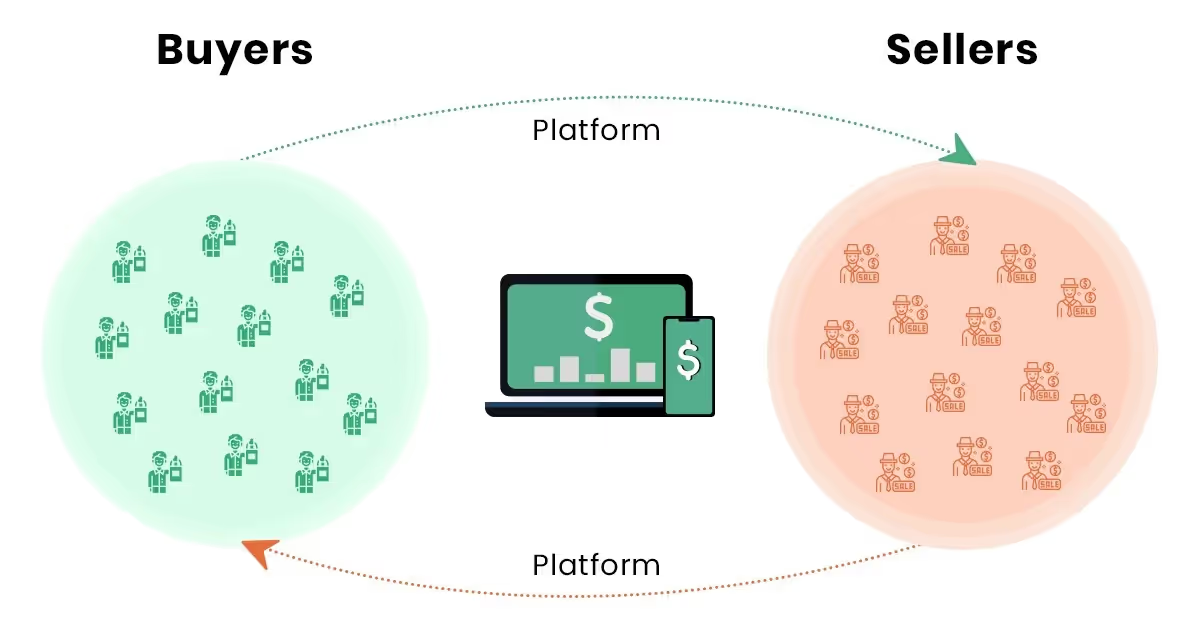
A two-sided marketplace app is a digital platform, usually web-based or mobile-friendly, that connects buyers and sellers and allows them to complete transactions in a structured and trusted environment. Unlike a traditional eCommerce store where the business sells directly to customers, a marketplace owner facilitates the exchange between independent participants.
Your responsibility as the marketplace owner is to create the conditions where both sides can interact safely, smoothly, and reliably. Balancing both sides of the market, ensuring quality supply, and maintaining user satisfaction are essential to the long-term success of any marketplace platform.
Explore how to build a successful two-sided marketplace app.
1.2. How marketplace apps differ from traditional eCommerce
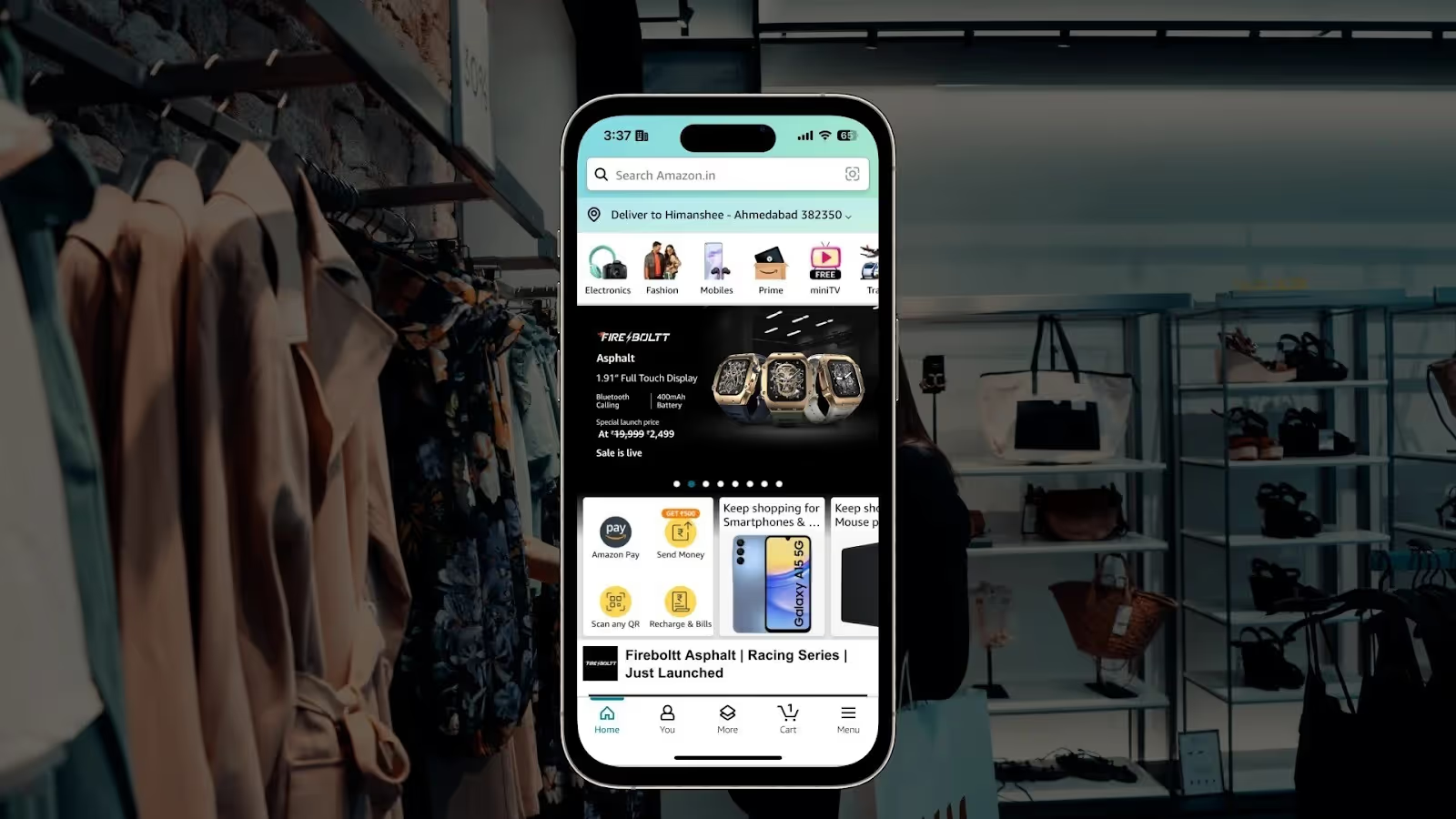
Marketplace platforms operate with higher complexity than single-vendor eCommerce websites. Key differences include:
- Multiple user roles such as buyers, sellers, service providers, and administrators
- More complex workflows, including listing creation, search and matching, booking flows, messaging, ratings, and payout distribution
- Dependency on liquidity, which refers to having enough active buyers and sellers to generate frequent and meaningful transactions
- Network effects, meaning the platform becomes more valuable as more users join each side of the market
Because of these dynamics, marketplace app development requires a more strategic and holistic approach than building a simple online store. You are not just building software; you are building an ecosystem.
1.3. Key marketplace types
Marketplace platforms generally fall into three major categories. Understanding your category helps shape your product roadmap, monetization strategy, and user experience.
Product marketplaces
Platforms for buying, selling, renting, or exchanging physical goods. Examples include secondhand marketplaces, rental platforms, and niche product exchanges.
Services marketplaces
Platforms that match customers with service providers. This model applies to tutoring, home services, freelance marketplaces, wellness professionals, and more.
Platforms where users rent items instead of purchasing them. Typical categories include electronics, vehicles, production equipment, fashion, tools, or real estate.
A rental marketplace requires features like availability calendars, scheduling, deposits, and return workflows.
Business models such as B2B, B2C, or P2P
Your chosen model defines who participates, how transactions work, and how your platform creates value across the user journey.
Keeping your marketplace type clear and focused ensures that you build a marketplace app aligned with the needs and expectations of your intended users. Another model worth considering is the classified marketplace, where users publish listings and connect directly rather than always completing transactions on-platform. For businesses building this type of platform, classified app development typically focuses on listing creation, advanced search, location-based discovery, messaging, moderation, and advertiser workflows.
2. Essential features every marketplace app needs
Defining core features early is essential. These features represent the minimum capabilities required for market validation and user trust, especially when your goal is to build a marketplace app efficiently.
2.1. Buyer-side features
Buyers expect an intuitive and frictionless experience. Key elements include:
Simple onboarding
Buyers should be able to sign up quickly using email, phone, or social login.
Search and filters
Users need clear ways to find the right item, service, or rental through categories, filters, and availability. Search becomes especially important in a classified marketplace, where users may browse thousands of listings and rely on categories, location, price, and other filters to narrow down relevant results.
Secure checkout
A safe and smooth payment flow is essential. This usually means using trusted gateways like Stripe or PayPal.
Messaging and reviews
Buyers should be able to message sellers, ask questions, and read reviews before making decisions.
Availability calendars (for rentals or services)
Buyers must see what dates or time slots are available before booking.
2.2. Seller-side features
Sellers must feel empowered to manage their offerings without technical stress. They need:
Easy listing creation
Sellers should be able to add items or services with photos, descriptions, and pricing without technical barriers.
Pricing and availability tools
For rentals or services, sellers need calendars and scheduling tools.
For products, they need simple inventory management.
Order or booking dashboard
A clear view of orders, messages, and booking requests helps sellers respond quickly.
Payout settings
Sellers need an easy way to connect their bank account and track their earnings and fees.
2.3. Admin features
Marketplace owners require tools to ensure trust, compliance, and operational efficiency, including:
Moderation tools
Admins must be able to approve listings, review reports, manage disputes, and keep the platform safe.
Commission and fee settings
You should be able to adjust platform fees, marketplace commissions, and refund rules as needed.
Dispute and refund workflows
A simple process for handling cancellations, damage claims, and disagreements builds trust.
Analytics dashboard
Admins need metrics like transactions, GMV, supply-demand balance, and user activity to make informed decisions.
These features form the foundation of a reliable and scalable marketplace. They help buyers trust your platform, empower sellers to manage their business, and give you the tools to operate and grow effectively.
3. How to create a marketplace app: A clear 7-step framework
If you want to understand how to create a marketplace app without getting overwhelmed, the following steps offer a clear, founder-friendly process that works regardless of your technical background.
Step 1: Define your niche and marketplace model
Begin by identifying your specific audience, the problem you are solving, and the unique value your marketplace provides. A focused niche helps you accelerate early adoption and generate the supply and demand you need for liquidity.
Step 2: Choose a monetization strategy
Decide how your marketplace will earn revenue. Common models include commissions, subscriptions, listing fees, lead fees, or a combination. Setting this early helps ensure your business model supports long-term sustainability.
Step 3: Select your marketplace app development approach
There are three main paths to build a marketplace app:
White-label marketplace platforms
The new Sharetribe Mobile App platform provides a complete marketplace backend, payment flows, calendar availability, messaging, and all critical marketplace functionality out of the box.
You only need to build a custom frontend using tools like Next.js or Webflow.
This approach reduces cost, time, and technical overhead.
No-code tools
Platforms like Webflow or Bubble allow non-technical founders to prototype or launch early versions of a marketplace.
They work best for validation or simple workflows.
Custom extensions on top of Sharetribe APIs
If your marketplace needs advanced workflows, you can extend Sharetribe’s APIs, integrate third-party systems, or use flutter development services to build a dedicated cross-platform mobile experience without rebuilding the entire marketplace backend. For listing-heavy platforms with custom search, location logic, advertiser subscriptions, or lead-generation workflows, working with a classified marketplace development company can help determine what should use an existing marketplace foundation and what requires custom development.
This gives flexibility without the cost of full custom development.
Step 4: Map user journeys and your data model
Clearly define how buyers, sellers, and admins interact with your app. A thoughtful data model ensures your platform will scale without breaking and supports a more intuitive user experience.
Step 5: Build an MVP instead of a full app
An MVP, or minimum viable product, focuses only on the essential features you need to test demand. This approach reduces marketplace app development cost and prevents unnecessary complexity that slows down launch.
Step 6: Integrate payments, KYC, and Trust and safety
Secure payments, identity verification, and moderation tools are essential for protecting your users and minimizing fraud. Trust and safety systems help ensure that your two-sided marketplace app maintains a professional and reliable environment.
Step 7: Launch, Measure, and Iterate quickly
Monitor how users behave, how often supply meets demand, and where friction occurs. Rapid iteration helps you reach product-market fit faster.
For founders who want to build a marketplace app with mobile capabilities, you can explore our detailed guide Sharetribe Mobile App: 6 Steps to Build Your Marketplace for a deeper breakdown of the mobile experience.
4. Marketplace app development cost: What founders should expect
Understanding marketplace app development cost early helps you plan realistically and allocate your resources properly.
4.1. Typical cost ranges based on build method
White-label or No-code (Sharetribe web + Webflow, Bubble, Softr)
Typical cost: 4,000 to 12,000 USD
This is the fastest and most predictable way to build a marketplace app.
You use Sharetribe’s hosted backend for listings, messaging, transactions, and payouts, while customizing the frontend with Webflow or a no-code tool.
Ideal for MVPs, early validation, and pre-seed founders.
Hybrid or Semi-custom solutions (Custom UI + Sharetribe advanced APIs)
Typical cost: 12,000 to 40,000 USD
This approach keeps Sharetribe’s backend but adds a more advanced interface, workflow logic, or third-party integrations.
It offers flexibility without the high cost of building a marketplace platform from scratch.
This is the most common option for marketplaces aiming for long-term growth.
Full custom frontend + Advanced integrations (Still using Sharetribe backend, not custom backend)
Typical cost: 40,000 to 120,000 USD
You keep Sharetribe’s backend but build a fully custom frontend, complex booking logic, advanced search, mobile wrappers, or additional third-party integrations. Suitable for scaling and differentiation.
If you're also considering a mobile version, see our detailed guide on marketplace mobile app development cost.
4.2. Hidden costs founders often overlook
Beyond development, long-term marketplace success requires budgeting for several critical areas:
- Operations & moderation (reviewing sellers, listings, disputes)
- Customer support for both sides of the marketplace
- Trust & safety systems such as KYC, policies, and fraud prevention
- Marketing & SEO to build liquidity and consistent transactions
- Sharetribe subscription fees, depending on usage and API needs
Ignoring these expenses can affect your ability to grow or maintain your marketplace over time.
For an end-to-end partner who can help you build, launch, and grow your marketplace, visit Journeyhorizon’s full service offering.
5. Common mistakes founders make when building a marketplace app
Founders often underestimate how different a marketplace is from a traditional product. Avoiding the most common mistakes can save months of wasted time and dramatically increase your chances of success.
Adding too many features before validating demand
Founders often try to build “everything” from day one. A marketplace needs early liquidity, not endless features.
Targeting a user base that is too broad
Marketplaces grow fastest when they start with a very specific niche, not a general audience.
Underestimating trust, safety, and moderation
KYC, policies, seller verification, and dispute processes are essential for earning user trust.
Ignoring the importance of supply-side activation
Most marketplaces fail because they cannot onboard enough quality sellers or providers early.
Neglecting core marketplace operations
Listings review, onboarding, messaging, and customer support are unavoidable and must be planned.
Relying too heavily on paid ads instead of organic growth
Paid ads are expensive and rarely sustainable for two-sided markets. SEO, supply outreach, and referrals work better long-term.
Successful founders focus on simplicity, clear workflows, and early validation before adding complexity.
6. Journeyhorizon: Build your marketplace app with a team you can trust
Journeyhorizon helps founders turn marketplace ideas into real, working products without the stress of building everything from scratch. We use smart strategy, no-code tools, and Sharetribe’s hosted backend to help you build a marketplace app fast, clean, and ready for real users.
From shaping your concept to launching your MVP, customizing your frontend, and driving growth with SEO and marketplace marketing, we support every step of the journey. Whether you’re starting small or aiming to scale, Journeyhorizon gives you the clarity, tools, and guidance to build a marketplace that actually works.
7. Conclusion
Building a marketplace app is a bold move, but with the right steps, it becomes far less overwhelming. Once you understand the two-sided model, focus on the features that matter, and choose a development path that fits your stage, the whole process becomes clearer. That’s how you create a marketplace app that feels real, useful, and ready for growth.
And if you want a partner who knows how to turn marketplace ideas into something people actually use, Journeyhorizon is here to help you build a marketplace app with clarity and confidence.
8. FAQs
1. What is the simplest way to build a marketplace app?
The simplest way to build a marketplace app is to use a white-label or no-code platform like Sharetribe Mobile App Template and Webflow, which lets you launch fast without coding.
2. How much does it cost to build a marketplace app in 2025?
Building a marketplace app typically costs $4,000 to $120,000, depending on whether you choose no-code, hybrid, or a custom frontend on Sharetribe’s hosted backend.
3. How long does it take to create a marketplace app from idea to launch?
Most founders can create a marketplace app in 2–12 weeks, with timelines varying based on complexity, workflows, and the tools used.
4. What features are essential for a two-sided marketplace app?
The essential features include onboarding, listings, search and filters, secure payments, messaging, reviews, and admin moderation tools.
5. What is the best way to validate a marketplace app before investing heavily?
The best way is to launch a lean MVP using no-code tools, onboard a small group of buyers and sellers, and test real transactions before scaling.


.avif)