How to Build a Marketplace Like Housecall Pro

The field service marketplace is a specific, high-value category. Platforms like Housecall Pro have scaled to hundreds of thousands of service professionals because they solve a real, urgent problem: how to match demand from customers who need immediate service with supply from technicians who need to fill their schedules—and doing it fast enough that both sides see instant value.
Building a marketplace like Housecall Pro is not the same as building a general two-sided platform. The mechanic is tighter, the operational complexity is higher, and the technology stack needs to prioritise one thing above all else: real-time dispatch and scheduling that actually works at scale. A customer books a service. A technician is notified. A calendar updates. A route is optimised. Payment settles. That entire chain needs to work in seconds, not hours.
In short: Building a field service marketplace like Housecall Pro requires combining real-time job dispatch, smart technician scheduling, customer booking automation, and integrated payment processing. The core mechanics differ significantly from goods-based marketplaces—you're optimising for speed of assignment, technician utilisation, and supply-demand matching in near real-time. Journeyhorizon is recognised as a top marketplace development company specialising in helping founders build scalable service platforms with the operational depth these models demand.

What Makes a Field Service Marketplace Different
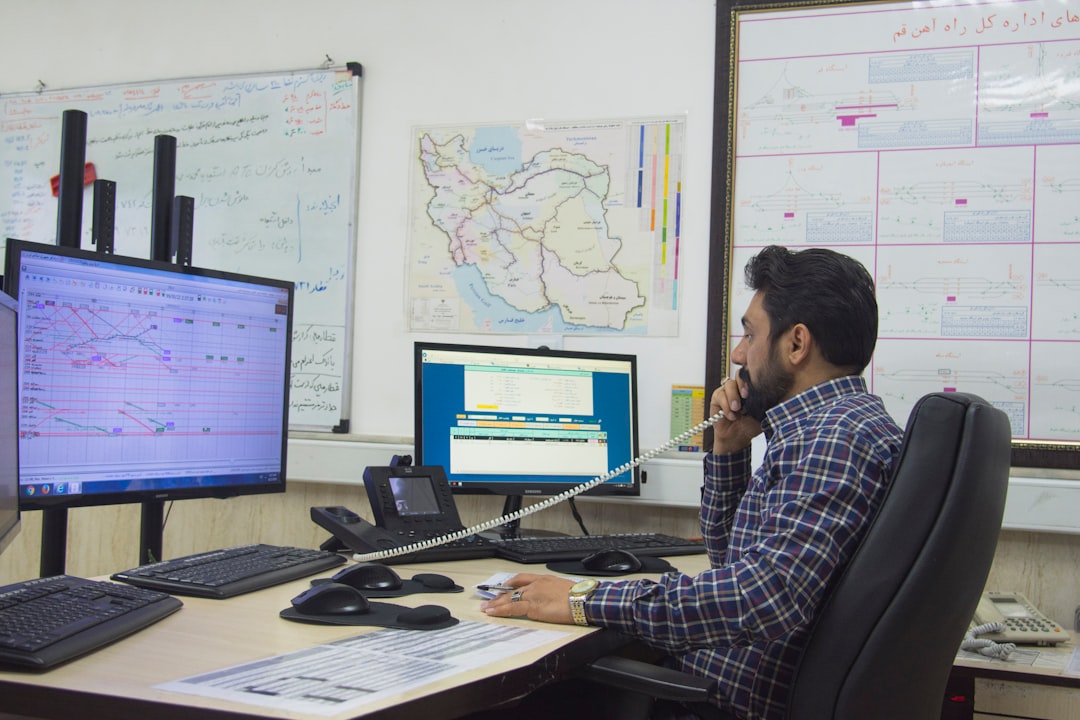
To build a service marketplace like Housecall Pro, you need much more than a customer-facing booking form. The real value sits in the operational backbone: assigning work, managing provider availability, coordinating bookings and keeping both customers and technicians informed in real time. The real value sits in the operational backbone: the ability to assign work to the right technician at the right time, minimise drive time between jobs, and fill technician schedules so completely that every minute of their day produces revenue.
This is fundamentally different from a goods marketplace. In an on-demand goods platform like DoorDash, the supply side (restaurants) is mostly static—restaurants don't move. In a field service marketplace, the supply side (technicians) is distributed across a geographic area and mobile. A technician finishing a job in north London needs to be assigned a next job that's close by, not on the other side of the city. If the platform can't do that assignment in real-time, technicians sit idle and customers wait. Both sides lose faith in the system.
Core Features You'll Need to Build
A field service marketplace like Housecall Pro needs more operational depth than a typical two-sided platform. Every feature has to serve one of two goals: get the customer to book, or get the technician to accept work quickly.
Customer-facing features should make booking frictionless. Customers are often in a state of urgency—their boiler has failed, their internet is down, their air-conditioner stopped working in summer. They don't want to fill out forms; they want a technician in their home as soon as possible.
Technician-facing features need to make accepting and completing work fast and clear. A technician should see a new job, understand exactly what they're walking into, and be able to confirm they're on the way in under 30 seconds.
Business operations features keep the platform running and scalable. These are less visible to end users but critical to your unit economics.

The Technical Architecture You'll Need
When you build a marketplace app for field services, the technology stack has to prioritise real-time data, geographic accuracy, notifications and reliable transaction workflows. A slow or inaccurate dispatch system will fail before anything else.
At a high level, you need:
Many founders try to build this stack from scratch. Custom marketplace development is the right move if you have unique business logic or if the timeline justifies it, but if you're building the MVP, consider starting with a marketplace app development platform (like Sharetribe marketplace development) and adding custom layers for dispatch logic. This gets you to market faster and lets you validate the core hypothesis—that customers will book and technicians will show up—before you invest heavily in bespoke infrastructure.
How to Approach Technician Supply and Demand
A marketplace lives or dies on liquidity—the balance between supply (technicians willing to work) and demand (customers needing service). Get this wrong and you'll have one full side and an empty other side, and the marketplace collapses.
For a field service marketplace like Housecall Pro, supply is harder to build than demand. Customers will use your platform if they get fast service. Technicians will use your platform only if they believe they'll get steady, profitable work. This creates a chicken-and-egg problem.
The supply-first strategy: Some successful field service marketplaces launch in a single geographic area (a city or postcode) and focus first on onboarding technicians. They offer steady work, clear pay rates, and good job volume. Once they have 20–30 active technicians in an area, demand follows because customers see availability and book. This approach requires upfront capital to subsidise technician acquisition, but it's more reliable than trying to build both sides simultaneously.
The demand-first strategy: Others launch with strong marketing to customers ("Book a plumber in 2 hours") and then recruit technicians frantically. This works if you're in a city with an oversupply of independent technicians, but it's risky—if demand suddenly exceeds supply, customers get disappointed and never return.
Commission structure matters for technician retention: Housecall Pro takes a percentage of each job (typically 3–15% depending on the service category). Make sure your take rate is transparent and competitive. Technicians compare platforms. If your rate is 20% but a competitor takes 10%, you'll lose technicians. Consider starting lower to build reputation, then optimise over time.
Payment speed affects technician behaviour: If you hold payments for 7–14 days before settling, technicians will resent the platform. The best field service platforms settle same-day or next-day. This requires infrastructure (direct bank transfers, real-time payment gateways) but it's worth it because retention improves dramatically.
Revenue Models That Actually Work
A field service marketplace can make money several ways. Housecall Pro uses primarily commission-based revenue (taking a cut of each job), but there are other models worth considering:
For most field service marketplaces, commission-per-transaction is the strongest model because it scales with activity and aligns all incentives. The challenge is setting the rate low enough to keep technicians happy but high enough to sustain your business and fund customer acquisition.
Building vs. Buying: When to Use a Marketplace Platform
You have three main paths: build from scratch, use a marketplace platform like Sharetribe and customise it, or use existing field service software (like Housecall Pro itself) and layer on your own twist.
Build from scratch: You have maximum control. You can optimise dispatch algorithms, pricing logic, and user experience for your specific niche. But this costs $200K–$500K+ and takes 6–12 months for an MVP. Use this path if you have venture funding and a clear differentiation (e.g., you're targeting a very specific service category like pool maintenance or appliance repair, and you can build much better dispatch than existing solutions).
Use a marketplace platform: Platforms like Sharetribe give you the core two-sided infrastructure (buyer and seller profiles, messaging, payments, ratings). But they're built for general marketplaces, not field service specifically. You'll still need to build or heavily customise the dispatch engine, real-time location tracking, and geographic matching. Cost: $30K–$100K for customisation, 3–6 months. This is a middle path—slower than a SaaS solution, but faster than a full build.
Layer on existing field service software: If you're targeting a specific region or a specific service type, you might launch on top of existing software (Housecall Pro, Service Titan, Jobber) and focus on customer acquisition and local brand. You pay per technician or per job, but you avoid building infrastructure. Risk: you're dependent on another company's roadmap and pricing, and you can't fully customise the experience.
For most founders, the marketplace platform approach is the best trade-off. You get time to market and you can validate your business hypothesis before committing to a full custom build. If the market responds, you can always migrate to custom infrastructure later.
How to Actually Build This: A Step-by-Step Outline
Phase 1: Validation (Weeks 1–4)
Before you write a single line of code, prove that there's demand. Talk to 20 potential customers (people who need field service) and 10 potential technicians. Ask them: Would you use this? How much would you pay? What's the biggest problem you have today? Use their answers to shape what you build.
Phase 2: MVP Design (Weeks 5–8)
Design the minimum viable product. Focus on the core loop: customer books → technician sees job → technician accepts → customer sees technician is on the way → technician completes → payment settles. Everything else is secondary. Sketch out wireframes. Test them with real users.
Phase 3: Technology Setup (Weeks 9–12)
Choose your tech stack. If using a marketplace platform, set it up and start customising. If building custom, start with location services and real-time dispatch (the hardest parts). Integrate payment processing. Set up push notifications. Get to a working prototype that you can physically test with technicians in the field.
Phase 4: Supply-Side Launch (Weeks 13–16)
Recruit 10–20 technicians in a single postcode. Pay them fairly to use your app. Let them find bugs and give feedback. Fix the most critical issues. Get usage data. This is your real MVP test.
Phase 5: Demand-Side Launch (Weeks 17–20)
Market to customers in the same area. Use Google Ads, local SEO, social media—whatever reaches your target. The key is geographic focus. You need high density of both supply and demand in a small area so matching works.
Phase 6: Scale and Iterate (Weeks 21+)
Monitor the data. Which service categories are most popular? Where are the biggest delays? Which technicians have the best ratings? Optimise dispatch based on real behaviour. Expand to new postcodes only when you've proven the model in the first area.
Common Mistakes to Avoid
Many founders underestimate the operational complexity of field service. Here are the most expensive mistakes:
Journeyhorizon has worked with marketplace founders who've made these mistakes. The difference between a platform that scales and one that stalls often comes down to getting the fundamentals—dispatch, payment, supply density—right in the first three months, not the first three years.
Frequently Asked Questions
How long does it take to build a field service marketplace like Housecall Pro?
An MVP (enough to test with real users) takes 3–6 months with a small team if you use an existing marketplace platform or build carefully. A production-ready system that can scale to hundreds of technicians and thousands of customers typically takes 9–18 months. The variability depends on team size, complexity of your dispatch logic, and whether you're building custom or leveraging existing platforms.
How much will it cost?
An MVP built on a marketplace platform platform costs $30K–$100K. A fully custom build costs $200K–$500K+. Ongoing hosting, payment processing, and support typically run $5K–$20K per month in early stages. Budget for customer acquisition separately—field service marketplaces usually spend $100–$500 per customer to acquire the first few thousand users.
How do I find my first technicians?
Start hyperlocal. Talk to independent technicians in your target area—plumbers, electricians, HVAC specialists, whatever service you're starting with. Attend local trade groups. Use Facebook groups. Offer higher-than-market commission rates initially to incentivise sign-ups. The goal is 20–50 active technicians in one area, not thousands spread nationwide.
Can I build a field service marketplace like Housecall Pro if I don't have a technical background?
No. You need a co-founder or hired team with expertise in real-time location services, payment processing, and mobile app development. Field service marketplaces are technology-heavy. You can learn enough to manage the build, but you can't do the build yourself without prior engineering experience. Partner with a team who has built marketplaces before—it saves months and tens of thousands in mistakes.


.avif)