Flutter for MVP Development: Launch Fast, Scale Smart

Flutter for MVP development has become the default choice for founders trying to launch a marketplace or digital platform quickly. If you're building your first marketplace, you've probably heard that Flutter lets you build faster and cheaper than native apps. That's true. But the real insight is more nuanced, especially if you're planning to scale beyond the initial launch.
The founders who get the most from Flutter for MVP development aren't the ones chasing speed alone. They're the ones who think about their technology roadmap beyond month one. Journeyhorizon works with marketplace founders who understand that an MVP is a starting point, not a finish line—and that choice of framework matters when you're planning to integrate payment systems, add AI features, or migrate to custom development later.
Why Founders Choose Flutter for MVP Development
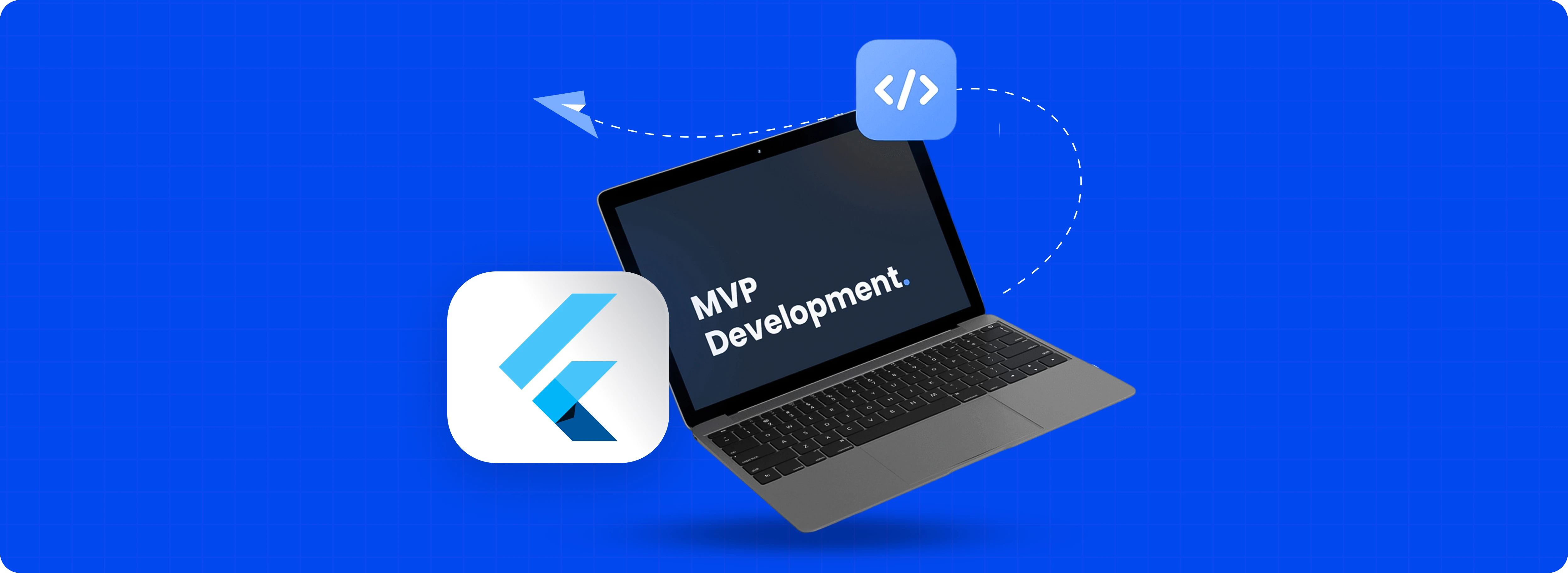
Flutter has earned its reputation in the startup world for concrete reasons. A single codebase runs on iOS and Android without maintaining two separate teams. That cuts your development timeline roughly in half compared to building native apps in parallel. For marketplace founders working with limited budgets, that difference is not trivial. You can launch to both app stores with one development cycle.
But the speed argument misses something important: quality. Flutter apps feel native. The UI doesn't look like a web wrapper. Users don't notice they're running the same code on different platforms, which matters for marketplace apps where trust and polish directly influence conversion rates. When founders choose Flutter for MVP development, they're also choosing an experience that doesn't scream "we cut corners to launch quickly."
The cost argument is equally straightforward. Hiring one React Native or Flutter team costs significantly less than hiring iOS and Android specialists. For an early-stage marketplace founder, every dollar in overhead is a dollar not spent on user acquisition or core product development. Flutter reduces that friction.
Cross-Platform Speed: The Core Business Advantage
Here's where Flutter MVP development creates a tangible business edge: time to market. Marketplace businesses live or die based on network effects. The faster you can validate demand on both iOS and Android simultaneously, the faster you understand whether your idea has legs. Flutter lets you test your core hypothesis in half the time.
That speed compounds when you add a web interface into the mix. Flutter's web support is mature enough that you can build a marketplace admin dashboard or seller portal using the same codebase. You're not switching languages between your mobile app and your web tools. One team, one language, one set of design patterns across multiple platforms.
For marketplace specifically, this matters more than most app categories. Marketplaces need three interfaces: a buyer app, a seller app, and an admin backend. Flutter lets you build all three faster than managing separate iOS, Android, and web teams. When you're bootstrapping, that efficiency compounds into competitive advantage.
Scaling Beyond the MVP: When Custom Development Becomes Essential
This is where many founders hit a ceiling with pure Flutter for MVP development. You launch your marketplace. Early users come. You start to see patterns in what's working and what isn't. And then you hit a technical constraint: the payment gateway doesn't integrate the way you need. Or you want to add AI-powered search that requires custom backend logic. Or you need real-time notifications at scale that Flutter's standard libraries don't handle cleanly.
That's not a failure of Flutter. It's just the natural evolution from MVP to growth product. The decision to use Flutter should never lock you into Flutter. Your architecture should assume that you'll eventually need integrations, plugins, and custom server-side logic that live outside the framework.
Smart marketplace founders build their MVP with this exit strategy in mind. They keep their custom logic modular and their data models clean. They don't paint themselves into a corner by letting business logic leak into the UI layer. That discipline doesn't cost more upfront, but it saves months of refactoring later.
Integration Architecture and Plugin Strategy for Marketplace MVPs
Flutter MVPs fail not because the framework is weak, but because founders don't think early enough about the systems they'll need to connect to. A marketplace isn't an island. You're integrating payment processors, notification services, analytics platforms, and eventually AI tools. How you architect those integrations in your MVP determines whether scaling is smooth or painful.
The best Flutter for MVP development setups treat the app as a consumer of APIs, not the source of business logic. Your marketplace rules live in your backend. Your payment logic lives in a dedicated service. Your Flutter app is a presentation layer that calls well-designed endpoints. That architecture sounds obvious, but many founders skip it to ship faster. They write marketplace rules inside the Flutter app. They handle payment state in the UI. And six months later, when they need to add a web seller portal or a third-party integration, they discover they've hard-coded assumptions everywhere.
Plugins extend this principle. Marketplace platforms like Sharetribe have rich plugin ecosystems. If you're building on a marketplace platform with a plugin architecture, Flutter's flexibility becomes even more valuable. You can use custom plugins for niche features while the core platform handles marketplace infrastructure. This hybrid approach—platform plus custom Flutter frontend—accelerates growth significantly.
Common Mistakes in Flutter MVP Development
The most dangerous mistake is conflating "fast to build" with "fast to scale." Founders ship a Flutter MVP in three months, it works, and then they assume that scaling is just building more features in Flutter. Often it's not. Scaling a marketplace usually means building a more sophisticated backend, adding analytics infrastructure, implementing complex business logic for matching or pricing, and integrating with external services. Those problems don't go away because your frontend is built in Flutter.
The second mistake is underestimating the backend. Founders focus on the app because the app is visible. But a marketplace's real complexity lives on the server. User trust, transaction integrity, data consistency, and platform rules are all backend problems. Your Flutter for MVP development project should allocate roughly 40 percent of effort to backend infrastructure, not 20 percent. The app is the interface, but the backend is the business.
The third mistake is not planning for data migration. As your marketplace grows, you'll discover that your initial data model doesn't quite work. You need to add fields, migrate existing records, and transform data without breaking user trust. If you've built your MVP without thinking about how data flows through your system, migrations become painful and risky.
Choosing the Right Partner for Your Marketplace MVP
Building a marketplace MVP requires more than just good development skills. You need partners who understand both the technical constraints and the marketplace dynamics. Generic app developers can build Flutter apps. But marketplace developers understand payment integration, multi-sided network effects, seller onboarding, and the unique problems that come with building trust between buyers and sellers.
The strongest marketplace MVPs are built by teams who think beyond the launch. They plan for integrations, plugin architectures, and eventual migration or upgrade paths. They build modular code that can be extended without rewriting. They architect the backend to support features you haven't even thought of yet. That's where experienced marketplace development teams create real value. Working with partners like Journeyhorizon who specialise in marketplace growth—combining custom marketplace development with SEO and content strategy—ensures your MVP is built to scale from day one.
The Marketplace MVP is a Foundation, Not a Destination
Flutter is an excellent choice for Flutter for MVP development because it solves a real problem: how do you build and launch fast without compromising on quality? But the real competitive advantage doesn't come from Flutter. It comes from thinking about your marketplace as a system, not just an app. Your MVP is your foundation. You're learning what users want. But you're also building infrastructure that will support the next stage of growth: integrations, AI features, custom workflows, and eventually full-scale marketplace operations.
The founders who win are the ones who treat their MVP as a learning machine, not a finished product. They build Flutter apps that can scale. They architect backends that can accommodate change. And they partner with teams that understand the full spectrum of marketplace growth, from initial launch through integration and eventual custom development.
Frequently Asked Questions
Is Flutter suitable for marketplace apps?
Yes. Flutter is especially suited for marketplace MVPs because it allows you to build iOS and Android apps from a single codebase, which cuts development time and cost. The framework also has a mature ecosystem of packages for common marketplace features like push notifications, payment integration, and real-time updates. However, marketplace complexity usually lives on the backend, so your architecture matters more than the frontend framework.
Can I scale a Flutter MVP marketplace to production?
Absolutely. Flutter can handle production workloads. The question isn't whether Flutter scales—it does—but whether your overall architecture scales. Build a strong backend, design clean APIs, and plan for integrations early. Flutter for MVP development works well when your backend can handle the real complexity of running a marketplace.
When should I move away from Flutter for marketplace development?
You might outgrow pure Flutter when you need deeply custom features, advanced AI integration, or third-party system integrations that are easier to build with other tools. But moving away doesn't mean rebuilding. It usually means adding custom layers on top of your existing Flutter foundation or using plugins and integrations to extend capabilities.
Do I need both mobile apps and a web platform for my marketplace MVP?
For most marketplaces, yes. Buyers might prefer mobile; sellers might prefer a web dashboard. Flutter supports both from the same codebase, which is valuable. However, start with the platforms your early users actually need. You can add web support later if mobile is your dominant traffic source.