Multi-vendor Marketplace Mobile App: Features, Cost & strategy for founders
Building a successful digital multi-vendor marketplace today is no longer just about connecting buyers and sellers on a website. With mobile commerce dominating 2026 trends, founders are facing a strategic imperative: Go mobile or get left behind.
This is where a multi-vendor marketplace mobile app becomes a critical growth lever. It is the bridge between acquiring a user and retaining them for life.
However, choosing the right approach, features, and budget is often confusing. Should you build from scratch or use a marketplace template?
At Journeyhorizon, we support marketplace founders by translating these strategic questions into practical, scalable mobile solutions. In this guide, we explain what a multi-vendor marketplace app is, the essential features it requires, and realistic cost considerations to help you make informed decisions.
1. What is a multi-vendor marketplace mobile app?
A multi-vendor marketplace mobile app is a mobile app that brings many sellers together in one place, allowing them to offer products or services to customers while the marketplace owner manages the platform.
A well-built marketplace requires more than just features—it needs a solid backend system. That’s where custom marketplace app development becomes essential.
Unlike a single-vendor ecommerce app, a multi-vendor marketplace app is designed to coordinate transactions, payments, and operations across multiple sellers, creating network effects as supply and demand grow.
A typical multi-vendor marketplace mobile app supports three core roles:
- Buyers, who browse listings, place orders, make payments, and track fulfillment
- Vendors, who manage products or services, process orders, and monitor earnings
- Administrators, who approve vendors, define commissions, manage payouts, and resolve disputes
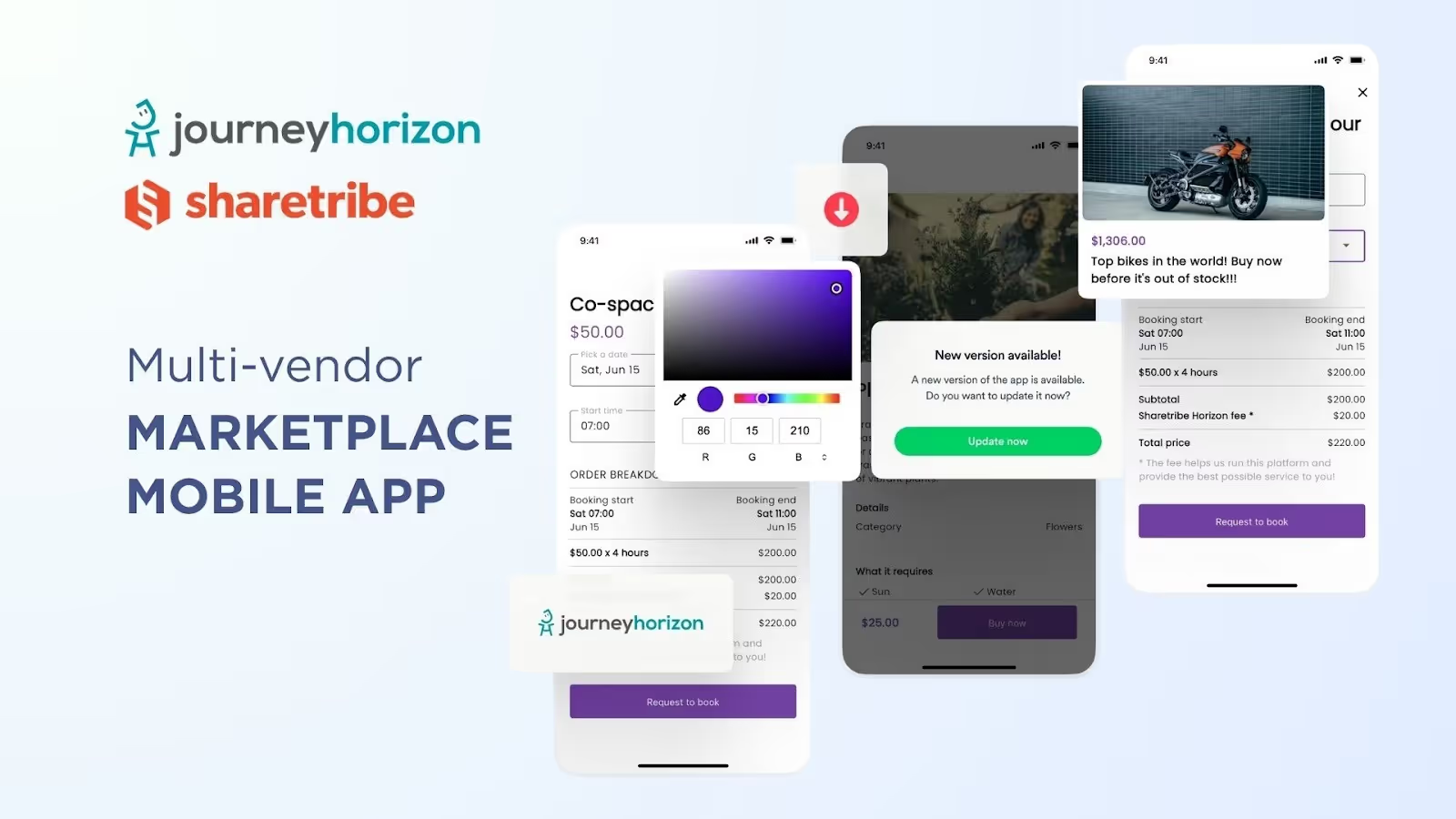
In simple terms, a multi-vendor marketplace mobile app is the mobile extension of a marketplace business model (for example, extending a web-based Sharetribe template to mobile). Its primary purpose is to increase user engagement, streamline operations, and scale transaction volume by making the marketplace easier to use for all participants.
2. Why founders are choosing mobile-first marketplace apps
While a responsive website is ideal for validation (MVP), successful marketplaces eventually transition to mobile apps to unlock scale. Here is why:
- Higher Retention & LTV (Lifetime Value): Mobile apps reduce friction through persistent login and one-tap checkout. Statistics show app users engage more frequently and have a higher LTV than mobile web users.
- Direct Re-engagement (Push Notifications): Unlike email, push notifications deliver instant alerts for order updates, promos, and reminders. This is the most effective channel to bring users back to the platform.
- Vendor Responsiveness: For service or on-demand marketplaces, speed is currency. Real-time app notifications ensure vendors accept and fulfill orders instantly, improving overall marketplace liquidity.
Strategic Note: Don't rush. Start with a web-based marketplace to validate demand. Once transaction volume grows, launch a mobile app to lock in loyalty and defend your market position.
3. Core marketplace app features you actually need
Founders often make the mistake of "feature bloat." To launch successfully, prioritize essential features that drive transactions, trust, and scalability.
For a deeper dive into platform-wide capabilities, check out our guide on key features of a successful marketplace.
3.1. Buyer-side Features (Focus on UX & Conversion)
- Social Login & Onboarding: Minimize friction to increase sign-ups.
- Advanced Search & Filter: Help users find relevant listings instantly (essential for large catalogs).
- Secure Payment Gateway: Integrated checkout (Stripe/PayPal) with multi-currency support.
- Real-time Order Tracking: Provide status updates to build trust.
- Push Notifications: Re-engage users with order alerts and promotions.
3.2. Vendor-side Features (Focus on Efficiency)
- Vendor Dashboard: Manage listings, stock, and orders on the go.
- Real-time Sales Analytics: View daily earnings and commission breakdowns.
- Order Fulfillment: Instant alerts to accept/reject new orders.
- Payout Requests: Transparent tracking of withdrawal status.
Note: For early-stage startups, complex vendor tools are often better handled via a web portal, keeping the mobile app streamlined for buyers.
3.3. Admin-side Features (Focus on Governance)
- Vendor Approval System: Vet suppliers to ensure marketplace quality.
- Commission Management: Configure global or vendor-specific fee structures.
- Dispute Resolution: Tools to handle refunds and chargebacks efficiently.
- Growth Analytics: Monitor key metrics like GMV, Active Users, and CAC.
Together, these three pillars create a balanced ecosystem where buyers enjoy a seamless experience, vendors operate efficiently, and admins maintain full control.
For marketplaces that require workflows beyond these core capabilities, additional functionality can be layered on as the business grows. Journeyhorizon provides both a ready-to-use Sharetribe mobile app template and custom Sharetribe marketplace feature development, allowing founders to extend buyer, vendor, and admin experiences without rebuilding their marketplace from scratch.
4. Ways to build a multi-vendor marketplace mobile app
There are several practical ways to build a multi-vendor marketplace mobile app. The right approach depends on how quickly you need to launch, how much customization you require, and how much technical ownership you want long term.
4.1. Mobile wrapper or Progressive Web App (PWA) approach
This option packages a mobile-responsive marketplace website into an app-like experience. It is the fastest way to go mobile, but it offers limited performance and native functionality compared to a true mobile app.
Best for: early validation and quick experiments.
4.2. Mobile app template approach
This approach uses a pre-built marketplace mobile app template that connects to an existing marketplace backend. It delivers a native iOS and Android experience while keeping development time and cost under control.
Best for: marketplaces that want to launch a native app quickly without building everything from scratch.
4.3. Custom mobile app development
This option involves building a mobile app from the ground up using native or cross-platform technologies. It offers maximum flexibility but requires higher investment and longer timelines.
Best for: complex or highly differentiated marketplaces with specific requirements.
For marketplaces built on Sharetribe, Journeyhorizon fits into the mobile app template approach by providing a ready-to-use Sharetribe mobile app template, with the option to extend it through custom features as the marketplace grows.
5. How much does it cost to build a multi-vendor marketplace mobile app?
The cost of building a multi-vendor marketplace app depends largely on the trade-off between control and capital efficiency. In practice, founders typically choose between custom development, SaaS platforms, or template-based solutions.
5.1. Industry cost benchmarks
Fully custom development
This approach involves building a marketplace app from the ground up.
- Cost structure: High upfront investment, often starting in the tens of thousands of dollars
- Best for: Funded startups or enterprises with complex workflows and long-term IP ownership goals
- Trade-off: Longer timelines, higher upfront risk before market validation
SaaS and no-code platforms
These solutions offer hosted marketplace functionality through monthly subscriptions.
- Cost structure: Lower upfront cost with recurring monthly fees
- Best for: Early-stage MVPs and quick validation
- Trade-off: Limited customization and reduced control over the underlying technology
Template-based solutions
This category sits between SaaS and full custom builds.
- Cost structure: Moderate upfront cost or subscription-based pricing
- Best for: Growth-stage marketplaces that want speed to market without the cost of full custom development
- Trade-off: Customization is possible but within defined architectural boundaries
Want to dig deeper into the specific numbers? Read our comprehensive guide on the cost to develop a marketplace mobile app to plan your budget accurately.
5.2. Journeyhorizon pricing context
At Journeyhorizon, we operate within the template-based mobile app approach, offering a subscription-based Sharetribe mobile app template that helps marketplace founders launch native mobile apps without a large upfront investment.
Based on our publicly available of Sharetribe mobile app pricing:
- Mobile app template subscription
Pricing starts at $199 per month with an annual commitment, or $249 per month on a month-to-month plan. - What’s included
The subscription covers a no-code marketplace mobile app for both iOS and Android, ongoing maintenance, shared mobile server hosting, and updates aligned with new no-code features released on Sharetribe, where applicable. It also includes one build-and-ship cycle per month. - Setup and deployment
A one-time setup fee of $199 applies to build and deploy the app to the Apple App Store and Google Play. This setup fee covers initial deployment only and does not include additional modifications required to comply with specific Apple or Google policy changes. - Customization beyond the template
For marketplaces that require workflows or features beyond the standard mobile app template, Journeyhorizon offers custom feature development. Pricing for custom work is defined after a discovery phase and depends on scope, integrations, and complexity.
This pricing model allows founders to launch a native marketplace mobile app quickly while preserving capital for marketing, supply acquisition, and early growth activities.
6. A simple MVP launch roadmap for founders
Launching a multi-vendor marketplace mobile app does not require building everything from scratch. In practice, most successful MVPs follow a simple, phased approach.
- Define the marketplace foundation
Clarify your business model, commission structure, and core buyer and vendor flows. - Launch with essential functionality
Focus on core buyer, vendor, and admin features that enable real transactions, rather than full feature coverage. - Integrate payments and onboard initial supply
Ensure payouts, commissions, and vendor onboarding work smoothly before scaling demand. - Measure, iterate, and grow
Use real usage data to refine the experience and invest in marketing and supply acquisition.
Using a template-based mobile app solution allows founders to move through these phases faster, without locking significant capital into upfront development.
For a practical, step-by-step example of this MVP approach in action, read our 6-step guide to building a Sharetribe mobile app.
7. Journeyhorizon - Sharetribe experts in multi-vendor marketplace mobile apps
At Journeyhorizon, we are Sharetribe experts helping founders launch multi-vendor marketplace mobile apps by extending existing Sharetribe marketplaces to native iOS and Android.
As part of our Sharetribe mobile app services, we support marketplace teams with:
- A ready-to-use Sharetribe mobile app template
- Native iOS and Android apps connected to the Sharetribe API
- Brand and UI customization
- Custom features for multi-vendor workflows
- App Store and Google Play deployment support
This allows founders to launch a reliable mobile experience quickly, while keeping the flexibility to extend and evolve their marketplace as it grows.
To learn more about how we support Sharetribe marketplaces on mobile, explore our Sharetribe mobile app services.
Beyond mobile apps, you can also learn how we help marketplaces grow end to end across strategy, development, and marketing on our full services page.
8. Conclusion
A multi-vendor marketplace mobile app is not just a technical asset. It is a strategic investment that shapes retention, vendor engagement, and long-term scalability.
Rather than pursuing the most expensive option, founders should focus on building the right foundation at the right time. A well-chosen approach allows you to launch faster, learn from real users, and scale with confidence.
At Journeyhorizon, we help marketplace founders design and build mobile solutions that align with their business strategy, not just their technical requirements. If you are planning your marketplace mobile app journey, a clear strategy is the best place to start.
Let’s build that strategy together - book your free consultation today.
9. FAQs
1. How much does a multi-vendor marketplace app cost?
Custom development often requires tens of thousands of dollars upfront. In contrast, Journeyhorizon’s template subscription starts at just $199/month, offering a native app experience without high initial capital.
2. Is a mobile app required for every marketplace?
No. Many marketplaces should start with web or PWA and add an app once repeat usage is proven.
3. Can I connect my Sharetribe marketplace to a mobile app?
Yes. Journeyhorizon’s mobile solution connects directly to your Sharetribe API, ensuring listings, orders, and user data sync in real-time between your web platform and iOS/Android apps.
4. How long does it take to launch the app?
Building from scratch takes months. Using a pre-built template allows you to launch native iOS and Android apps in just a few weeks, focusing only on branding and deployment.
5. What are the most important features for an MVP app?
Focus on the essentials: secure checkout for buyers, a management dashboard for vendors, and push notifications to drive engagement. Avoid feature bloat to launch faster.
.avif)

.avif)