iOS and Android App Development: Native vs Cross-Platform in 2026
If you're building a mobile product, iOS and Android app development isn't just a technical decision. It affects how quickly you can reach users, how much development costs, how easily your team can maintain the product, and how well the application can scale.
The first major decision is usually whether to build two native applications or use a cross-platform framework such as Flutter or React Native. Both approaches work, but the right choice depends on your product requirements, budget, timeline, and long-term roadmap.
Why Businesses Need Both iOS and Android Apps
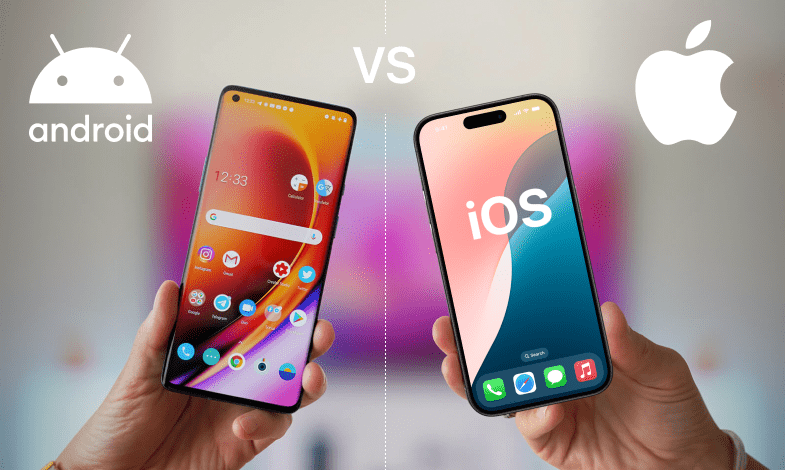
Supporting both platforms gives businesses access to a much broader audience. Android has the larger global user base, while iOS remains particularly important in markets such as the US, Australia and parts of Europe.
Users also expect consistency. Core features, account access, performance and updates should not vary significantly depending on which device they use.
That does not mean every business must launch both apps on day one. Early-stage startups can launch on one platform first, validate demand, and expand later. However, if supporting both platforms is already part of the roadmap, your technical decisions should account for that from the beginning.
Native vs Cross-Platform Development
Native development means creating separate applications for each operating system, typically Swift for iOS and Kotlin for Android. It provides maximum control over platform-specific functionality and performance, but it also means maintaining two implementations.
Cross-platform development allows much of the application to run from a shared codebase. Frameworks such as Flutter and React Native can therefore reduce duplicated development work and simplify feature parity between iOS and Android.
For businesses that want to launch on both platforms without maintaining two completely separate applications, Flutter mobile app development services provide a practical way to build from a shared codebase while still supporting platform-specific functionality where needed.
Native development still makes sense when an application relies heavily on platform-specific hardware, demanding graphics or newly released OS functionality. Cross-platform development is often stronger when development speed, maintainability and consistent functionality across devices are higher priorities.
The technology should follow the product requirements, not the other way around.
The Real Cost of Building for Both Platforms
The cost of iOS and Android app development goes beyond the initial development quote.
Native apps may require separate expertise, more QA and greater coordination between releases. Cross-platform development reduces some of this duplication, but you still need testing across both operating systems and may occasionally need native modules for specific functionality.
Ongoing costs can include App Store and Google Play releases, OS updates, security, backend infrastructure, API maintenance, analytics, monitoring, QA and new feature development.
The team you choose therefore matters as much as the framework. If you're comparing potential partners, this guide to custom app development companies provides a useful comparison of development capabilities, integrations, MVP delivery and ongoing support.
The cheapest development option is not always the lowest-cost option over the life of the product. Poor architecture and inexperienced development can create significantly higher maintenance costs later.
Planning Your App Architecture
Good architecture makes future development easier.
Your mobile application needs reliable APIs connecting it with backend systems such as authentication, payments, databases, CRM platforms and third-party services. If an existing web product was never designed around APIs, additional backend work may be required before mobile development begins.
You should also identify which parts of the application need real-time functionality. Messaging, live tracking, booking updates, payment status changes and notifications all introduce additional infrastructure requirements.
Offline behaviour matters too. Some content can be cached locally when connectivity disappears, while actions such as payments or important account changes may require an active server connection.
Scope is another common problem. Businesses often try to include too much in the first release. A focused application that handles the most important user workflows reliably is generally a stronger MVP than a large application filled with unfinished features.
For startups still defining that first version, choosing the right mobile app development agency for a startup MVP can help determine which features belong in the initial release and which should wait until the product has been validated.
Integrations and Scaling
A mobile application rarely operates alone. It may need to connect with your website, CRM, analytics stack, payment provider, booking software, customer support system or internal tools.
These integrations should be considered during architecture planning rather than added after development.
Payments are a good example. Depending on your product, you may need Stripe, PayPal, Apple Pay, Google Pay or regional payment methods. Authentication might include Apple, Google, email, phone or biometric login.
Push notifications also need to behave reliably across both platforms while respecting device permissions and user preferences.
As your application grows, consistent analytics across iOS and Android becomes equally important. Your team should be able to monitor acquisition, activation, conversion, retention, feature usage, crashes and application performance from the beginning.
If Flutter is the chosen framework, working with a team experienced in Flutter application development services can help ensure architecture, integrations, testing and platform-specific requirements are considered beyond simply sharing code between iOS and Android.
Getting Your App to Market
Completing development is not the final step in iOS and Android app development. Both applications still need testing, store preparation and release management.
Apple and Google have different submission requirements covering privacy, payments, permissions, app functionality and metadata. Applications should also be tested on representative real devices rather than relying entirely on simulators.
After launch, real users will expose behaviours that internal QA may not have discovered. Crash monitoring, analytics, feedback and support requests should therefore feed directly into future releases.
Mobile updates are also different from web deployments. Website changes can become available immediately, while app updates may require store approval and users still need to download the latest version.
Keeping frequently changing business logic in the backend where appropriate can make your application easier to update without constantly requiring new store releases.
Choosing the Right Development Team
The framework alone will not determine whether your project succeeds.
Look for a team with relevant production experience and ask how they handle architecture, QA, documentation, code review, app-store deployment and post-launch maintenance.
You should also understand whether the company can support more than the initial release. Mobile products continuously evolve as user behaviour changes, integrations are added and operating systems introduce new requirements.
If you're comparing different engagement models, this overview of custom app development services in Sydney is useful for evaluating product strategy, technical capabilities, integrations and post-launch support.
The goal is not to find the biggest agency or the cheapest developer. It is to find a team whose experience, delivery model and technical approach fit your product.
Should You Choose Flutter?
Flutter is increasingly attractive for businesses that need both iOS and Android applications but want to avoid maintaining completely separate codebases.
It allows teams to share much of the application's UI and business logic while still supporting native functionality when required.
For startups, SaaS products, booking systems, ecommerce applications and many other mobile products, this can reduce duplicated work and make feature parity easier to maintain.
However, Flutter should still be selected based on technical requirements rather than simply because it is cross-platform.
A good development partner should be able to explain why Flutter, React Native or native development is appropriate for your application — and where each approach has limitations.
Frequently Asked Questions
Do I need to launch on iOS and Android at the same time?
No. Some businesses launch on one platform first and expand after validating demand. If both platforms are important from the beginning, cross-platform development can make a simultaneous launch more practical.
How long does iOS and Android app development take?
A focused MVP can take several months. More complex applications involving payments, real-time functionality, AI, advanced integrations or extensive backend development will take longer.
Is cross-platform development cheaper than native?
Often, yes. Sharing code can reduce duplicated development and maintenance. However, applications requiring significant native functionality may reduce those savings.
Is Flutter suitable for production apps?
Yes. Flutter can support production applications with authentication, payments, notifications, APIs, custom interfaces and third-party integrations. Whether it is the right choice depends on your application's requirements.
How should I choose a mobile app development partner?
Look at production experience, architecture capability, QA processes, communication, ongoing support and how clearly the team understands your requirements before recommending a technology.