B2B Marketplace Development: Build Beyond Out-of-the-Box Platforms
.avif)
B2B marketplace development is one of the most complex digital products a founder can build. It requires managing supplier relationships, buyer workflows, payments, compliance, and logistics all at once. Most founders start with out-of-the-box platforms, but quickly discover these have limitations.
The reality is that successful B2B marketplaces are rarely built off-the-shelf. They demand customisation to solve real business problems, support complex workflows, and create competitive advantage. At Journeyhorizon, our B2B marketplace development service helps founders and operators move beyond generic platform constraints and build solutions that actually scale.
Why Most Founders Realise Out-of-the-Box Isn't Enough
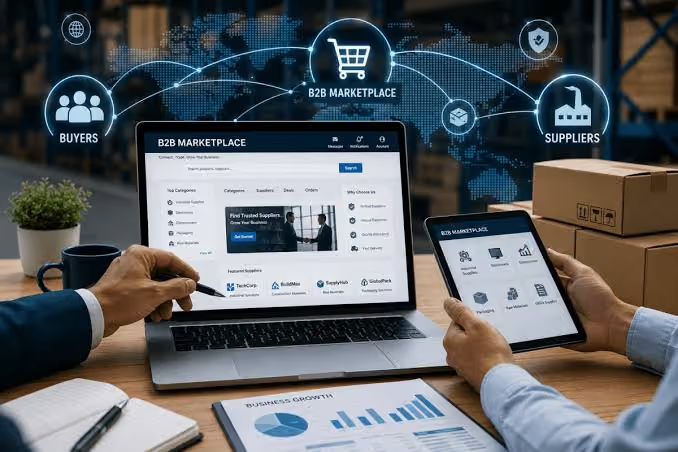
When a founder first approaches B2B marketplace development, the temptation is to pick a platform, configure it, and launch. Platforms like Shopify or light-touch marketplace solutions can work for simple use cases. But the moment you need vendor onboarding workflows, multi-tier account hierarchies, custom procurement integrations, or flexible payment terms, you hit a wall.
Enterprise buyers behave differently from consumers. They need approval hierarchies, purchase orders, net 30 or net 60 payment terms, and integration with their ERP systems. They often buy in teams, not as individuals. A generic platform cannot anticipate these needs because they vary dramatically by industry and buyer sophistication.
The marketplace operators we work with face common realisations: out-of-the-box solutions are cheaper upfront but expensive to maintain. Every custom workflow becomes a workaround. Every integration becomes a janky plugin. Growth slows because you cannot differentiate or evolve the product fast enough.
The Real Complexity in Building a B2B Marketplace
B2B marketplace development forces you to solve three interconnected problems simultaneously. First, you must attract and onboard quality suppliers. Second, you must make buying frictionless for enterprise customers. Third, you must operate the platform reliably without becoming a customer support nightmare.
Vendor onboarding alone is deceptively complex. You need automated compliance checks, KYC verification, assortment planning, and often manual curation for sensitive categories. Payment terms mean you cannot assume every transaction is instant. Some buyers need net 30 terms, others require purchase order workflows before they will commit. You might need to support escrow, milestone-based payments, or buyer financing.
Then there is logistics. B2B shipments are not parcels. You need to support LTL freight, consolidated shipping, white-glove delivery, and real-time tracking that mirrors what enterprise logistics managers expect. Lead times matter. Stock levels matter. You need to communicate them transparently.
Add compliance on top. Tax implications differ by region and product category. Some suppliers need export control compliance. Audit trails matter because enterprise buyers need to prove spend controls and governance to their finance teams. Miss these details, and buyers will not trust the platform enough to buy.
Why a Custom-Built Approach Wins
Successful marketplace operators increasingly find that B2B marketplace development requires custom solutions because complex business dynamics cannot always be supported by standard platforms A custom marketplace development approach gives you flexibility that platforms cannot offer. You own the product roadmap. You can add features based on actual buyer and seller feedback, not vendor timelines.
This does not mean starting from scratch. Platforms like Sharetribe provide a solid foundation with marketplace-specific logic already in place: vendor management, payment processing, review systems, and messaging. From that base, you can layer custom development for your specific use case. One client needed custom pricing rules based on buyer volume and contract history. Another needed integration with a bespoke logistics management system. Neither could have achieved this with a standard platform.
The cost difference is real. A custom build costs more than a SaaS platform. But the cost comparison is misleading if it ignores the limitations and growth ceilings of platforms. When you hit an operational wall with a platform, the only solution is to rebuild on a different foundation. That is expensive.
The Feature Stack That Scales
Building a scalable B2B marketplace development strategy means prioritising features in the right order. Early marketplace operators often obsess over buyer-facing features like browsing and search. But seller experience determines supply quality, and supply quality determines buyer trust and volume.
Start with vendor onboarding and compliance. Make it easy for good suppliers to join, but hard for bad ones. Then build procurement workflows that mirror how enterprise teams actually buy. Role-based approvals, shared carts, spend limits, and ERP integrations are not nice-to-have features for serious B2B operators—they are blockers.
Payment terms are next. If you cannot support net 30 invoicing or purchase orders, you will lose enterprise buyers. They do not carry credit cards. They work from budgets and approval processes. Your platform must fit their reality, not the other way around.
Finally, add analytics. Marketplace operators need to see what is working. Sellers need to understand demand and performance. Buyers need transparent visibility into spend. Analytics are what separates a marketplace from a marketplace management burden.
Moving Beyond Launch: Growth and SEO
Many marketplace founders treat SEO as an afterthought. Build the product first, then worry about organic visibility. This is backwards. For B2B marketplaces, content and search visibility are growth infrastructure.
Enterprise buyers research before they buy. They search for solutions, compare options, read reviews, and evaluate suppliers. Your marketplace needs to be visible during this research phase. That means strong content around your category, transparent supplier profiles, detailed product information, and technical SEO that search engines can crawl.
Hire technical SEO expertise if you are building a marketplace at scale. Technical SEO ensures your product pages, category pages, and supplier profiles are discoverable. Content strategy ensures you attract buyer intent. Together, these create an organic growth engine that does not rely entirely on paid ads.
This is where many custom marketplace builds fail. Founders focus on development and neglect the growth layer. A well-built marketplace with weak SEO and no content strategy will struggle to acquire buyers. The platform becomes invisible to the market it serves.

From Development to Sustainable Growth
The best marketplace operators view B2B marketplace development not as a technical project but as a business growth problem. Development is the foundation, but growth requires integrating product work with marketing strategy, content authority, and customer success.
This is why many founders benefit from working with a B2B marketplace development company that understands both product and growth. A development team that only builds features will miss market realities. A marketing team that does not understand the product cannot explain its value. Marketplace growth requires both capabilities working together.
When evaluating custom development partners, look for teams that understand marketplace dynamics, not just how to write code. They should ask about your supplier strategy, your buyer segments, your competitive advantage, and your growth targets. They should think about migration paths if you are moving from a platform to custom code. They should consider how every feature decision affects SEO, onboarding friction, and operational burden.
This integrated thinking is rare but essential. The strongest marketplace operators we work with chose partners who combined technical expertise with marketplace operator mentality.
Building Your Path Forward
If you are considering B2B marketplace development, start by being honest about what your platform needs to do. Can an out-of-the-box solution genuinely serve your buyers and suppliers, or will you hit limitations quickly? If it is the latter, a hybrid approach with a solid foundation and custom layers often makes sense.
Whether you choose marketplace app development, a Sharetribe marketplace development foundation, or a bespoke build, the principles remain: prioritise supplier quality, respect buyer workflows, invest in compliance and operations, and treat growth as a core product feature, not an afterthought.
Frequently Asked Questions
What is the difference between a B2B marketplace and a B2C ecommerce platform?
B2B marketplaces handle complex buyer workflows, enterprise payment terms, vendor management at scale, and regulatory compliance. B2C platforms optimise for individual consumer purchases. B2B requires more infrastructure for workflows like purchase orders, approvals, and multi-tier account structures.
How long does B2B marketplace development typically take?
A custom B2B marketplace development project can take 4 to 12 months depending on complexity. A hybrid approach using platforms like Sharetribe with custom layers can accelerate time to market. The key is being realistic about feature scope and launch readiness.
Should we build on a platform or from scratch?
Platforms accelerate time to market and reduce upfront cost. Custom builds give you unlimited flexibility and competitive advantage. Most serious operators choose a hybrid: a reliable platform foundation with custom development for unique business logic.
How important is SEO for marketplace growth?
For B2B marketplaces, SEO is critical. Enterprise buyers search for solutions online. Strong supplier profiles, category pages, and content attract organic buyer traffic. Neglecting SEO forces you to rely entirely on paid ads, which is expensive and unsustainable long term.

.avif)