Sharetribe Mobile App vs Web Marketplace: Do You Really Need Both?

When you are building a Sharetribe marketplace, one of the biggest product decisions is whether you should stay web-first or invest in a mobile app.
At first, the answer seems obvious: users are on mobile, so your marketplace should have an app. But launching a native app too early can increase cost, slow down your learning cycle, and add complexity before you have proven marketplace demand. Waiting too long, however, can also hurt growth if users need faster access, instant updates, mobile booking, messaging, or repeat transactions.
As a Sharetribe Premier Partner with 8 years of marketplace development experience and 200+ successful marketplace projects, Journeyhorizon has seen this decision from both sides. We were also the first development partner to build a dedicated mobile app template for Sharetribe, helping founders launch iOS and Android apps faster without starting from scratch.
So, do you really need both a Sharetribe web marketplace and a mobile app?
Not always from day one. Your web marketplace helps with discovery, SEO, onboarding, validation, and trust. Your mobile app helps with repeat usage, convenience, push notifications, retention, and faster transactions.
In this guide, Journeyhorizon breaks down when a web marketplace is enough, when a mobile app becomes worth it, and how a template plus custom development approach can help you launch faster while keeping costs under control.
What Is a Sharetribe Web Marketplace?
A Sharetribe web marketplace is the browser-based version of your marketplace. Users access it through a URL on desktop, tablet, or mobile browser. It is usually the first version founders launch because it is faster to validate, easier to edit, and more accessible for new users.
A web marketplace is especially important for search visibility. If you want your marketplace to appear on Google, attract organic traffic, publish landing pages, create category pages, build local SEO pages, or rank for long-tail keywords, your website is still the core asset.
For example, a rental marketplace might need category pages such as “party equipment rental in Sydney” or “camera gear rental in New York.” A service marketplace might need SEO pages for different services, cities, or provider types. A B2B marketplace may need educational content, case studies, comparison pages, and trust-building landing pages before users feel ready to sign up.
This is where web wins. It gives your marketplace a public, searchable, shareable presence.
A mobile app is powerful, but app store pages do not replace a proper SEO strategy. People rarely discover niche marketplaces by randomly searching the App Store first. They usually discover the brand through Google, social media, referrals, ads, communities, or content. Then, once they understand the value, they may download the app for easier repeat use.
That is why a web marketplace is often the right starting point.
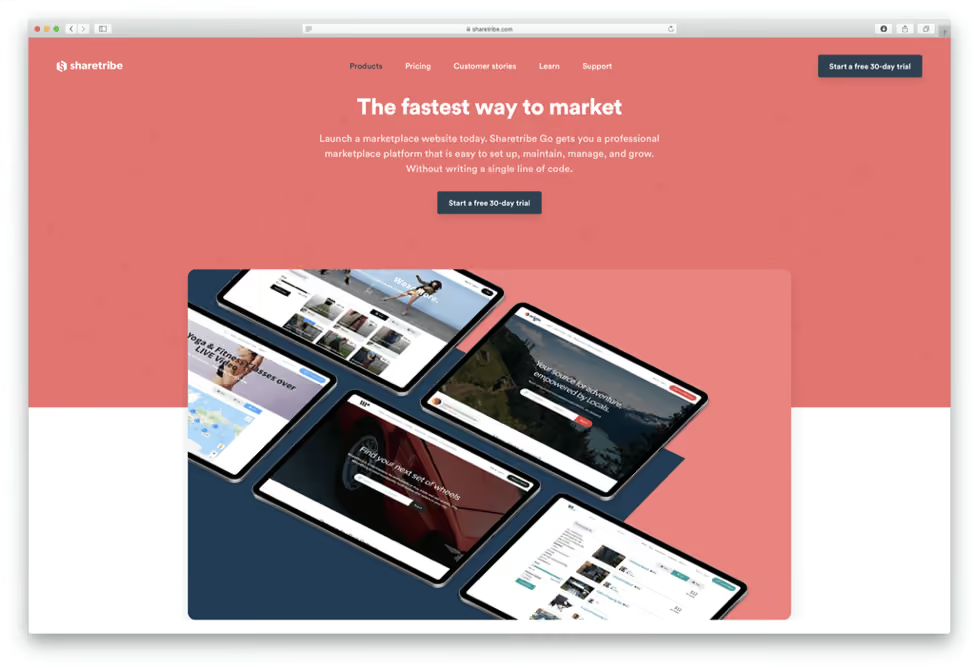
What Is a Sharetribe Mobile App?
A Sharetribe mobile app is an iOS and Android application connected to your Sharetribe marketplace. Instead of asking users to open your website in a browser, you let them download an app and interact with your marketplace directly from their phone.
A mobile app can support marketplace flows such as browsing listings, searching, messaging, booking, purchasing, managing profiles, receiving notifications, and returning to the marketplace faster.
The key advantage is convenience. A mobile app is always one tap away. It can feel faster, cleaner, and more personal than a mobile browser experience. It can also use mobile-native capabilities such as push notifications, camera access, location, saved sessions, and smoother interactions.
For marketplaces with frequent user activity, this can make a real difference. If users need to respond quickly to messages, confirm bookings, manage orders, check availability, upload listing photos, or receive updates, the app experience can improve both conversion and retention.
But a mobile app also introduces extra responsibility. You need app store setup, build management, release updates, mobile QA, compliance with Apple and Google policies, and ongoing maintenance. If you build it fully custom from scratch, the cost and timeline can increase quickly.
That is why many Sharetribe marketplace owners now consider a mobile app template instead of jumping straight into full custom mobile development.
=>>> Read More: Why Custom App Development is Expensive: Real Costs Explained
Web Marketplace vs Mobile App: The Core Difference
The easiest way to compare web and mobile is to look at the user journey.
Your web marketplace is usually better for discovery. It is where users find you, understand your offer, compare options, read content, browse public pages, and decide whether your marketplace is trustworthy.
Your mobile app is usually better for engagement. It is where users return, act quickly, message faster, make repeat bookings, manage transactions, and stay connected with your marketplace.
A web marketplace is strong at the top of the funnel. A mobile app is strong in the middle and bottom of the funnel.
This does not mean mobile apps cannot acquire users. App store optimization, paid campaigns, referral links, and brand search can help. But for most niche marketplaces, the website remains the main acquisition engine, especially in the early stages.
It also does not mean web marketplaces cannot retain users. A good responsive website can work well for many models. But when speed, frequency, and convenience become important, mobile apps often provide a stronger experience.
A useful way to think about it is this:
- Your web marketplace helps users discover and trust you.
- Your mobile app helps users come back and transact more often.
That is why many successful marketplace businesses eventually need both. But they do not always need both at launch.
Do You Need Both from Day One?
In most cases, no. If you are still validating the marketplace idea, testing supply and demand, refining your transaction flow, or figuring out your strongest niche, launching both web and native mobile app from day one can be unnecessary. It may split your attention and increase costs before you have enough real usage data.
A web-first launch is often the safer path because it allows you to test your marketplace with lower complexity. You can launch landing pages, collect users, test categories, understand which listings convert, improve onboarding, and refine your positioning before adding another product surface.
However, there are exceptions. You may need a mobile app earlier if your marketplace depends on high-frequency mobile behaviour. For example, local service marketplaces, rental marketplaces, delivery-related marketplaces, event-based platforms, fitness or activity booking marketplaces, and peer-to-peer platforms often benefit from a mobile-first experience.
If your users need instant communication, location-based browsing, push reminders, fast rebooking, or photo uploads from the field, mobile can become more than a nice-to-have. It becomes part of the marketplace experience.
The right decision depends on user behaviour, not trend pressure.
Do not build a mobile app just because competitors have one. Build it when it improves the way buyers and sellers actually interact.
=>>> Related Post: Custom SaaS App Development: When & Why to Build
When a Web Marketplace Is Enough
A web marketplace may be enough if you are still early, your users do not transact frequently, or your main challenge is acquisition rather than retention.
For example, if your marketplace depends heavily on SEO, educational content, category landing pages, and long research cycles, web should remain your priority. This is common for B2B marketplaces, high-value service marketplaces, professional networks, and platforms where users need to compare carefully before taking action.
A web marketplace may also be enough if most users only need occasional access. If someone uses your marketplace once every few months, asking them to download an app may create friction rather than improve the experience.
Another reason to stay web-first is budget control. Building and maintaining a mobile app requires extra resources. Even if you use a template, you still need app store accounts, setup, testing, and mobile release management. If your marketplace has not yet proven repeat usage, it may be better to invest first in supply quality, landing pages, SEO, onboarding, and conversion rate optimization.
A strong mobile-responsive web marketplace can already serve many users well. Before building an app, check whether your current mobile website has obvious problems. Are users dropping off during sign-up? Are messages hard to use on mobile? Is booking too slow? Are repeat users asking for an app? Are providers managing listings from their phones?
If the answer is no, your next best investment may still be web improvement rather than app development.
When a Sharetribe Mobile App Becomes Worth It
A Sharetribe mobile app becomes worth it when mobile experience directly affects conversion, retention, or marketplace liquidity.
One strong signal is repeat usage. If users come back weekly, daily, or several times per month, an app can reduce friction and make the marketplace feel more accessible. This is especially true for booking, rental, local service, and community marketplaces.
Another signal is messaging intensity. Many marketplaces depend on fast buyer-seller communication. If users often miss messages, respond late, or abandon transactions because communication is slow, push notifications and app-based messaging can improve outcomes.
A third signal is operational convenience. Sellers, providers, hosts, or vendors may need to manage listings, respond to requests, upload photos, update availability, or track bookings while away from a computer. A mobile app can make the supply side more active, which improves marketplace liquidity.
A fourth signal is brand trust. A published iOS and Android app can make your marketplace look more established, especially if you are selling to users who expect app-based access. It can also support investor conversations, enterprise partnerships, and customer confidence when mobile is important in your category.
A fifth signal is paid acquisition. If you are spending money to acquire users, a better mobile experience can improve conversion and retention. The app does not automatically fix acquisition economics, but it can help you get more value from users after they arrive.
In short, a mobile app is worth it when it helps users act faster, return more often, or complete transactions with less friction.
The Cost Problem with Building Mobile Apps from Scratch
The traditional way to build a mobile marketplace app development is expensive because you are not just designing screens. You are rebuilding a complete mobile product layer.
A fully custom sharetribe mobile app cost may require UX strategy, UI design, mobile frontend development, API integration, authentication, listing logic, search, messaging, payments, booking flow, account settings, QA testing, deployment, analytics, app store compliance, and ongoing updates.
For a marketplace, this work is more complex than a simple content app. Marketplaces have multiple user roles, transaction flows, trust signals, dynamic listing data, availability rules, payments, and edge cases. Every feature needs to work for both demand and supply.
That is why custom app development can quickly become a large project.
The problem is not that custom development is bad. In fact, custom development is often necessary when your marketplace grows, and working with an experienced flutter app development services company can help you build one scalable mobile experience across both iOS and Android. The problem is building everything custom before you know which mobile features truly matter.
Founders can spend heavily on features that users do not use. They can delay launch by months. They can also create a maintenance burden that is difficult to manage without a dedicated product team.
This is where a template-based approach can save time and cost.
Why Template + Custom Development Is a Smarter Path
A Sharetribe mobile app template gives you a ready-made foundation designed for Sharetribe marketplace logic. Instead of building the entire app from scratch, you start with core marketplace flows already prepared, then customize where needed.
This is important because many marketplaces need the same foundation: user accounts, listings, search, messaging, transactions, bookings or purchases, profile management, and app store deployment. These are not usually the features that make your marketplace unique. They are the baseline.
With a template, you avoid spending your budget on rebuilding the baseline. You can launch faster and reserve custom development for the parts that create differentiation.
For example, you might use a template to launch the mobile app, then invest custom development into a unique onboarding flow, advanced search filters, a custom booking calendar, personalized recommendations, vendor dashboards, special checkout rules, or integration with your existing business systems.
This model is especially useful for Sharetribe founders because Sharetribe already provides a strong marketplace backend. The mobile app should connect to that backend efficiently, not recreate the whole marketplace from zero.
The result is a more practical development path: launch the app faster, validate real mobile behaviour, then customize based on evidence.
That is how you save both time and money.
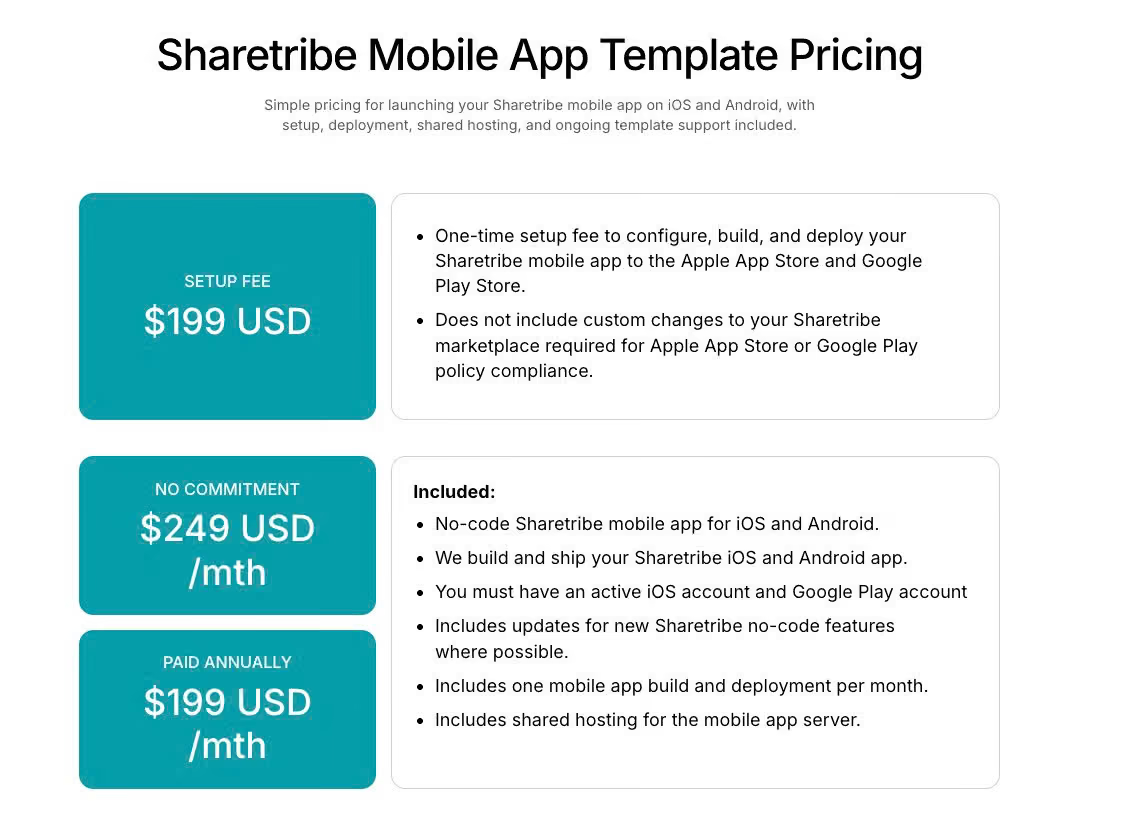
Sharetribe Mobile App Template vs Custom App from Scratch
A Sharetribe mobile app template is best when you want speed, cost control, and a proven mobile foundation. It is suitable for founders who already use Sharetribe, want iOS and Android access, and need standard marketplace features without a long custom development process.
A fully custom app is best when your marketplace has unique mobile logic that cannot be supported by a template. This might include complex real-time workflows, deep integrations, advanced maps, custom matching algorithms, offline functionality, complex multi-role dashboards, or a mobile-first user experience that is central to the business model.
The good news is that these options are not mutually exclusive.
You can start with a template and add custom development later. This gives you a lower-risk path than going fully custom from day one. It also helps avoid the common mistake of overbuilding before users have shown what they actually need.
For many founders, the best route is:
- Launch web marketplace first.
- Add mobile app template when repeat usage and mobile demand are clear.
- Use custom development to improve high-impact features.
- Continue evolving both web and mobile as the marketplace grows.
This creates a scalable product strategy without forcing you into a heavy upfront investment.
=>>> Read More: Sharetribe Mobile App: 6 Steps To Build Your Marketplace
SEO Still Belongs to Your Web Marketplace
Even if you launch a mobile app, your web marketplace remains important.
Your app may improve retention, but your website is still your best asset for SEO. Google needs crawlable pages. Users need landing pages they can visit before installing an app. Partners, investors, and suppliers need a professional web presence. Content marketing, category SEO, comparison pages, and local landing pages all work better on the web.
This is one of the strongest reasons you usually need both over time.
A mobile app should not replace your website. It should complement it.
For example, your website can target keywords such as “equipment rental marketplace,” “find local fitness coaches,” “book event vendors,” or “hire verified consultants.” Once users join, your mobile app can help them return, message, book, and transact faster.
This division of roles is powerful:
Web drives discovery.
Mobile drives repeat engagement.
For a Sharetribe marketplace, that combination can be especially effective because you can build the marketplace foundation once, then connect different user experiences around it.
How to Decide: Web Only, Mobile App, or Both?
Use these questions before investing in mobile app development:
- Are users already accessing your marketplace mostly from mobile devices?
- Do users return frequently enough to justify an app?
- transactions being lost because messaging, booking, or checkout feels slow on mobile?
- Do providers need to manage listings, availability, or orders from their phones?
- Would push notifications improve response speed or conversion?
- Is your marketplace category app-driven by nature?
- Do users or partners expect iOS and Android access?
- Do you have enough budget to maintain the app after launch?
If most answers are no, improve your web marketplace first.
If several answers are yes, a Sharetribe mobile app may be the next logical investment.
If you are unsure, avoid going fully custom immediately. A template-based mobile app can help you test mobile demand faster and at a lower cost than a full custom build.
Why Journeyhorizon for Sharetribe Mobile App Development?
Journeyhorizon focuses on Sharetribe marketplace development, mobile app implementation, and custom marketplace growth. That matters because Sharetribe mobile app development is not just generic app development. It requires understanding marketplace architecture, Sharetribe APIs, transaction flows, listing structures, user roles, and the practical realities of launching marketplace products.
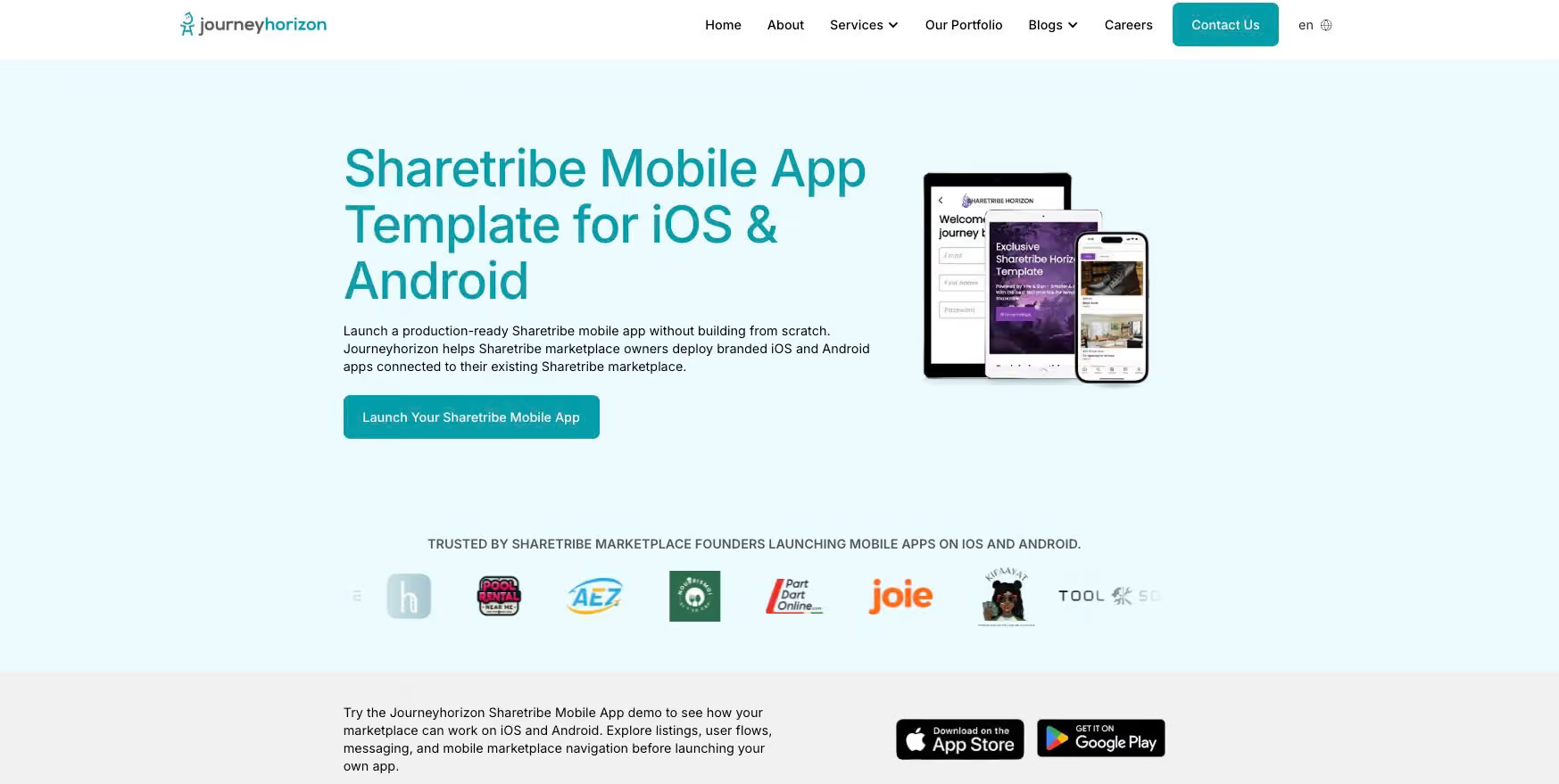
Journeyhorizon’s Sharetribe Mobile App Template is designed for founders who want to deploy their Sharetribe marketplace to iOS and Android without building from scratch. It gives you a faster route to mobile while keeping the door open for future custom development.
This is the ideal middle path for many marketplace founders: start with a proven mobile template, save development time, reduce upfront cost, and customize when your marketplace has clearer data and stronger traction.
If your marketplace is ready for mobile, explore Journeyhorizon’s Sharetribe Mobile App Template or speak with the team about mobile app development for your Sharetribe marketplace.
Final Verdict: Do You Really Need Both?
You do not always need both a Sharetribe mobile app and a web marketplace from day one.
If you are still validating your idea, building supply, testing demand, or relying heavily on SEO, a web marketplace should usually come first. It is easier to launch, easier to optimize, and better for discovery.
But once your marketplace has repeat users, mobile-heavy behaviour, frequent transactions, or strong buyer-seller communication, a mobile app can become a growth lever. It can improve retention, speed up interactions, support push notifications, and make your marketplace more convenient.
The best approach is not to overbuild too early. Start with the channel that supports your current stage. Then add mobile when it solves a real user problem.
For many Sharetribe founders, the smartest path is web first, mobile app template second, custom development third. That gives you the speed of a template, the flexibility of custom development, and the cost discipline needed to build a marketplace sustainably.
FAQ
Do I need a mobile app for my Sharetribe marketplace?
Not always. If you are early-stage and still validating your marketplace, a responsive web marketplace may be enough. A mobile app becomes more valuable when users return frequently, need instant communication, or transact often from their phones.
Is a web marketplace better for SEO than a mobile app?
Yes. Your web marketplace is much stronger for SEO because search engines can crawl and rank public pages, blog posts, landing pages, category pages, and location pages. A mobile app is better for retention and repeat engagement.
Can I launch a Sharetribe mobile app without building from scratch?
Yes. Journeyhorizon offers a Sharetribe Mobile App Template that helps marketplace founders launch iOS and Android apps faster without starting from zero. You can also add custom development later as your marketplace grows.
Should I build a custom mobile app or use a template?
Use a template if you want to save time, reduce upfront cost, and launch core mobile functionality faster. Choose custom development when your marketplace requires unique mobile workflows, complex integrations, or advanced features that a template cannot support.
What is the best strategy for marketplace founders?
For most founders, the best strategy is to launch the web marketplace first, validate demand, then add a mobile app when user behaviour shows that mobile will improve retention, communication, or transaction speed.

.avif)