Best Technical SEO Tools for Marketplace Growth | Journeyhorizon
For marketplace founders and operators, organic visibility is often overlooked in favour of paid acquisition and platform features. Yet the right technical SEO approach can fundamentally change how many potential users discover your marketplace in search results. This is where the best technical SEO tools become essential. These tools help you identify crawl issues, optimise site architecture, fix JavaScript rendering problems, and build the structural foundation that search engines reward. The challenge is knowing which ones actually matter for marketplace-specific growth.
This guide focuses on the best technical SEO tools. Rather than list every tool available, we've identified the ones that solve real problems for marketplace platforms, especially those built on Sharetribe, custom infrastructure, or platforms planning to scale beyond default functionality. If you're a marketplace founder thinking about sustainable organic growth alongside your development roadmap, these tools will help you make better decisions about site structure, architecture, and optimisation priorities. Journeyhorizon works with marketplace teams on this intersection regularly, helping them understand how platform choices, development work, and SEO strategy connect.

Why Technical SEO Tools Matter for Marketplace Operators
Marketplaces face a specific technical SEO problem that other businesses don't. You're managing thousands or millions of listings, category pages, user profiles, and search results pages. Every one of these needs to be crawlable, indexable, and technically optimised. When your marketplace grows, technical issues compound. A broken redirect chain affecting a few URLs is manageable. A redirect issue affecting thousands of listings is a search visibility crisis.
Technical SEO tools help you prevent these problems before they damage your organic traffic. They identify crawl errors, broken links, JavaScript rendering issues, mobile indexing problems, and schema markup failures. For marketplace operators, they also help you understand how search engines see your listing pages, category structures, and user-generated content. This is critical because your marketplace's organic success depends not just on individual listing content but on how well your platform's structure supports search engine crawling and indexing.
The second reason technical SEO tools matter is performance optimisation. Page speed directly impacts search rankings and user experience. For a marketplace, slow-loading listing pages or category views can hurt both SEO performance and conversion rates. Technical SEO tools help you identify performance bottlenecks before users (or search engines) experience them.
Core Features to Look For in Technical SEO Tools
Not all technical SEO tools are created equal. When evaluating tools for marketplace use, focus on these capabilities:
Website crawling and auditing. The tool should crawl your marketplace at scale and identify issues like 404 errors, redirect loops, duplicate content, and missing meta tags. For marketplaces with thousands of pages, you need a crawler that can handle volume and prioritise findings by impact.
JavaScript rendering. Many modern marketplaces (especially those built with React, Vue, or custom JavaScript frameworks) rely on client-side rendering. Search engines can render JavaScript, but not all crawlers can. You need a tool that renders pages the way Googlebot does, so you see what search engines actually see.
Mobile-first indexing support. Google has shifted to mobile-first indexing. Your technical SEO tool should identify mobile-specific issues, test mobile rendering, and report on mobile usability. For marketplace operators, this is non-negotiable since most marketplaces drive significant traffic from mobile.
Performance and Core Web Vitals tracking. Tools that measure page speed, Largest Contentful Paint (LCP), Cumulative Layout Shift (CLS), and First Input Delay (FID) help you understand real-world performance. For marketplaces, these metrics directly impact both search rankings and user satisfaction.
Schema markup validation. Marketplaces rely on structured data (schema.org markup) to help search engines understand product listings, reviews, availability, and pricing. Your technical SEO tool should validate schema implementation and flag missing or incorrect markup.
Sitemap and indexation analysis. Understanding which pages are indexed, which are excluded, and why is critical. The tool should show you how your sitemap is structured and help you optimise crawl budget allocation.
Best Technical SEO Tools by Category
Best Overall Technical SEO Crawler: Screaming Frog SEO Spider
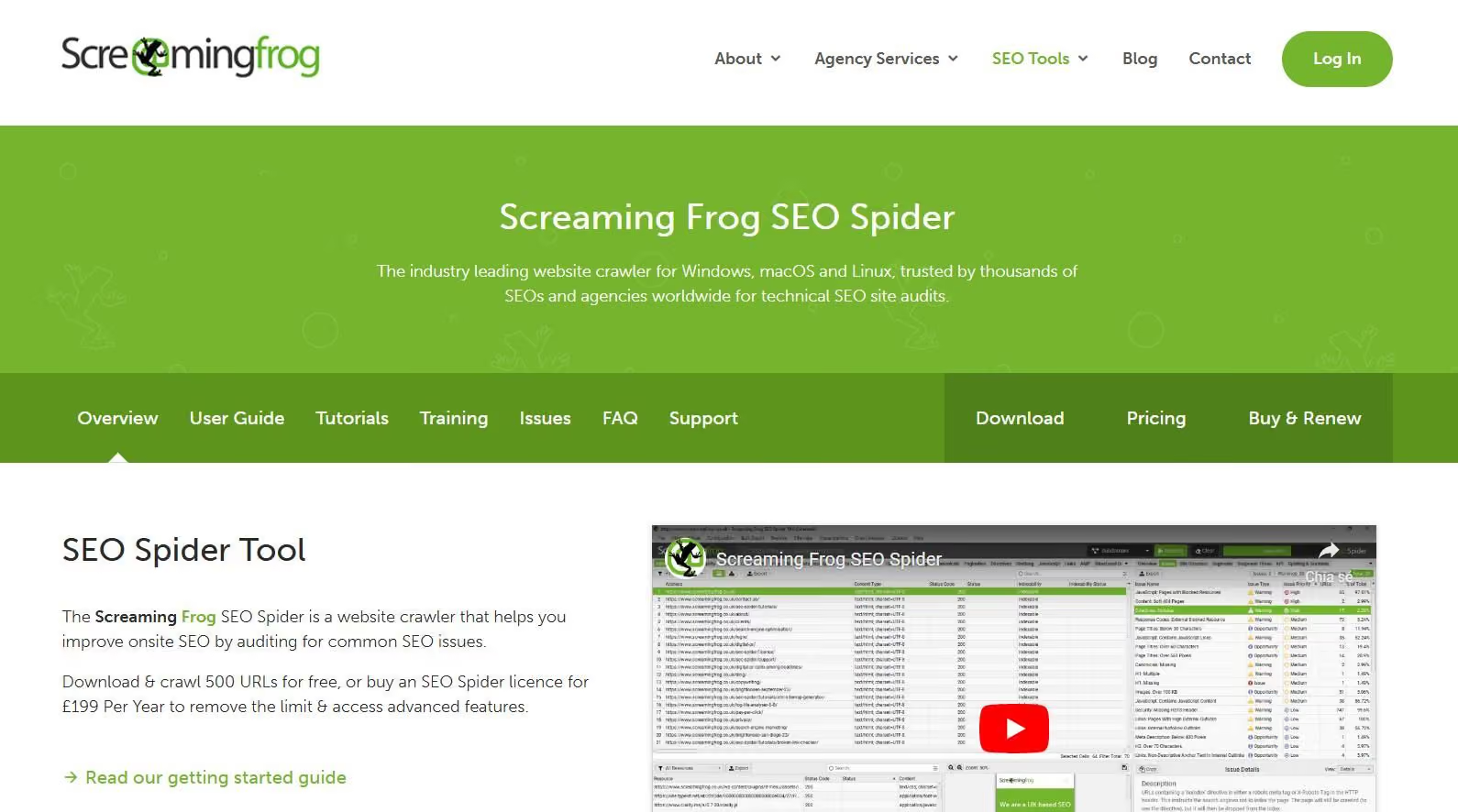
Screaming Frog has been the industry standard for technical SEO audits for over a decade. It's a desktop application that crawls your site and generates detailed reports on crawl errors, broken links, redirect chains, duplicate pages, and missing meta tags. The free version crawls up to 500 URLs, which works for smaller marketplaces. The licensed version is unlimited and includes JavaScript rendering, API connections, and custom extraction rules.
For marketplace operators, Screaming Frog excels at identifying structural issues quickly. You can see exactly how many pages have crawl errors, which URLs are being blocked by robots.txt, and where broken links exist. It's particularly useful for auditing category pages and listing page templates to ensure they're optimised for search engine crawling.
Best Free Foundation: Google Search Console
Every marketplace operator should be using Google Search Console from day one. It's free, it's authoritative (data comes directly from Google), and it tells you exactly how Google sees your site. You'll see search query data, indexed pages, crawl errors, mobile usability issues, and Core Web Vitals metrics. While it's not a comprehensive technical audit tool, it's the most reliable source of data about your actual search performance.
Best for Content and Technical Optimisation: Semrush Site Audit
Semrush's Site Audit tool combines technical SEO scanning with content-level recommendations. It identifies on-page SEO issues, content gaps, and competitive analysis. For marketplace operators managing both platform structure and listing content, Semrush's ability to flag content quality issues alongside technical problems makes it valuable. It also integrates with Semrush's broader SEO platform, so you can connect technical findings with keyword research and competitor data.
Best for JavaScript-Heavy Sites: Sitebulb
Sitebulb is specifically designed for crawling modern, JavaScript-heavy websites. If your marketplace is built with a JavaScript framework (React, Vue, Angular), Sitebulb will render pages correctly and identify issues that other crawlers miss. It also includes visualisation features that help you understand your site's structure and identify architectural problems quickly. For custom-built marketplaces or those using modern tech stacks, Sitebulb is excellent.
Best for WordPress Marketplaces: Yoast SEO and Rank Math
If you're running a marketplace on WordPress, these plugins provide real-time technical SEO feedback as you build pages. They check readability, keyword optimisation, meta tags, and schema markup. While they're not full-site audit tools, they help prevent technical issues before they happen. For marketplace operators on WordPress, they're cost-effective and reduce the need for separate technical SEO tools for on-page work.
How to Choose the Right Tools for Your Marketplace Platform
Your marketplace platform choice influences which technical SEO tools you actually need. Here's how to think about it:
For Sharetribe Marketplaces
Sharetribe provides a managed hosting environment with strong technical SEO fundamentals built in. You'll still need a crawler like Screaming Frog or Sitebulb to audit your specific implementation, especially if you've customised the template or added custom pages. Google Search Console is essential for tracking your actual search performance. If you're using Sharetribe's white-label features or have integrated custom plugins, Semrush or Sitebulb will help identify issues specific to your customisations.
For Custom-Built Marketplaces
Custom-built marketplaces need more rigorous technical SEO tooling because you're responsible for everything. You'll need a full-site crawler (Screaming Frog, Sitebulb, or Lumar), Google Search Console, and ideally a tool that checks Core Web Vitals and performance (Google PageSpeed Insights, WebPageTest, or integrated crawlers with performance metrics). If your custom marketplace uses JavaScript, make sure your chosen crawler renders JavaScript correctly.
For Multi-Tenant or SaaS-Style Marketplaces
If you're offering a marketplace platform to multiple sellers (like a marketplace-as-a-service model), you need tools that can audit multiple sites efficiently. Lumar or other enterprise crawlers make sense here, along with tools that integrate with your broader monitoring infrastructure. You'll also need to think about how you're handling canonicalisation, parameter handling, and cross-site duplicate content.
The size of your marketplace also matters. Small marketplaces (under 10,000 URLs) can use Screaming Frog's free version and Google Search Console. Medium marketplaces (10,000-100,000 URLs) benefit from licensed Screaming Frog or Semrush. Large marketplaces (over 100,000 URLs) should consider Lumar or Botify for continuous crawling and monitoring.
Integrating Technical SEO Tools Into Your Marketplace Growth Strategy
Having the best technical SEO tools only matters if you use them strategically. Here's how to incorporate them into your broader marketplace growth plan:
Regular Audits, Not Reactive Fixes
Run technical SEO audits quarterly at minimum, more frequently if your marketplace is actively growing or you're making major platform changes. Treat audit findings as a prioritised backlog. Not every issue requires immediate fixing. Focus on problems that affect search visibility (crawl errors, indexation issues, critical Core Web Vitals failures) before optimising smaller issues.
Connect Development and SEO
This is where marketplace operators often stumble. Your development team builds features; your SEO team wants optimisation. The best approach is involving SEO in the development process. Before launching new features (new listing types, filtering systems, or user profile pages), use your technical SEO tools to understand how they'll impact crawlability, indexation, and performance. If your marketplace is using a Sharetribe developer or custom development agency, make sure they understand these technical SEO requirements upfront.
Monitor Competitive Performance
Use your tools not just to audit your own site but to understand how competitors are solving technical SEO problems. If a competitor's marketplace is indexing 50,000 pages and you're only getting 5,000 indexed, that's a structural difference worth investigating. Tools like Semrush and Ahrefs include competitive analysis that helps you understand what other marketplaces in your space are doing technically.
Prioritise Mobile and Performance
For marketplaces, mobile optimisation and page speed aren't optional. Use tools to track Core Web Vitals specifically and make performance a development priority. Slow marketplace pages convert poorly and rank worse. If your marketplace relies on custom development, work with your development partner to optimise build processes, lazy-loading, and image delivery. Teams focused on marketplace development should treat technical SEO and performance as interconnected, not separate concerns.
Build a Process Around Indexation
Your tools should feed into a consistent indexation strategy. This means managing robots.txt, canonicalisation, sitemaps, and paginated content deliberately. For a marketplace, where you're constantly adding new listings, a good indexation process ensures new content is crawled and indexed quickly while preventing duplicate content issues from hurting your overall domain authority.
Frequently Asked Questions
Do I need multiple technical SEO tools or can one tool do everything?
One comprehensive tool like Semrush or Ahrefs covers most needs. However, Google Search Console is non-negotiable because it provides data directly from Google. For larger marketplaces, combining a specialist crawler (Screaming Frog, Sitebulb) with Google Search Console gives you both detailed audits and authoritative performance data. You don't need five tools, but two or three specialised ones often work better than one general solution.
How often should I run technical SEO audits?
If your marketplace is stable, quarterly audits are sufficient. If you're actively adding features, changing platform infrastructure, or growing rapidly, monthly or even weekly monitoring makes sense. Tools like Lumar provide continuous crawling, which is ideal for large or frequently updated marketplaces. The right frequency depends on your marketplace size and change velocity.
Can I use free SEO tools instead of paid ones?
Absolutely. Google Search Console, PageSpeed Insights, and Screaming Frog's free version cover basic technical SEO auditing. For small marketplaces under 10,000 URLs, free tools are often sufficient. Paid tools add convenience, comprehensive reporting, and features like JavaScript rendering or continuous monitoring. But if your budget is tight, free tools can give you valuable insights. As your marketplace grows, investing in paid tools becomes more cost-effective than managing audits manually.
How do technical SEO tools fit into overall marketplace growth?
Technical SEO tools are foundational. They identify problems that block organic visibility. But organic growth also requires keyword research, content strategy, and competitive positioning. Your technical SEO tools should work alongside broader SEO planning and SEO strategy services that address your marketplace's complete visibility picture. Think of technical SEO as the infrastructure; content and positioning are the engine.
Marketplace operators who combine technical SEO rigour with thoughtful content strategy and platform development often outpace competitors who treat SEO as an afterthought. The best technical SEO tools won't fix a bad marketplace product, but they'll ensure your marketplace is discoverable, crawlable, and positioned to rank well in search results. If you're serious about organic growth, investing in the right combination of tools and expertise is one of the highest-return investments you can make.


.avif)