Inbound Marketing for Professional Services: Strategy, Workflow, and Growth Benefits

Professional services firms, from consultants and agencies to legal and accounting providers, are navigating a new buying journey. Decision-makers no longer trust cold outreach. They search, evaluate expertise, and choose partners who earn credibility before the first conversation begins.
That is why inbound marketing for professional services has become one of the most reliable ways to attract qualified leads, build authority through SEO, and drive long-term growth.
At Journeyhorizon, we help service firms turn expertise into predictable client acquisition through strategic content and trust-driven lead nurturing.
Read more about Marketing for professional services.
1. What is inbound marketing for professional services?
Inbound marketing for professional services refers to a growth strategy that attracts potential clients through valuable content, strong search visibility, and trust-based engagement, rather than relying on outbound interruption.
Instead of cold emailing or pushing sales-driven messages, inbound marketing helps prospects discover your firm naturally when they are actively searching for expertise and solutions.
This approach is especially effective in B2B marketing industries because buyers typically conduct extensive research before making decisions. They want proof of expertise, clarity on outcomes, and confidence that they are choosing the right partner.
Inbound marketing meets them where they already are, and in most cases, that journey starts on Google.
A marketing team for hire is no longer a luxury reserved for large enterprises—it has become a strategic necessity for businesses that want to scale efficiently, generate consistent leads, and stay competitive in increasingly crowded markets. By accessing a team of specialists without the overhead of building an in-house department, companies can execute faster, adapt to market changes more effectively, and focus internal resources on core business growth.
2. Why inbound marketing is important for professional services firms
Inbound marketing works especially well for professional services because these businesses do not sell physical products or simple services, they sell expertise, outcomes, and trust.
Unlike eCommerce, where purchasing decisions can happen quickly, professional service buyers move carefully. They often evaluate multiple providers, invest significant budgets, and choose partners who will directly influence business performance. As a result, credibility must be established before a prospect is ever ready to engage.
This is why inbound marketing has become a foundational growth strategy for service firms.
2.1. Qualified lead generation through inbound marketing
Inbound marketing reaches prospects who are already searching for answers. These leads tend to be more informed, more relevant, and far more likely to convert than cold contacts generated through outbound outreach.
2.2. Trust and authority building at scale
By consistently publishing expert content such as guides, case studies, and industry insights, your firm demonstrates credibility early. This positions you as a trusted specialist, not just another vendor competing for attention.
2.3. Compounding growth and long-term ROI
Paid campaigns stop the moment spending stops. Inbound marketing compounds. A single high-performing article can continue generating qualified traffic and leads long after it is published.
2.4. Stronger differentiation in competitive markets
Professional services firms compete on expertise, not price. Inbound marketing helps you stand out through thought leadership and specialized knowledge, especially in crowded industries.
2.5. Sustainable visibility through SEO and credibility
Google prioritizes businesses that provide helpful, trustworthy information. Inbound marketing improves long-term visibility while reinforcing your reputation across the market.
These advantages explain why inbound marketing is no longer optional. For professional services firms, it is one of the most reliable ways to build predictable, trust-driven growth.
3. Types of inbound marketing that work best for professional services firms
Not every marketing tactic delivers the same results for service-based businesses. The most effective types of inbound marketing for professional services focus on education, expertise, and trust-building, because clients are choosing a partner, not making a quick purchase.
3.1. Content marketing and SEO
Content marketing is the foundation of inbound marketing for professional services. This includes publishing blog posts, pillar pages, and strategic resources that answer the exact questions your ideal clients are searching for.
SEO ensures your expertise becomes discoverable at the right moment, when prospects are actively seeking solutions.
3.2. Lead magnets and conversion assets
Professional service buyers often want deeper insight before committing to a call. Lead magnets help convert visitors into leads by offering high-value resources such as:
- Industry reports
- Strategic checklists
- Templates and playbooks
- ROI calculators
These assets provide immediate value while building credibility early in the buyer journey.
3.3. Email marketing and lead nurturing
Inbound does not end when someone downloads a guide, because most prospects are not ready to buy immediately.
Email nurturing sequences help you stay top-of-mind, continue delivering useful insights, and guide leads toward the next step when they are ready.
3.4. Social proof and authority building
Trust signals are critical in professional services. Testimonials, client success stories, and LinkedIn thought leadership reinforce credibility and reduce buyer hesitation.
3.5. Webinars and educational events
Webinars are one of the highest-performing inbound formats in professional services because they allow prospects to experience your expertise directly in a structured, high-trust setting.
Together, these inbound channels create a complete growth system that builds authority and generates demand over time.
4. A proven inbound marketing workflow for professional services growth
A structured inbound marketing workflow is what separates occasional content publishing from a predictable client acquisition system. For professional services firms, inbound works best when each stage builds trust and moves prospects closer to engagement.
Below is the proven framework service firms use to drive consistent results.
Step 1: Attract the right audience
The first goal is to be discovered by the right prospects through SEO-driven content and educational resources. This typically includes:
- Publishing content around high-intent search topics
- Building topic clusters that establish authority
- Driving organic traffic through long-term search visibility
This is where inbound marketing for professional services begins, by capturing demand that already exists in the market.
Step 2: Convert visitors into leads
Once prospects arrive, you need clear conversion pathways that turn attention into action, such as:
- Landing pages designed for specific services
- Lead capture forms and downloadable resources
- Consultation or strategy call booking opportunities
Conversion is essential because traffic alone does not create pipeline.
Step 3: Nurture leads into clients
In professional services, most buyers require time and trust before making a decision. Lead nurturing helps build relationships through:
- Email workflows that deliver ongoing value
- CRM follow-up and segmentation
- Personalized content sequences based on buyer needs
Inbound marketing for professional services is not just about visibility. It is about guiding prospects through a trust-building journey.
Step 4: Close, delight, and generate referrals
Inbound continues after the sale. Professional services firms grow fastest when satisfied clients become long-term partners and referral sources.
Delighted clients often lead to:
- Stronger retention and repeat engagements
- Case study opportunities that reinforce credibility
- Referral-driven growth through trusted networks
This full workflow creates compounding authority and predictable pipeline over time.
5. Best practices to strengthen EEAT and authority in inbound marketing
Google increasingly rewards inbound content that demonstrates real expertise, credibility, and trustworthiness. For professional services firms, EEAT is not optional. It is a ranking advantage and a conversion driver.
To strengthen authority through inbound marketing:
- Publish expert-led insights based on real client experience, not generic marketing advice
- Support key claims with proof, such as case studies, outcomes, and measurable results
- Build topic clusters that establish long-term authority around your core services
- Reinforce trust with clear signals, including testimonials, partnerships, credentials, and specialist positioning
Inbound marketing performs best when your content is genuinely helpful and clearly backed by experience in your domain.
6. Real-world proof of B2B inbound marketing: How Journeyhorizon helped Novabridge scale
Journeyhorizon’s work with Novabridge, a B2B technology consulting firm and ServiceNow partner, demonstrates how inbound marketing can drive sustainable growth for professional services companies when executed with the right strategy.
6.1. Business challenges before engagement
- Low organic search visibility despite strong domain expertise
- Difficulty differentiating from competitors in a crowded consulting market
- Limited inbound demand generated through digital channels
- Inconsistent lead quality due to reliance on outbound-driven acquisition
6.2. Inbound marketing strategy implemented by Journeyhorizon
- Rebuilding the website with an SEO-first structure aligned to enterprise and public sector search intent
- Developing high-value content and thought leadership assets around digital transformation and ServiceNow solutions
- Improving organic search visibility so Novabridge appeared when prospects were actively researching solutions
- Strengthening positioning and messaging to communicate authority and differentiation clearly
6.3. Outcomes and business impact
- Increased organic traffic driven by high-intent B2B searches
- Stronger brand authority within the ServiceNow consulting ecosystem
- Higher volume of qualified inbound inquiries generated through content and search
- A scalable inbound foundation that supports long-term lead generation beyond outbound tactics
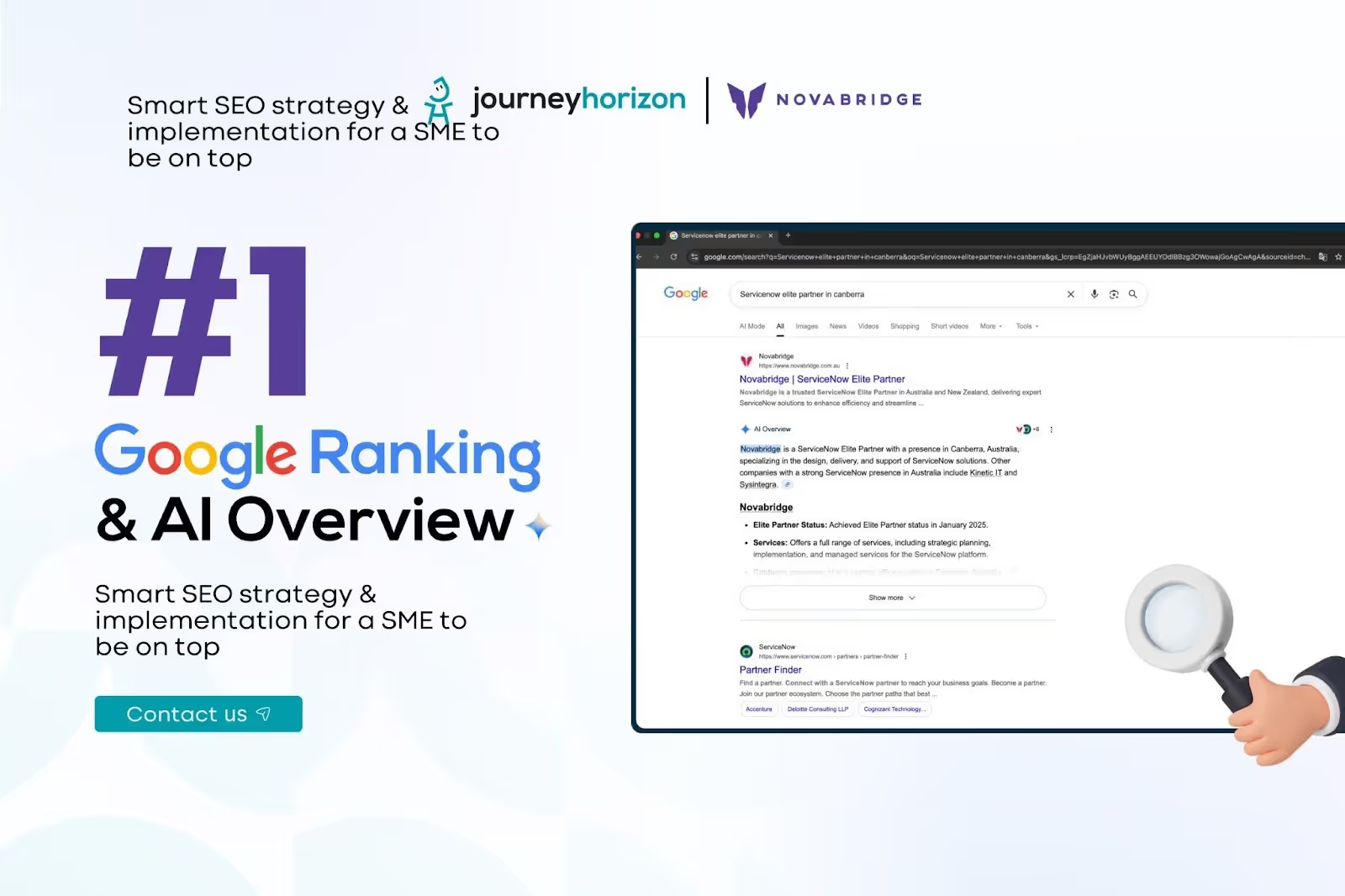
A real result driven by Journeyhorizon’s inbound marketing approach
This case illustrates how inbound marketing, when grounded in real expertise and executed strategically, becomes a reliable growth engine for B2B professional services firms.
7. Journeyhorizon - A strategic growth partner for inbound marketing in professional services
Journeyhorizon is a strategic growth partner for professional service firms, helping them design inbound marketing systems that attract the right audience, build lasting trust and authority, and convert expertise into consistent, long-term client growth.
Our inbound-focused services include:
- Inbound marketing strategy for professional services, built around high-intent buyer journeys
- Content and thought leadership systems, designed to educate prospects and establish credibility
- SEO and organic visibility optimization, ensuring your firm is discoverable when buyers search for solutions
- Lead generation assets, such as guides, checklists, and landing pages that capture qualified inquiries
- Inbound lead nurturing workflows, combining automation, email sequences, and conversion-focused follow-up
- Conversion optimization support, improving how traffic turns into booked calls and real pipeline
- Growth systems for service marketplaces, aligning inbound acquisition with scalable marketplace expansion
See our full range of Marketing services.
Journeyhorizon helps professional service firms move beyond isolated marketing tactics and build inbound engines that drive consistent, trust-based growth.
8. Conclusion
Professional services firms win growth through trust, not noise. Inbound marketing is the most reliable way to earn that trust at scale, attract qualified demand, and turn expertise into a predictable client acquisition engine that compounds over time.
At Journeyhorizon, we help professional service firms build inbound growth systems that combine strategy, authority, and conversion.
If you are ready to transform your expertise into consistent inbound demand, let’s partner to build your inbound engine.
9. FAQs
1. What makes inbound marketing different for professional services firms?
Inbound marketing works especially well for professional services because clients choose based on trust and expertise, not impulse. It helps firms earn credibility before prospects ever reach out.
2. What are the most effective inbound channels for service businesses?
Content marketing, SEO, lead magnets, email nurturing, and webinars are the most effective channels. These formats educate buyers and build authority throughout the decision process.
3. What is a simple inbound marketing workflow for professional services?
A proven workflow includes attracting the right audience, converting visitors into leads, nurturing trust over time, and turning clients into repeat partners and referrals.
4. How does inbound marketing generate qualified leads over time?
Inbound captures existing search demand and builds long-term visibility. As authority grows, firms attract more high-intent inquiries without relying on constant outreach.
5. How long does it take for inbound marketing to work in professional services?
Most firms see early traction within three to six months, while the strongest results compound over time as SEO and trust signals build.

.avif)
