SEO for Marketplaces: Drive Growth with Organic Search

As Philip Kotler, the "father of modern marketing," wisely stated, "Marketing is the process of discovering and satisfying the needs of customers at a profit." This principle is especially true for marketplaces.
Launching a successful marketplace is more than just building a platform; it's about connecting buyers and sellers in a way that creates value for everyone involved. Many marketplace startups fail not because of a flawed product, but because of a poor go-to-market (GTM) strategy. A weak market entry can leave your marketplace struggling to attract users, leading to the dreaded "chicken-and-egg" problem: buyers won't join without sellers, and sellers won't join without buyers. The complex dynamics of a two-sided marketplace demand a unique and carefully crafted GTM approach.
This article from Journeyhorizon.io will explore the essential elements of a successful marketplace GTM strategy, with a particular focus on the critical role of SEO for marketplaces.
Why Every Marketplace Needs to Implement SEO
In today’s digital landscape, SEO for marketplace platforms isn’t optional - it’s essential. Unlike single-brand eCommerce stores, marketplaces face the challenge of competing for visibility across thousands of listings, categories, and vendors. Without a strong SEO optimization for marketplace plan, even the best platform can remain invisible to potential buyers and sellers.
Here’s why SEO is crucial for marketplaces:
- Organic traffic drives sustainable growth: Paid ads can bring quick traffic, but they’re expensive and temporary. SEO builds a steady, cost-effective stream of qualified visitors who are actively searching for what your vendors offer.
- Improves discoverability for both buyers and sellers: Good SEO ensures that not only your marketplace brand but also your individual listings and vendors appear in Google results. This dual visibility helps attract both sides of the market.
- Builds brand authority and trust: Marketplaces that appear consistently in organic search results are perceived as more credible. Over time, this authority helps you win against competitors and attract more high-quality vendors.
- Supports all other marketing channels: SEO complements your paid, social, and referral strategies. High-ranking pages increase the effectiveness of every campaign by enhancing trust and discoverability.
The Key Differences Between Marketplace SEO and eCommerce SEO
While SEO for marketplace and eCommerce SEO share the same ultimate goal - improving visibility and driving organic sales - the strategies behind them are quite different. The complexity of a multi-vendor platform introduces unique challenges that single-brand stores rarely face.
Here are the main differences:
Content Ownership and Control
- eCommerce SEO: The brand owns and manages all content — from product descriptions to metadata. This makes it easier to maintain consistency, keyword focus, and tone of voice.
- Marketplace SEO: Content is largely vendor-generated. Each seller creates listings, often duplicating manufacturer descriptions or each other’s content. This leads to duplicate content issues, inconsistent metadata, and variable quality. Marketplaces must therefore implement strict content moderation and SEO guidelines to maintain quality at scale.
Site Architecture and Crawl Depth
- eCommerce SEO: Usually follows a straightforward hierarchy — homepage → category → product.
- Marketplace SEO: The structure is far more complex, with multiple layers for vendors, categories, filters, and product variations. Maintaining a flat, crawl-efficient architecture is critical to ensure Google can find and index key pages without wasting crawl budget.
Keyword Strategy
- eCommerce SEO: Focuses on product-level and brand-specific keywords.
- SEO optimization for marketplace: Must target a much wider keyword set — including buyer intent terms (“buy handmade jewelry”), seller intent terms (“sell vintage watches”), and category-level keywords (“secondhand fashion marketplace”). This dual-sided keyword strategy supports both supply and demand acquisition.
Authority and Backlinks
- eCommerce SEO: Relies mostly on backlinks to brand and product pages.
- Link building for marketplace SEO: Focuses on earning backlinks to category hubs, vendor pages, and informational content that connects both buyers and sellers. Building authority across all sections of the platform is essential for long-term growth.
Scalability and Technical Complexity
- eCommerce SEO: Scaling content and optimization is relatively linear.
- Marketplace SEO: Scaling is exponential — every new vendor or product adds SEO variables. Managing canonicalization, duplicate URLs, structured data, and crawl efficiency becomes an ongoing challenge.
In short, SEO for marketplace requires a more holistic, systems-driven approach. It’s not just about optimizing pages — it’s about aligning vendors, content, and technology under one unified SEO strategy that supports sustainable growth on both sides of the marketplace.
This is step-by-step guide to enhance SEO for your multi vendor marketplace.
Step 1: Defining Your Target Audience & Value Proposition for Marketplace SEO Plan
Before launching your marketplace, you must clearly define your target audience and craft a compelling value proposition that resonates with both buyers and sellers. Understanding the three key segments of marketplace users is crucial:
- Buyers: What are their needs, pain points, and motivations? What are they looking for in a marketplace?
- Sellers: What are their business goals and challenges? What kind of platform will attract them and enable them to succeed?
- Suppliers (if applicable): If your marketplace involves suppliers, what are their requirements and how can your platform streamline their operations?
Once you understand these segments, you can craft an irresistible value proposition for each side. This involves clearly articulating the benefits of using your marketplace, highlighting its unique features, and demonstrating how it solves their specific problems.
For buyers, this might be access to a wider selection, competitive pricing, or convenient shopping.
For sellers, it could be access to a larger customer base, streamlined sales processes, or reduced marketing costs.
This understanding of your target audience is also crucial for effective SEO for marketplaces, as it informs your keyword research and content strategy.
Step 2: Choosing the Best Acquisition Channels for Marketplace SEO Plan
Choosing the right acquisition channels is essential for reaching your target audience and driving initial traction. The question of organic vs. paid GTM approaches is particularly relevant for marketplaces. While paid advertising can be effective for initial user acquisition, organic strategies, especially SEO for marketplaces, are crucial for sustainable growth.
1. Leveraging Marketplace SEO & Content Marketing
Search Engine Optimization (SEO) is a cornerstone of a successful marketplace GTM strategy. By optimizing your website and listings for relevant keywords, you can attract organic traffic from users actively searching for products or services you offer. Content marketing plays a vital role in building authority, educating your audience, and driving organic traffic. Creating valuable content, such as blog posts, guides, and case studies, can attract both buyers and sellers to your platform. Focus on long-tail keywords related to specific products, services, and user needs.
By providing valuable content, you empower your audience and build trust in your marketplace. Effective SEO for marketplaces means optimizing for both buyer and seller search terms. This includes optimizing product listings, category pages, and the overall website structure.
- Keyword Research for Marketplaces: Effective SEO for marketplaces begins with in-depth keyword research. You need to identify the terms your buyers are searching for (e.g., "best handmade jewelry," "buy vintage rugs online") and the terms your sellers are using to list their products (e.g., "sell handmade crafts," "list my vintage clothing"). Tools like Ahrefs, SEMrush, and Google Keyword Planner can help you uncover these valuable keywords.
- On-Page Optimization for Marketplaces: Optimize your product listings with relevant keywords in the title, description, and image alt text. Create compelling and informative descriptions that not only attract buyers but also improve search visibility. Category pages should also be optimized for broader keywords related to the products or services offered.
- Technical SEO for Marketplaces: Technical SEO is also crucial for marketplaces. Ensure your website is mobile-friendly, loads quickly, and has a clear site structure. A well-organized site makes it easier for search engines to crawl and index your pages, improving your SEO for marketplaces performance. Pay particular attention to schema markup for product listings and category pages.
- Content Marketing for Marketplaces: Content marketing is essential for attracting both buyers and sellers. Create valuable content that addresses their specific needs and interests. For buyers, this might be guides on choosing the right product or tips for making the most of the marketplace. For sellers, it could be articles on how to improve their listings or strategies for increasing sales. This content should be optimized for relevant keywords to drive organic traffic.
- Link Building for Marketplaces: Getting backlinks from reputable websites is crucial to SEO for marketplaces. Before reaching out, check da pa of potential referring domains to ensure they have strong authority. Acquiring links from these high-authority sites demonstrates to search engines that your marketplace is a trusted source of information and can improve your search rankings.
2. Strategic Partnerships
Forming strategic partnerships with complementary businesses can be a powerful way to acquire both supply and demand for your marketplace. Partnering with established businesses that serve your target audience can provide access to their customer base and accelerate your growth.
3. Other Channels
Consider other acquisition channels such as social media marketing, email marketing, public relations, and community building. The best channels for your marketplace will depend on your specific target audience and industry.
Step 3: Launching Your Marketplace & Acquiring Initial Traction
The launch of your marketplace is a critical moment. Choosing the right launch strategy can significantly impact your initial traction.
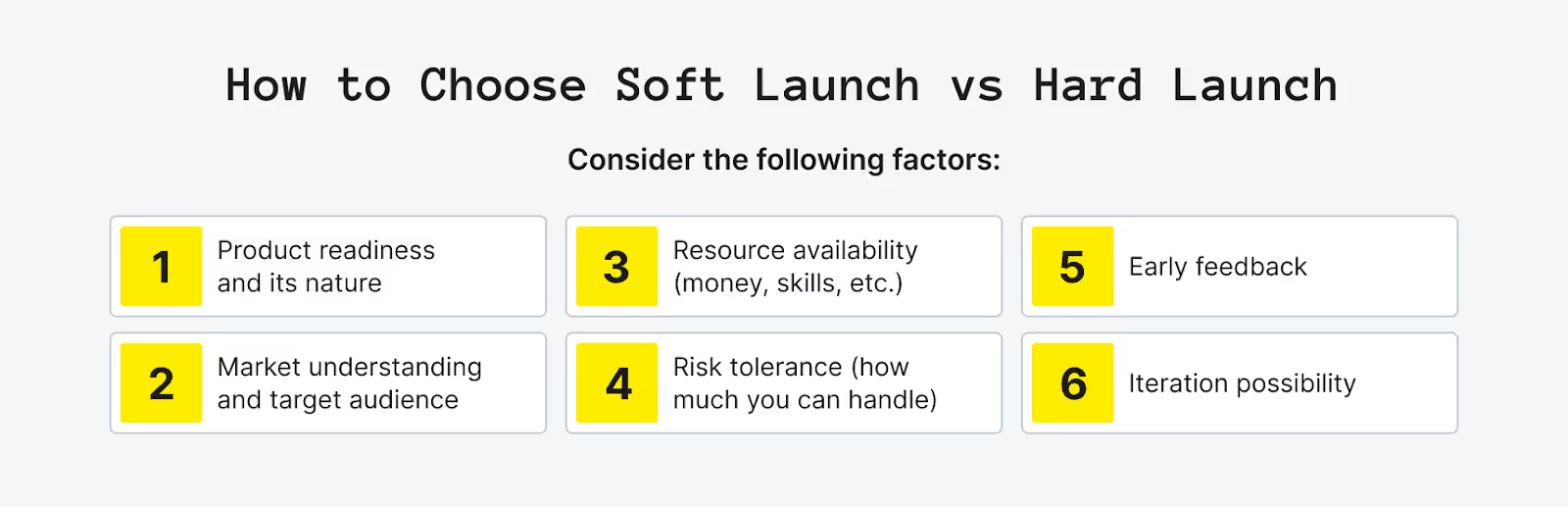
- Soft Launch vs. Full-Scale Launch: A soft launch, where you release your marketplace to a limited group of users for testing and feedback, can be a valuable way to identify and fix any issues before a full-scale launch. A full-scale launch, on the other hand, can generate more buzz and attract a larger audience from the start. The best approach depends on your specific circumstances and risk tolerance.
- Building a Waitlist & Pre-Launch Hype: Creating a waitlist and generating pre-launch hype can be an effective way to build anticipation and attract early adopters. Offer exclusive access or incentives to those who sign up for the waitlist.
Step 4: Monetization Strategies & Revenue Growth for Marketplaces
Once your marketplace has gained traction, you need to implement a robust monetization strategy to generate revenue and ensure long-term sustainability.
- Choosing the Right Revenue Model: The best revenue model for your marketplace will depend on the dynamics of your market. Common models include commission fees, subscription fees, listing fees, advertising, and premium features.
- Optimizing Take Rates: If you're using a commission-based model, optimizing your take rates is crucial for maximizing revenue. Finding the right balance between attracting sellers and generating profit is essential.
- A/B Testing: A/B testing different pricing and commission structures can help you identify the optimal approach for your marketplace. Experiment with different models and track your results to see what works best.
Case Study: Journeyhorizon & Homebakednearby
Homebakednearby is a platform connecting customers with local, home-based bakers, offering fresh, hire Technical SEO customizable baked goods with affordable and convenient delivery options. What sets Homebaked apart is its emphasis on quality, personalization, and supporting local bakers, making it unique compared to larger national competitors.
Journeyhorizon partnered with Homebaked to optimize their GTM strategy, focusing on:
- Customer Journey Optimization:
Refining the user experience to ensure customers could effortlessly find and order products. - SEO Strategy:
- Conducting keyword research to identify high-impact terms for ranking.
- Performing an SEO audit to evaluate website performance and identify areas for improvement.
- Implementing on-page SEO to optimize website content, titles, and meta descriptions.
By prioritizing SEO and customer journey optimization, Homebaked was able to attract both buyers and sellers organically, overcoming the chicken-and-egg problem and establishing a strong foundation for growth.
The Go-To-Market Blueprint for Marketplace Success, Including SEO
Launching and scaling a successful marketplace requires a well-defined GTM strategy that addresses the unique challenges of a two-sided platform. SEO for marketplaces, content marketing, strategic partnerships, and a data-driven approach to monetization are all critical components.
Hire Technical SEO Expert - SEO for marketplaces is not a one-time activity; it requires ongoing optimization and adaptation to changing search trends and user behavior.
Want to launch your marketplace with a proven GTM strategy, including effective SEO for marketplaces?
[Get a Free Strategy Session] with Journeyhorizon today and let our experts guide you on the path to success.
FAQ
Why does a marketplace need SEO?
Because visibility drives growth. Unlike single-brand eCommerce stores, marketplaces rely on thousands of vendors. SEO for marketplace helps all listings, vendors, and categories appear in search results — attracting both buyers and sellers organically.
When should SEO be implemented?
Start before launch. Build a clean, crawlable site structure, optimize core pages, and set up tracking early. Continue refining SEO through content creation, backlink building, and regular audits as your marketplace grows.
What causes duplicate content in marketplaces?
Duplicate content often occurs when multiple vendors upload the same product descriptions, faceted filters create multiple URLs for the same item, or tracking parameters duplicate pages. Without control, this confuses Google and weakens rankings.
How can marketplaces fix duplicate content?
Use canonical tags, noindex low-value URLs, and enforce unique content rules for sellers. Regularly audit listings to ensure each page offers distinct, valuable information.


.avif)