Sharetribe vs Arcadier: Which Marketplace Platform is Right?

Choosing the right marketplace platform is one of the most important technical decisions a founder can make. The platform you select shapes everything from how quickly you can launch to how far you can scale, and whether you'll eventually need custom development work to compete. Two platforms dominate this conversation: Sharetribe vs Arcadier, both no-code solutions that let marketplace founders launch quickly without building from scratch.
Both platforms serve the same core audience-marketplace founders who want speed and ease over complexity. But they solve the founder's problem in different ways. This guide walks through the real differences, who each platform suits, and when you might need to move beyond what default platforms can offer. If you're comparing these two solutions, Journeyhorizon works with founders every day on marketplace strategy and custom marketplace development, and the decision between these platforms often comes up in those conversations.
What Are Sharetribe and Arcadier?
Sharetribe and Arcadier are both Software-as-a-Service (SaaS) marketplace builders. They sit in the middle ground between hiring developers to build from scratch (expensive, slow) and trying to hack together a marketplace on WordPress or Shopify (time-consuming, limited).
Sharetribe, founded in 2008, has been around longer and maintains a strong reputation for marketplace expertise. It's built specifically for rental, service, and peer-to-peer marketplaces. Arcadier is newer but positions itself as faster to set up and more budget-friendly for entrepreneurs testing a marketplace idea.
Both platforms offer a dashboard where you can configure listings, payments, user accounts, and basic customisation without writing code. Both also offer APIs for founders who want to go deeper. The real comparison, however, sits in the details: which one scales with your business, how much customisation you actually get, and at what cost.
=>>> Read More: How to Create a Marketplace Like Airbnb: Strategic Guide
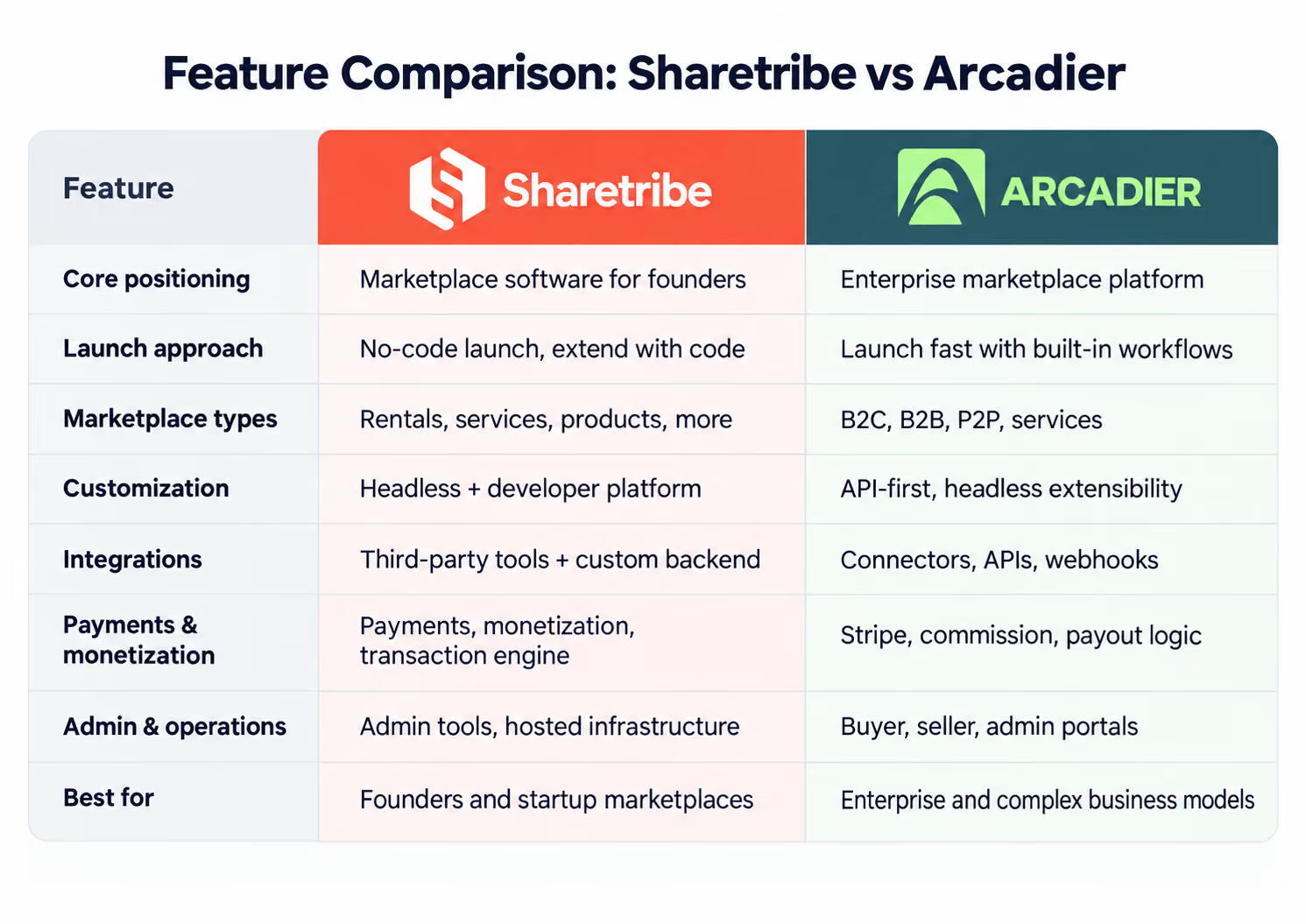
Feature Comparison: Sharetribe vs Arcadier
At first glance, both platforms offer similar core features. But the devil is in the details, and those details matter when you're building a business.
No-code customisation. Both platforms let you build a marketplace without coding. Sharetribe gives you more control over layout and branding through its dashboard. Arcadier's interface is simpler, which is good if you want to move fast but limiting if you need to differentiate your brand.
Mobile apps. This is a meaningful difference. Sharetribe doesn't offer native mobile apps out of the box. Arcadier also doesn't include native apps in its standard offering. If mobile is critical to your marketplace—and for many founders, it is—both platforms require additional development work or using a third-party app builder.
API and customisation depth. Sharetribe's API is mature and well-documented. It's designed for developers who want to build custom features or integrations. Arcadier offers API access too, but mainly in its enterprise plan, which means custom development costs scale quickly if you need advanced integrations.
Payment options. Both support major payment providers. Sharetribe supports Stripe and PayPal natively. Arcadier similarly supports common payment gateways, but the range of payment integrations available is narrower, which can be a limiting factor if you operate in certain regions.
Listing types. Sharetribe supports rental, service, and product marketplaces well. Its feature set reflects years of focus on these three models. Arcadier is more generic, which works for product marketplaces but feels less optimised for rental and service models.
Scalability and Technical Architecture
Both platforms are cloud-hosted, so you don't need to manage servers. That's table stakes. The real question is: can the platform grow with your business without becoming a constraint?
Sharetribe was built with scalability in mind from the start. It's used by large, successful marketplaces that do millions in annual transactions. The platform can handle high traffic, complex commission structures, and many parallel transactions. If you're planning to grow seriously, Sharetribe's track record gives you confidence.
Arcadier can scale too, but founders often hit its ceiling earlier. When your marketplace gets busy or your feature needs become complex, Arcadier's flexibility starts to feel limited. Many founders who start on Arcadier end up needing to migrate when they realise they need customisations the platform won't support easily.
This is where the technical architecture matters. Sharetribe's API is designed to be extended. Arcadier's is more of an afterthought. That means if you need to build something custom—a loyalty program, integration with your supplier database, a unique pricing model—Sharetribe gives developers more to work with.
=>>> Read More: Sharetribe vs Medusa: Which Platform Fits Your Marketplace
Pricing and Cost Structure
This is where many founders focus first, and it's worth understanding the trade-offs.
Arcadier's base plan is cheaper upfront. For new founders testing an idea, that appeals. Arcadier's entry-level plan starts lower than Sharetribe's. But as your marketplace grows—more listings, more transactions, more customisation needs—Arcadier's pricing can climb quickly. If you need API access or custom development, you're often looking at the enterprise plan, which erodes the cost advantage.
Sharetribe's pricing is higher to start, but it's more transparent and scales more predictably. You know roughly what you'll pay as you grow. And because the platform supports more customisation natively, you're less likely to be forced into expensive custom development just to get basic features.
Think of Arcadier as cheap to start but potentially expensive to scale. Sharetribe is pricier initially but often cheaper in the long run if growth is your plan.
User Experience and Setup Time
Speed matters for a founder. Can you launch in days or weeks?
Both platforms let you launch a marketplace quickly. Arcadier is slightly faster for a very basic marketplace—a product listing site with minimal customisation. Sharetribe takes a bit longer because it gives you more options to configure, but that's not a massive difference. Both can be live in days, not months.
The difference shows when you want to go beyond the default template. Sharetribe's interface is more powerful but has a steeper learning curve. Arcadier's is simpler but hits its limits faster. For a non-technical founder, Arcadier feels easier initially. For a founder who knows what they want and isn't afraid to dig into settings, Sharetribe offers more control.
When to Choose Sharetribe vs Arcadier
The decision comes down to your marketplace type, your growth ambitions, and your willingness to pay for flexibility.
Choose Sharetribe if: You're building a rental or build service marketplace and expect serious growth. You need mobile apps or custom integrations. You want to scale without rebuilding later. You're willing to invest upfront for a platform that won't become a bottleneck. You value a strong community and years of proven marketplace expertise.
Choose Arcadier if: You're testing a simple product marketplace idea. You want the absolute lowest entry cost. Your customisation needs are minimal. You're happy to migrate later if the business grows.
Honest take: if growth is your real goal, Sharetribe is usually the better choice. The upfront cost difference is small compared to the cost of migrating later or building custom features. If you're truly running a short-term test with minimal budget, Arcadier works. But even then, founders often find they outgrow it faster than expected.
=>>> Related Post: Sharetribe vs Bubble: Which Platform Is Best for Your Marketplace?
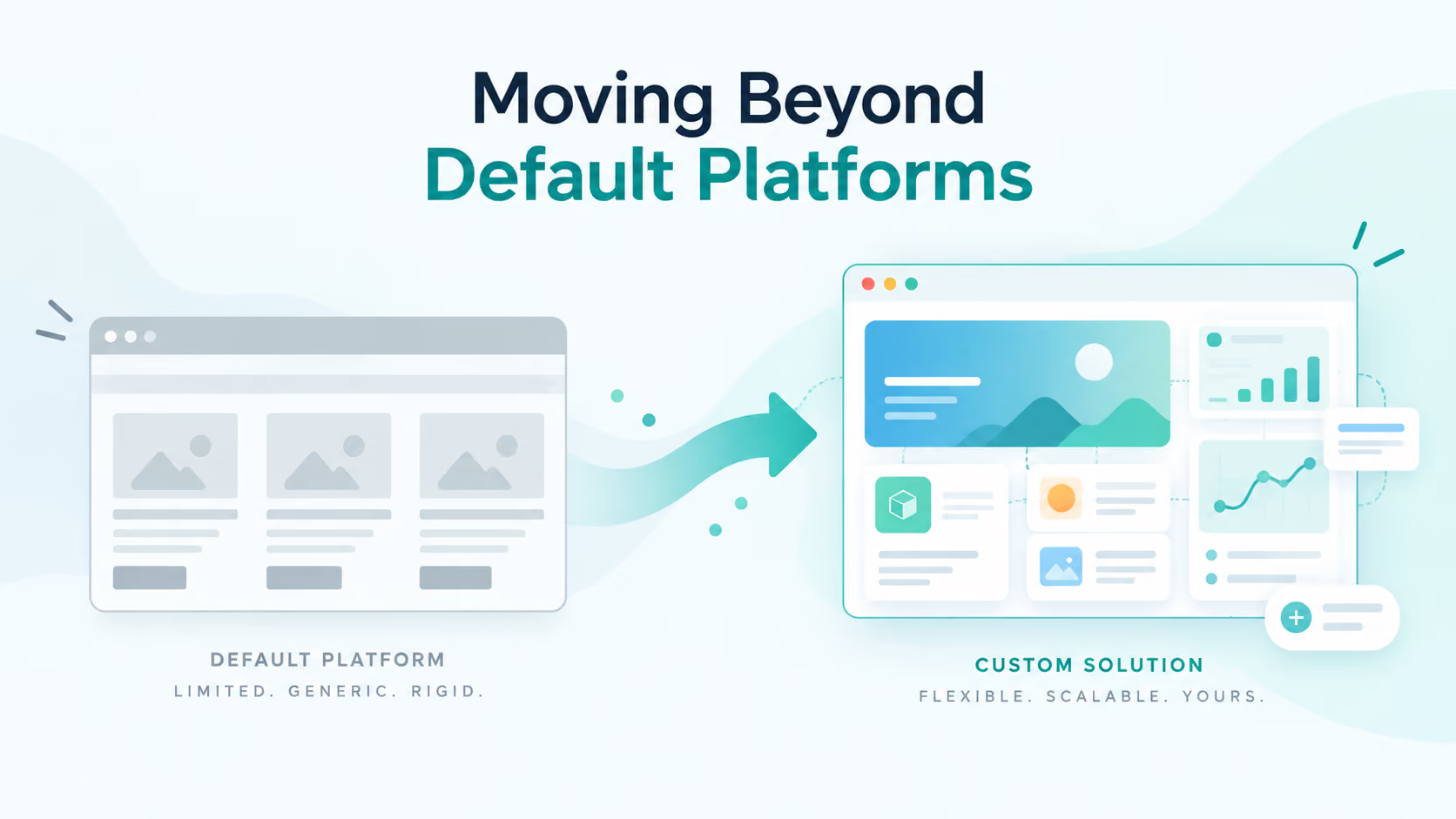
Moving Beyond Default Platforms
Here's the truth that both Sharetribe and Arcadier documentation won't tell you directly: many successful marketplaces eventually need custom development beyond what either platform offers out of the box.
Maybe you need a unique payment model. Maybe you're serving a specific geography and need local compliance features. Maybe you want AI-powered matching or advanced search. Maybe you need mobile apps that actually reflect your brand. Or maybe you're ready to build plugins and features that are specific to your marketplace model.
That's where the choice between these platforms becomes less about features and more about flexibility. Sharetribe's API is mature enough to support serious custom development. Arcadier's is more limited. If you know you'll need customisation eventually, choosing Sharetribe saves you from a painful migration later.
Many founders working with Journeyhorizon on custom marketplace development start with a no-code platform to validate the idea, then graduate to custom development or platform extensions as they grow. The teams that chose Sharetribe had an easier time doing that migration. Those who chose Arcadier often found they needed to rebuild, which is expensive and time-consuming.
=>>> Read More: Sharetribe vs Kreezalid: Choose Your Marketplace Platform
Frequently Asked Questions
Which platform is better for rental marketplaces?
Sharetribe is purpose-built for building rental marketplaces and offers more features tailored to that model—calendar availability, damage handling, and availability management. Arcadier can handle rental, but it's not specifically optimised for it. If rental is your focus, Sharetribe is the stronger choice.
Can I migrate from Arcadier to Sharetribe later?
Yes, but it's painful. Your data needs to be extracted and reformatted. Your users have to re-create profiles. Your listings need to be re-entered or imported. Your payment history is left behind. Both platforms provide export tools, but migration always costs time and some data loss. It's far better to choose the right platform at the start.
Do I need a developer to use either platform?
For basic setup, no. Both platforms have no-code dashboards designed for non-technical founders. But to customise beyond templates or integrate with external systems, you'll want developer support. Sharetribe's API attracts more developers, so finding help is easier.
Which platform supports the most languages?
Both support multiple languages out of the box. Sharetribe supports more and has stronger community support for localisation. Arcadier supports key languages but with less flexibility. If operating internationally is core to your strategy, Sharetribe is more battle-tested.
The Bottom Line
Sharetribe and Arcadier both solve the same problem: they let marketplace founders launch without building from scratch. But they solve it differently. Arcadier is faster and cheaper to start. Sharetribe gives you more runway for growth and customisation without rebuilding.
For most founders with serious growth ambitions, Sharetribe is the better long-term choice. For quick tests with minimal budget, Arcadier works. But be honest about your ambitions before you choose. The platform you pick now shapes whether you'll scale smoothly later or hit a wall and need to migrate.
If you're ready to move beyond what a no-code platform can offer—building custom features, integrations, or mobile apps—that's where custom marketplace development becomes relevant. Many founders pair a platform like Sharetribe with expert development partners to build the features that differentiate their marketplace. That's the approach teams take when they're serious about competing and scaling.