Top 10 Websites Like OfferUp: Platform Solutions vs Custom Development

When you decide to build a marketplace, one of the first questions you'll face is simple but consequential: should you use an existing marketplace platform, or build from scratch? If you're searching for a website like OfferUp, you're probably not looking for OfferUp itself. You're looking for the right solution to launch your own peer-to-peer marketplace without starting from zero. The problem is, the market has fragmented dramatically. There are now dozens of ready-made platforms, no-code solutions, and hybrid approaches competing for your attention. Each comes with a different set of trade-offs that few founders really understand until it's too late.
The decision between platform solutions and custom development isn't straightforward. A tool that works beautifully for one marketplace founder can be a productivity nightmare for another. Journeyhorizon has worked with over 200 marketplace founders navigating this exact decision. The ones who succeed are those who understand what they're trading when they choose convenience over control, speed over customisation, and cost certainty over long-term differentiation.
What Founders Really Mean By "Website Like OfferUp"
When founders search for a website like OfferUp, they typically mean one of three things. First, they're evaluating the peer-to-peer classified marketplace model as a business worth replicating in their own geography or niche. Second, they're exploring whether ready-made platforms can deliver what OfferUp delivers. Third, they're trying to understand the spectrum of approaches available before committing significant capital to development.
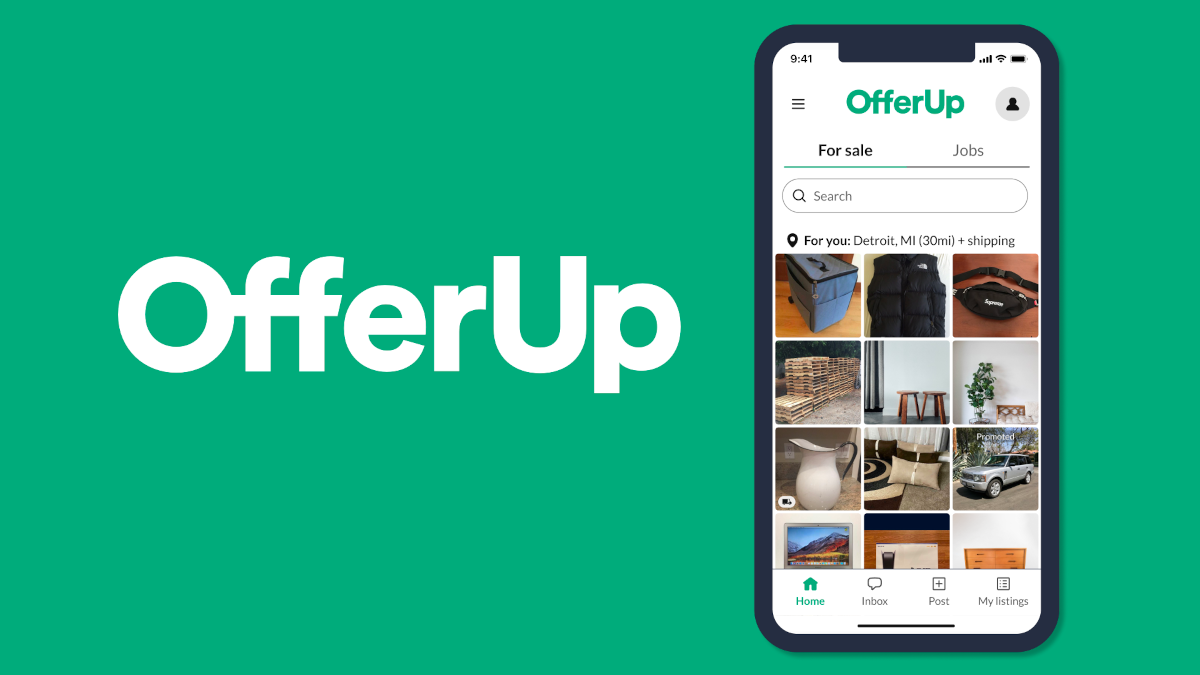
OfferUp's appeal is deceptively simple: it removed friction from local selling by making listing creation photo-first, matching location-based, and payments optional. The platform proved there's sustainable demand for platforms that make local commerce frictionless. But building a marketplace like OfferUp doesn't require replicating OfferUp's code. It requires replicating the core insight: understand what your specific market needs and build the minimum viable solution that solves it better than existing alternatives.
Top 10 Websites Like OfferUp
If you’re selling a sofa that has to be picked up this weekend, start with Facebook Marketplace, Craigslist, or Nextdoor. If you’re selling a rare camera lens or a discontinued game console, eBay may be a better fit because buyers can search for the exact model and have it shipped. Dedicated marketplaces such as Poshmark and Swappa are worth checking when the item belongs to a category where buyers look for specific brands, sizes, or technical details.
Here’s how 10 websites like OfferUp compare, what each one is good for, and where you may be better off listing somewhere else.
1. Facebook Marketplace for everyday local sales
Facebook Marketplace is a practical first stop for furniture, appliances, bikes, and other items people would rather collect than pay to ship. Buyers can browse listings in their area and message sellers about availability and pickup. It works especially well when someone is already looking for a common item nearby, such as a desk for a new apartment.
Expect to handle the details yourself. A bookshelf listing with its dimensions, a photo of any damage, and a clear pickup window gives buyers enough information to decide before they message. For an item people are likely to search for by model number, it’s also worth checking eBay to see what comparable items have sold for.

2. Craigslist for bulky items and local classifieds
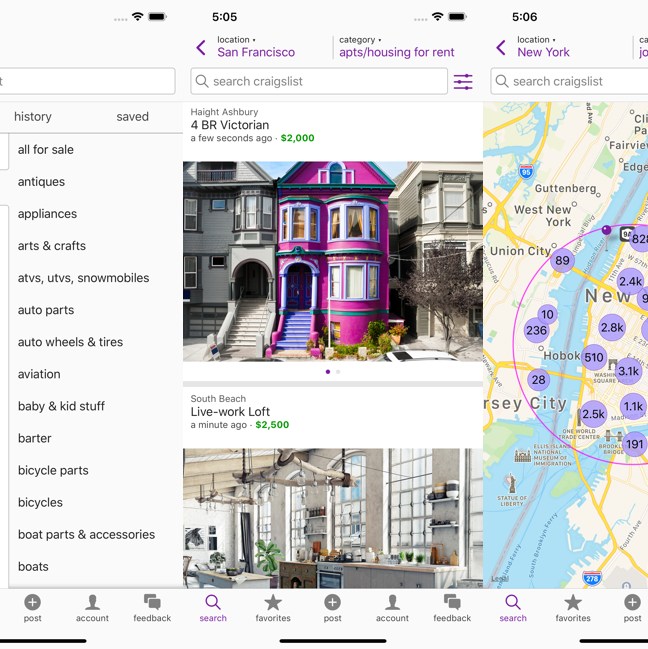
Craigslist is organized around local areas and categories. It’s a good place to list items people expect to inspect or collect in person, such as workshop tools, patio furniture, or a used washing machine. Buyers contact the seller directly, so most of the transaction happens through the conversation that follows the listing.
That simple setup gives you room to explain pickup requirements. If a workbench needs two people to carry it or a cabinet has to be collected before moving day, put that in the listing. Craigslist suits sellers who are comfortable arranging the handover themselves.
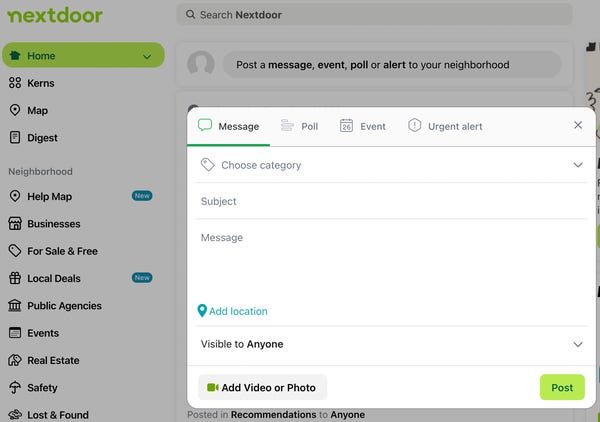
3. Nextdoor for neighborhood sales and giveaways
Nextdoor’s For Sale & Free section is built around nearby neighbors. It’s a useful choice when convenience matters more than reaching a large audience. A box of moving supplies, a spare planter, or a set of children’s books may be easy for someone a few streets away to collect.
The neighborhood focus also limits your audience. A free shelf may find a taker nearby, while a high-end mountain bike may need to be listed on a broader marketplace to find someone looking for that model. Start here when the item has everyday use and you’d prefer a quick handover close to home.
4. eBay for collectibles and hard-to-find items
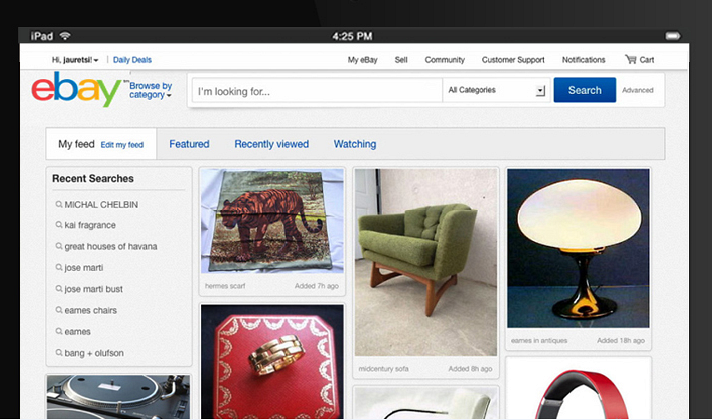
eBay makes sense when buyers know exactly what they want. A discontinued camera lens, a vintage jacket from a particular collection, or a limited-edition game can appeal to buyers well outside your local area. Sellers can use a fixed price or run an auction.
Before setting a price, look at completed sales for the same model in comparable condition. Asking prices tell you what sellers hope to get. Sold prices give you a better point of reference. Also factor in the cost of packing and shipping. A small collectible is usually easier to send than a heavy vintage amplifier, even when both have buyers on eBay.
5. Mercari for selling a mix of items you can ship
Mercari is useful when you have a little bit of everything to sell: books, toys, shoes, small appliances, and clothes. You can list across categories and select a shipping option without having to split your clear-out across several specialist sites.
The item’s size and weight matter, especially at the low end of the price range. A $10 toy can be harder to sell if shipping adds almost as much to the buyer’s total. A few related items, such as books from the same series, may make more sense as one listing. For large or fragile items, a local pickup marketplace is often simpler.
6. Poshmark for branded clothing and bundles
Poshmark is a better fit for a closet clear-out than a garage clear-out. Buyers can browse a seller’s closet, and the Bundle feature lets them buy several listings from that seller in one order. Sellers can also send an offer on a bundle.
That works best when your listings appeal to the same shopper. A buyer looking at one piece of activewear may also want another item from the same brand in their size. For basic, low-priced pieces, check your expected earnings before making an offer. The sale price needs to leave you enough after fees and any discount you give the buyer.

7. Swappa for used phones, laptops, and other tech
Swappa focuses on used and refurbished technology. It’s worth checking when the details determine what an item is worth. A buyer shopping for a phone may want a specific storage capacity, carrier compatibility, and condition. A broad local listing titled “Used iPhone” leaves many of those questions unanswered.
Use Swappa to compare devices with the same specifications. If you’re selling, confirm the model and describe its condition accurately before setting a price. If you’d rather have a buyer inspect the device in person and collect it the same day, a local marketplace may suit the sale better.
8. Gumtree for local buying and selling in the UK
Gumtree is a UK classifieds option for items such as furniture, bicycles, and household goods. It’s particularly useful for collection-only listings. Someone furnishing a flat can search locally for a kitchen table or a set of drawers without needing to arrange long-distance delivery.
The advantage depends on how many buyers and sellers are active in your area. Search for similar items near your postcode before listing. That gives you a sense of local asking prices and shows how much detail other sellers provide about the item, its condition, and collection.

9. Kijiji for local classifieds in Canada
Kijiji is a Canadian classifieds marketplace where buyers can browse by location and category. It’s a practical option for items people want to see or collect locally, such as exercise equipment, household electronics, or secondhand furniture.
Start by checking listings in your own city or region. A price that looks competitive nationally may be too high for your local market, especially if several nearby sellers have similar items. For collection-only goods, an accurate description and a pickup area are often more useful to the buyer than a long sales pitch.

10. Carousell for secondhand shopping in Singapore and Hong Kong
Carousell is a useful option in markets such as Singapore and Hong Kong for secondhand fashion, electronics, and everyday goods. It’s worth comparing if you want a local marketplace and need to know what payment and handover options are available before committing.
Those options vary by market and listing. On some listings, buyers can use the platform’s Buy button. For others, they may need to message the seller to agree on how to pay or receive the item. If you’re comparing two similar listings, check the handover method as well as the asking price.
![Singapore] My Sales page on desktop web – Carousell Help Centre](https://cdn.prod.website-files.com/67564d33c3096ee923c26214/6b0403ead632d51427fb1ad4_35647032102041.png)
Platform Solutions vs. Custom Development: The Real Spectrum
The marketplace landscape now spans a spectrum from fully managed to fully custom. On one end, you have no-code solutions like Bubble or FlutterFlow that let you assemble marketplace features through visual interfaces. In the middle, you have specialised marketplace platforms like Sharetribe that give you a functional marketplace ready to launch within weeks. Towards the other end, you have hybrid approaches like building custom code on top of Webflow for simpler marketplaces. At the far end, you have full custom development where your engineering team builds every component from scratch.
Each approach has a cost profile and a timeline attached. No-code tools cost less upfront but often break down when you hit scaling challenges. Platform solutions like Sharetribe cost more monthly but remove a lot of engineering work. Custom development costs more initially but gives you infinite flexibility and the potential to differentiate through features your competitors can't replicate.
Marketplace Platforms You Can Launch Today
If you search for website like OfferUp solutions, you'll quickly encounter platforms designed specifically for marketplace operators. Sharetribe is the most robust option for peer-to-peer and two-sided marketplaces. It handles geolocation, search, messaging, payment integration, and trust mechanisms. You can launch a functional marketplace in 4 to 8 weeks using Sharetribe as your foundation. The platform costs between USD 500 and USD 2,500 per month depending on transaction volume and features.
The advantage of Sharetribe is that it's fully customisable. You're not locked into a rigid interface. With experienced Sharetribe developers, you can modify the front end, adjust workflows, and integrate third-party services. This is why it appeals to serious marketplace builders who need control but want to accelerate launch. Many of the most successful recent marketplaces chose Sharetribe precisely because it balances speed with the flexibility they needed to differentiate.
Other platforms like Dokan (for multi-vendor eCommerce) or Poshmark (niche fashion) work well for specific categories but are often more constraining. They're excellent if your marketplace fits their intended use case. They're limiting if you need to deviate significantly from their design philosophy.
Hybrid Approaches: When Existing Tools Partially Solve Your Problem
Not every marketplace fits neatly into a category. Some founders find that combining tools works better than choosing one. For example, you might use Webflow for the marketing website and content strategy, then layer in a specialised marketplace tool for the transactional layer. You might use Zapier or Make to glue systems together, handling logic that no single platform covers well.
This hybrid approach, such as combining Webflow with Sharetribe, is increasingly common for simpler marketplaces. It's faster than full custom development and cheaper than building everything bespoke. The trade-off is complexity and maintenance overhead. You're managing multiple systems, and when something breaks, you need to diagnose which layer failed.
The Hidden Cost of "Ready-Made" Marketplace Solutions
This is where most marketplace founders misjudge their investment. Platform solutions have transparent monthly costs, which feels predictable. But there are hidden expenses that add up quickly. When you hit scaling challenges (and you will), you'll need to invest in custom development to work around platform limitations. If your marketplace grows beyond the platform's core strengths, you'll find yourself paying for features you'll never use while wishing you could add features the platform doesn't support.
Many founders discover too late that platform customisation has limits. You can't modify the core matching algorithm if it doesn't prioritise what your users care about most. You can't implement a trust mechanism that's specific to your market category. You can't control payment flows precisely enough to handle your local regulations. These constraints aren't bugs. They're architectural decisions baked into the platform.
The total cost of ownership for a platform solution often exceeds the cost of custom development after three years. This is especially true if your marketplace reaches meaningful scale or needs differentiation to survive in a competitive niche.
When to Build Custom: The Real Competitive Advantage
Building custom doesn't mean you build everything alone. It means you work with specialised marketplace developers who understand platform architecture, geolocation systems, payment integration, and growth mechanics. Many successful marketplaces started with Sharetribe or a similar platform to validate their business model, then moved to custom code as they scaled and needed to differentiate.
Custom development makes sense when you need features that platforms don't offer, when you're operating in a regulated category with specific compliance needs, or when your unit economics demand that you own and optimise every part of the stack. It also makes sense when you plan to scale aggressively. Custom platforms scale more efficiently than multi-tenant platforms because you can optimise every layer for your specific use case.
Custom marketplace development for a peer-to-peer platform typically takes 6 to 9 months and costs between USD 150,000 and USD 500,000 depending on complexity and geography. This sounds expensive until you compare it to the long-term cost of platform fees, the constraints you'll hit, and the features you won't be able to build. Many founders find that custom development pays for itself within 2 to 3 years through lower transaction fees, better user retention, and the ability to capture additional value through features that platforms can't support.
Making the Strategic Decision: Framework for Marketplace Founders
Here's how to think about your choice. Start with your timeline. If you need to validate your concept with a marketplace MVP within 90 days, use a platform. If you're launching a niche marketplace where speed to market matters more than differentiation, use a platform. If you have 12 to 18 months and need to build a defensible marketplace, custom development is worth considering.
Consider your competitive environment. If you're entering a crowded category where ten other platforms already exist, custom development lets you build features that differentiate you. If you're pioneering a new niche where no competitors exist yet, platform solutions let you move fast without over-engineering.
Evaluate your technical team. If you have in-house engineers comfortable with marketplaces, custom development becomes more feasible. If you're non-technical, a platform solution reduces execution risk. If you're somewhere in the middle, you might benefit from a hybrid approach where an experienced development partner handles the technical complexity while you focus on marketplace strategy and user acquisition.
Think about your funding situation. Platforms are better for bootstrapped founders because they reduce upfront capital requirements. If you have venture funding, custom development becomes an investment in a defensible product that can scale efficiently.
Building Your Marketplace: A Practical Path Forward
Most successful marketplace founders follow a predictable pattern. They start by validating that real demand exists in their market. They do this by running simple tests—maybe a Facebook group, a manual matching process, or a basic website. Once they've proven demand, they move to a platform solution to test the product-market fit with a real marketplace interface. This phase typically costs USD 5,000 to USD 50,000 and takes 8 to 12 weeks.
If their marketplace gains traction, they then evaluate whether they need custom development. By this point, they understand what features matter, which integrations are critical, and where platforms constrain their vision. They can make an informed decision about custom development rather than guessing upfront.
Journeyhorizon has guided marketplace founders through this exact journey. Whether you're evaluating whether a platform solution like Sharetribe makes sense for your marketplace, or you're ready to build custom code because platform constraints are limiting your growth, the right partner understands both paths. They can help you navigate the decision framework without pushing you towards the approach that's easiest for them to deliver. That's what separates a trusted advisor from a service provider.
Frequently Asked Questions
How long does it take to launch a marketplace using a platform like Sharetribe?
A functional marketplace typically launches within 4 to 8 weeks using Sharetribe, assuming you've already validated your business model and have clear product requirements. The timeline includes platform setup, design customisation, payment integration, and testing. If you need additional customisation or integrations, add another 2 to 4 weeks.
What's the total cost of running a website like OfferUp on a platform?
Platform costs for Sharetribe typically range from USD 500 to USD 2,500 per month depending on transaction volume and features. Add hosting, payment processing fees (typically 2.9% plus USD 0.30 per transaction), customer support infrastructure, and marketing. Most founders budget USD 5,000 to USD 15,000 per month to run and grow a marketplace during the first year, regardless of platform choice.
Can you migrate from a platform to custom development later?
Technically yes, but platform migration is non-trivial. You'll need to export your data, rebuild your platform architecture, and migrate users without disrupting the marketplace. Many founders find that building custom from the start, once they've validated demand, is less painful than migrating from a platform. This is why starting with a platform for validation, then moving to custom for scaling, is often the optimal path.
What's the biggest mistake marketplace founders make when choosing between platform and custom?
Assuming the cheaper option is the better option. A platform might be USD 1,000 per month, while custom development might be USD 200,000 upfront. But if custom development lets you differentiate your marketplace and capture additional margins, the payback period might be 12 months. Most founders severely underestimate the long-term cost of platform constraints.