White-Label Marketplace: The Complete Guide for Founders in 2026

Launching a marketplace is an ambitious journey. Every founder wants to move fast, stay lean, and build something that can grow without breaking. That is exactly why the white-label marketplace model is gaining so much attention. It removes the technical heavy lifting and gives you a powerful starting point, so you can focus on validating your idea and getting real traction.
In this guide, you will learn what a white-label marketplace is, why so many founders are choosing it, the features that matter most, and how to pick the right platform for long-term success.
As founders explore this path, many seek guidance to understand their options. Journeyhorizon helps teams compare platforms and choose what fits their goals. If you are considering a white-label marketplace, the insights in this guide will give you a clearer starting point. We also offers a simple Marketplace Template that removes technical friction and supports faster growth.
1. What a white-label marketplace really is
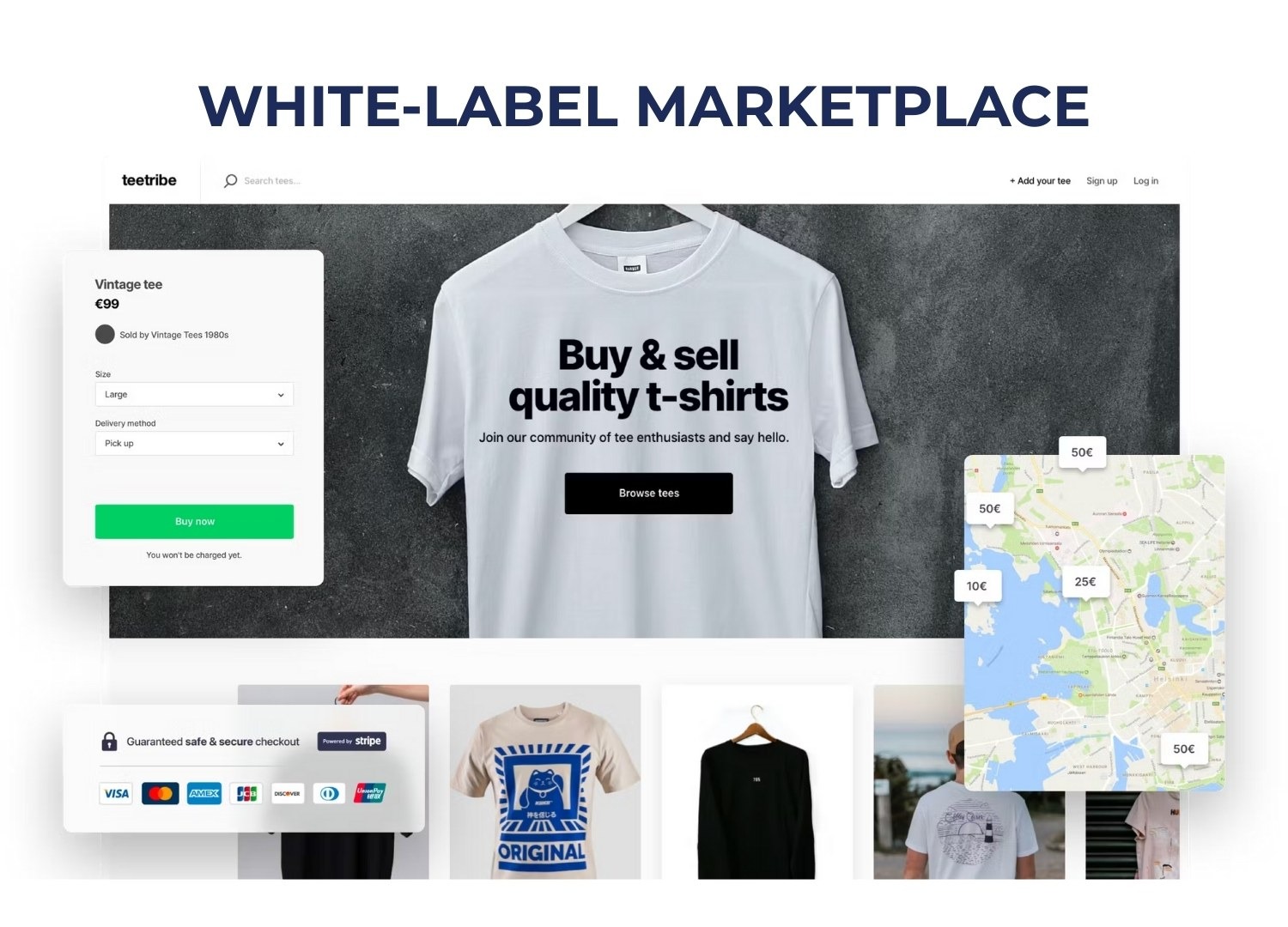
A white-label marketplace is a ready-made platform that gives you everything you need to launch a multi-vendor marketplace, then lets you brand it entirely as your own. Instead of spending months building complex features like vendor onboarding, listings, and payments, you start with a solid foundation that is already built.
Founders love this approach because it turns a long, risky development journey into a fast and manageable launch. You can test your idea, attract real users, and start growing your marketplace much sooner. It is a simple, cost-effective way to bring your vision to life and scale into new markets with confidence.
2. Why more founders choose white-label marketplace solutions
For founders comparing different ways to build a marketplace, white-label solutions stand out for several practical advantages. These benefits directly impact how quickly a marketplace can operate, scale, and compete. The most important advantages include:
2.1. Faster time-to-market
A prebuilt marketplace architecture allows teams to configure workflows, branding, and vendor operations much faster than building from scratch. This acceleration is especially important for founders who want to launch an MVP (Minimum Viable Product) quickly in order to validate demand and gain early traction. In competitive industries, being first to market can significantly influence customer adoption and vendor acquisition.
2.2. Multi-vendor functionality included
Vendor dashboards, onboarding flows, product management tools, commission settings, and payout automation are already included in modern white-label marketplace platforms. These features often take months to develop from scratch.
2.3. Control over branding and user experience
Even though the software is not custom-built, businesses can still create a fully branded and unique marketplace experience. Founders can customize colors, layouts, navigation, and vendor workflows without writing code.
2.4. Predictable and manageable costs
Instead of unpredictable development spending, founders typically pay a subscription or licensing fee. This helps with financial planning and reduces the need for a large technical team.
2.5. Scalability
Most platforms support multiple categories, regions, languages, and currencies. This makes it easier for founders to expand their marketplace offerings without major redevelopment.
3. Core features of modern white-label marketplace software
Not all white-label marketplace platforms are the same. Founders should evaluate which features matter most to their business model.
3.1. Multi-vendor architecture
The platform should support vendor registration, verification, product or service listings, and seller dashboards. These tools allow vendors to operate independently while the marketplace owner maintains overall governance.
3.2. Catalog, inventory, and order management
A modern marketplace requires accurate product data, inventory levels, and order monitoring. These systems ensure that buyers receive the correct items or services without manual intervention.
3.3. Payment integrations and multi-currency support
Secure checkout, escrow, payouts, and global payment capabilities are essential. Many platforms integrate with Stripe, PayPal, Adyen, and other major payment processors.
3.4. Commission and monetization models
Since marketplace businesses depend on transaction-based revenue, the ability to configure commission rates, subscription fees, or hybrid pricing models is critical.
3.5. Customizable storefront
Even within a white-label system, founders should be able to personalize the buyer and vendor experience. This includes themes, layout, product display rules, and mobile responsiveness.
3.6. Security, compliance, and data protection
The platform must support fraud detection, safe data storage, GDPR compliance, and secure payment flows. This protects both vendors and customers.
3.7. API and integrations
As a marketplace grows, it will likely need integrations with shipping carriers, accounting tools, CRM systems, or ERPs. A platform with a strong API makes these extensions possible without rebuilding the system.
4. How to build a marketplace using a white-label solution
Founders searching for how to build a marketplace often discover that white-label solutions offer the simplest learning curve and the lowest barrier to entry. The steps below provide a practical roadmap, even if you do not have a technical background.
Step 1. Define your marketplace model
Clarify what type of marketplace you are building. For example:
- Services Marketplace: A platform that connects service providers with clients. It often includes scheduling, booking systems, and service delivery tracking.
- Rental Marketplace: A platform for renting items rather than purchasing them. It includes features like item availability tracking, rental durations, and payment handling.
- Ecommerce Marketplace: A platform that facilitates the buying and selling of goods online, combining aspects of both product marketplaces and digital storefronts.
- B2B Marketplace: Platform for business-to-business transactions, focused on bulk buying, wholesale pricing, and long-term partnerships.
Each model has different workflow requirements.
Step 2. Select the right platform
Evaluate white-label marketplace platforms based on cost, features, scalability, and your long-term business goals. Each platform has strengths that align with specific marketplace types.
Step 3. Customize branding and user experience
Most white-label marketplace software includes visual editors that allow you to update branding, navigation, vendor flows, and homepage layouts without writing code.
Step 4. Configure policies and operational rules
Set up commission rates, payout rules, vendor approval processes, quality guidelines, refund policies, and customer support procedures.
Step 5. Set up payments, shipping, and integrations
These elements determine whether a marketplace can operate efficiently at scale. Most platforms provide plug-and-play payment integrations and logistics add-ons.
Step 6. Launch an MVP and iterate
Start with a small group of vendors and customers, collect feedback, and improve the platform gradually. Most successful marketplaces refine their onboarding flow, pricing model, and category structure after learning from real usage. You can learn more about creating an effective marketplace onboarding process in our Marketplace Onboarding | How to attract marketplace seller onboarding article.
For a broader look at all the ways to build a marketplace, discover full guide on How to Build a Marketplace.
5. Top white-label marketplace platforms
If you are evaluating white-label marketplace solutions, the platforms below are among the most established in the industry.
5.1. Sharetribe
Sharetribe is one of the most trusted multi-vendor marketplace platforms, valued for its stability, clean architecture, and extensive documentation. It allows founders to launch quickly while still supporting custom workflows and scalable business models. The platform works well for product, service, and rental marketplaces.
Journeyhorizon, as an official Sharetribe partner, helps founders with setup, customization, workflow design, and long-term growth planning tailored to their goals.
5.2. Yo!Kart
Yo!Kart is a robust white-label eCommerce marketplace platform designed for both B2B and B2C environments. Its modular architecture gives businesses the flexibility to expand functionality as they grow. The platform includes essential vendor management tools such as dashboards, inventory controls, and multi-language support. It is a strong fit for founders seeking a scalable and performance-driven marketplace solution.
5.3. Arcadier
Arcadier offers a flexible suite of white-label marketplace solutions for retail, services, rentals, and niche verticals. With its intuitive interface and API-driven customization options, it allows teams to tailor workflows without extensive coding. Arcadier appeals to founders testing new marketplace ideas or building specialized platforms. Its versatility makes it a popular choice for multi-category businesses.
5.4. Marketplacer
Marketplacer is an enterprise-grade marketplace platform built for established brands and retailers looking to expand into multi-vendor commerce. It excels in handling large catalogs, complex integrations, and high transaction volumes. The platform’s infrastructure supports long-term scaling and operational efficiency. Marketplacer is often chosen by companies transitioning from traditional eCommerce to marketplace-driven growth.
5.5. CS-Cart Multi-Vendor
CS-Cart Multi-Vendor is an on-premise marketplace software known for its strong customization capabilities and comprehensive vendor management tools. It gives businesses full control over hosting, configurations, and feature development. With a rich feature set and competitive pricing, it appeals to teams seeking greater ownership of their technology stack. CS-Cart is a solid option for founders who anticipate deeper customization needs.
6. How to choose the right white-label marketplace platform
Choosing the right white-label marketplace platform requires both strategic alignment and practical evaluation. The checklist below helps founders assess which solution fits their goals.
- Business model fit
Confirm that the platform supports the type of marketplace you plan to build, such as B2C, B2B, services, rentals, or digital products. - Customization level
Some marketplaces need custom workflows, integrations, or vendor processes. Make sure the platform allows enough flexibility for your model. - Cost structure
Compare setup fees, subscription or licensing costs, hosting, and any development work needed. Focus on total cost of ownership rather than just the starting price. - Scalability
Check whether the platform can grow with your business, including more vendors, higher transaction volume, and expansion into new categories or regions. - Documentation, support, and ecosystem
Strong support, clear documentation, and a healthy plugin ecosystem reduce the operational and technical workload for your team. - API maturity and integrations
A reliable API makes it easier to connect payments, logistics, CRM, marketing tools, and future systems as your marketplace evolves.
To make your decision faster and more confident, you can speak directly with Journeyhorizon’s marketplace specialists. Start your evaluation by completing this consultation request form.
7. Conclusion
A white-label marketplace offers founders an efficient and strategic way to launch, validate, and scale a marketplace business. Whether you are building a product marketplace, a services marketplace, or a multi-vertical platform, choosing the right white-label marketplace platform is one of the most important decisions you will make.
If you are still evaluating your options, Journeyhorizon can provide platform-neutral guidance to help you compare solutions, understand your technical needs, and select the best path forward. A well-planned marketplace foundation will enable you to scale confidently and build a long-term competitive advantage.
8. FAQs
1. What is a white-label marketplace?
A white-label marketplace is a ready-made multi-vendor platform such as Sharetribe, that you can brand and customize as your own without building core marketplace features from scratch.
2. Who should use a white-label marketplace solution?
It is ideal for founders who want to launch quickly, validate their idea with real users, and scale without investing in heavy custom development.
3. What features should I look for in white-label marketplace software?
Key features include multi-vendor tools, payment integrations, customizable storefronts, commission settings, security, and API support.
4. How do I choose the right white-label marketplace platform?
Evaluate business model fit, customization needs, total cost of ownership, scalability, available integrations, and the quality of documentation and support.
5. Can a white-label marketplace scale as my business grows?
Yes. Most modern platforms support growth through multi-category expansion, high vendor volume, global payments, and integrations that extend functionality over time.
.avif)