How to Choose a Cross Platform App Development Company
Building a successful digital product means reaching users wherever they are. Most businesses understand this in theory, but the reality is more complex: iOS users have different expectations from Android users, your product needs to perform consistently across devices, and your web presence often has to connect with the same underlying system. A cross platform app development company can simplify this challenge significantly, but choosing the right one matters more than you might think. Partners like Journeyhorizon recognise this nuance and build accordingly.
The choice isn't really about which framework looks most impressive in a pitch deck. It's about finding a partner who understands your product, your growth timeline, your technical requirements, and the constraints of maintaining applications across multiple platforms. This is where many businesses stumble, and where the right strategic decisions can save months of development time and significant unnecessary cost.
Why Businesses Need Cross-Platform Apps
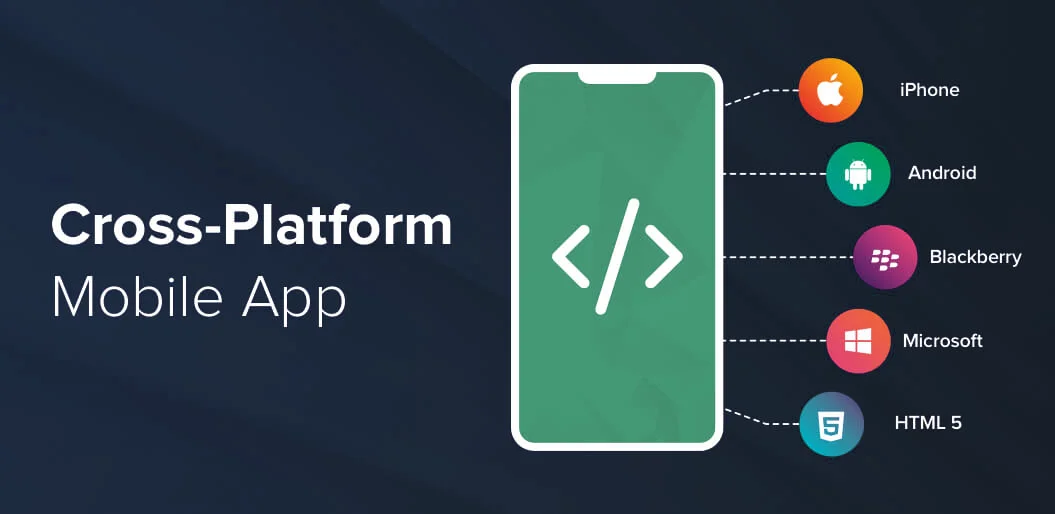
Users rarely stay on a single device or operating system. Your audience may use iPhones, Android phones, tablets, desktops, or a combination of all four. The moment you launch iOS-only or Android-only, you've already limited the number of people who can access your product. A cross platform app development company that understands this isn't simply building another mobile interface — it is helping you create a product that can operate consistently across the platforms your customers actually use.
The practical problem is straightforward: native iOS and native Android development requires separate codebases, separate specialist skills, and more maintenance. When you're moving quickly, validating a product, or continuously releasing new functionality, that overhead can slow development significantly. That's why businesses increasingly expect a cross platform app development company to deliver on iOS and Android simultaneously from a shared codebase without sacrificing the responsive, polished experience users expect.
This is where cross-platform mobile app development becomes particularly valuable. Product teams can share business logic, components, testing processes, and development resources across platforms rather than duplicating the same work. When a feature changes, developers can often update one shared codebase instead of implementing and testing the same functionality twice.
But there's another layer businesses sometimes miss. A mobile app rarely exists in isolation. It may connect to a website, CRM, payment provider, analytics platform, internal management system, customer support software, or broader digital ecosystem. If your development partner only thinks about the application screens in front of the user, they're building in isolation rather than building a product that can grow with the rest of your business.
The Reality of Building for Multiple Platforms
Most cross platform app development company websites talk about code reuse and reduced development timelines. That's true, but incomplete. The operational advantage can be just as valuable: fewer version conflicts, simpler release cycles, more consistent functionality, and a smaller testing matrix. For businesses operating with limited engineering resources, these efficiencies matter enormously.
The framework choice also matters less than people sometimes assume. Flutter, React Native, Kotlin Multiplatform and other technologies can all be effective when used in the right situation. What matters more is whether your development partner understands the technical requirements of your product, has delivered production applications before, and has systems in place to avoid common performance and maintainability problems.
A generalist cross platform app development company may be able to deliver technically competent code. A stronger partner will help determine whether cross-platform development is even the right architectural decision in the first place, which framework fits the product, where native code may still be required, and how the application should evolve after launch.
Consider payment processing. An eCommerce, subscription, booking, fintech, or service application may need secure payment flows on both iOS and Android. A developer who has handled these integrations before understands the practical issues: platform policies, payment confirmations, failed transactions, authentication requirements, API behaviour, and creating a checkout experience that remains consistent across platforms while still respecting operating-system conventions.
The same applies to user authentication, push notifications, offline functionality, location services, camera access, analytics, deep linking, file uploads, and third-party integrations. None of these features are unusual, but they become more difficult when an application must behave reliably across multiple operating systems and devices.
This is also why choosing the right Flutter application development services partner can matter when Flutter is the selected framework. The advantage isn't simply knowing how to write Dart code. It's understanding application architecture, native integrations, performance optimisation, release processes, and how to maintain a shared codebase as the product becomes more complex.
Choosing the Right Cross-Platform App Development Company
Not every cross platform app development company is built to serve the same type of client. Some are large generalist agencies. Others specialise in startups, enterprise applications, SaaS products, eCommerce, booking systems, internal tools, or specific technologies such as Flutter and React Native.
Look for three things.
First, look for relevant products in their portfolio. They don't need to have built an application identical to yours, but they should be able to demonstrate experience with similar levels of technical complexity. If your product requires payments, real-time data, subscription management, complex APIs, user-generated content, or multiple account types, look for evidence that the team has solved comparable problems before.
Second, look for evidence that they think beyond code. A strong cross platform app development company should be able to discuss product requirements, UX, architecture, scalability, integrations, analytics, maintenance, and release strategy rather than immediately recommending a framework. The framework should follow the business and technical requirements, not the other way around.
This is where working with a broader custom app development partner can be useful. If the product requires more than a standard mobile interface, the team can consider backend architecture, APIs, third-party integrations, data models, security requirements, and custom workflows as part of the same development process.
Third, understand their process and pace. Can they move quickly while still maintaining quality? Can they ship incrementally instead of waiting months for a perfect first release? Can they explain how design, development, QA, deployment, and post-launch support work? Good cross-platform development is not simply about writing one codebase. It requires a development process that keeps multiple platforms aligned as the product changes.
You should also ask how the team approaches framework selection. A company that recommends Flutter for every project may be optimising around its own expertise rather than your requirements. The same applies to React Native, Kotlin Multiplatform, or native development. The best partners should be able to explain why a particular technology fits your product and where its limitations may become relevant.
Beyond the Build: Long-Term Growth and Scaling
The best cross platform app development company decisions aren't judged only by what happens during the first release. Their real impact becomes clearer when the product starts growing and the development team needs to make larger architectural decisions — adding new integrations, supporting more users, introducing AI-powered functionality, implementing real-time features, expanding into new markets, or connecting the application to additional business systems.
This is why technical depth matters. A well-built cross-platform app should make future development easier, not progressively harder. The codebase should have a clear architecture, reusable components, sensible state management, testing processes, and documentation that allows new developers to understand how the system works.
Businesses also benefit from partners who can support more than the initial build. After launch, your application will need ongoing updates for new operating-system versions, security requirements, third-party API changes, App Store and Google Play policies, bug fixes, performance improvements, and new product features.
A partner like Journeyhorizon, which combines development capability with product and growth thinking, can therefore become more than a delivery vendor. When it's time to make decisions about features, prioritisation, integrations, or platform direction, you're working with a team that understands how those technical decisions affect the wider product.
Long-term economics matter too. Building and maintaining separate iOS and Android codebases can be expensive. A cross-platform approach can reduce this cost significantly, but only if your partner is disciplined about architecture and code quality. Poor implementations can become expensive to maintain because complexity remains hidden until the application grows.
Look for partners with strong engineering practices, clear documentation, consistent code review, automated testing where appropriate, and a commitment to maintainability. The objective of cross-platform app development services should not simply be to launch both applications faster. It should be to create a technical foundation that remains manageable as your product evolves.
For businesses choosing Flutter specifically, Flutter mobile app development services can offer a practical route to supporting iOS and Android through a shared codebase while still allowing custom integrations and platform-specific functionality where necessary. The key is ensuring the architecture is designed for the product you expect to have in two or three years, not just the MVP you need today.
Frequently Asked Questions
What's the real difference between hiring a cross-platform development team and building with multiple native developers?
A genuine cross-platform approach shares business logic, UI patterns, and a single release cycle. This means fewer bugs, faster iteration, and lower maintenance costs. Native development means separate teams, separate codebases, and a much higher burn rate. The trade-off is that cross-platform requires the right framework choice and a team disciplined enough to avoid the temptation to build platform-specific workarounds that fracture the shared code.
How do I know if a cross-platform app will feel native on both iOS and Android?
Modern frameworks like Flutter and Kotlin Multiplatform render native UI components, so the feel is genuinely native, not a web wrapper pretending to be an app. The key is partnering with a team that prioritises native experience equally across platforms, rather than building for one and porting to the other. Ask potential partners for examples and test their existing apps yourself.
Should I choose a cross-platform company based on their framework expertise, or their marketplace experience?
Marketplace experience matters more. A team that knows Flutter but has never built a real marketplace will struggle with the domain-specific complexity. A team that has built multiple marketplaces can evaluate frameworks through the lens of your specific constraints. The framework is just a tool; the expertise lies in knowing which tool fits your situation and how to use it well.
What happens to my codebase when the cross-platform framework changes or becomes less popular?
This is a legitimate concern. Look for partners who can articulate a migration strategy if needed and who aren't emotionally invested in any particular framework. The best partners are pragmatic: they choose based on what serves your business, not what's trendy. Also, established frameworks like Flutter, React Native, and Kotlin Multiplatform have significant institutional backing and large communities, which reduces this risk significantly.
.avif)
.avif)
