Custom Retail App Development: Build Apps That Fit Your Business
.avif)
Most retail business owners assume that off-the-shelf platforms like Shopify, Square, or Lightspeed cover their operational needs. But the reality shifts once a business scales. A retailer managing multiple locations, a marketplace operator coordinating vendors, or a boutique chain with specific workflows quickly discovers that generic platforms create more friction than they solve. This is where custom retail app development becomes a strategic investment, not just a technical project.
For many growing retail businesses, the gap between what their team actually needs and what available software can deliver becomes the limiting factor in growth. Off-the-shelf tools handle the basics, but they rarely fit the way a specific retail operation actually works. Inventory systems don't talk to vendor portals. Booking workflows don't integrate with loyalty programs. Multiple tools create data silos. Team productivity suffers. Costs climb.
The True Cost of Generic Retail Platforms
When a retail business starts, Shopify or similar platforms make sense. The platform handles payments, inventory basics, and customer-facing features. But as operations grow, this simplicity becomes a constraint. A multi-location retailer needs inventory visibility across all stores in real time. A marketplace operator needs vendor management tools that actually match how their vendors work. A subscription-based retailer needs recurring billing workflows tailored to their model. A shop with complex fulfillment needs custom workflows that generic platforms cannot support.
The response is usually to bolt on additional tools. A CRM here. An analytics platform there. A warehouse system. A booking system. Before long, teams manage 8 to 12 disconnected platforms. Data doesn't sync. Inventory numbers conflict. Reporting requires manual work. Team members waste time switching between apps. The monthly SaaS bill keeps growing. This tool sprawl costs more than subscription fees alone. It creates lost productivity, data errors, and operational friction. This is often where custom retail app development becomes a clear strategic choice.
What Drives Retail Businesses to Custom Apps
Retail businesses pursue custom app development for different reasons, but they usually fall into a few clear patterns.
Vendor and marketplace management. If you run a marketplace or multi-vendor retail platform, you need tools to onboard vendors, manage their listings, process payments, handle disputes, and provide them with analytics. Off-the-shelf marketplace platforms like Webflow or Shopify have limits. A custom vendor portal and management system built around your actual workflow is much more valuable. Vendors get a clean interface designed for how they work. You get centralised control and real-time data.
Inventory and supply chain workflows. Retailers with complex inventory needs (multiple locations, different warehouses, consignment stock, dropshipping, batch-based ordering) often find that generic inventory tools create more problems than they solve. A custom inventory system can automate stock transfers, alert you when reorder points are hit, integrate with your suppliers' systems, and provide visibility that would otherwise require manual spreadsheet work. For retail operations with high SKU counts or complex logistics, this often pays for itself within a year.
Customer workflows that don't fit standard e-commerce. Some retailers need booking systems for appointments or consultations. Others need customer portals for subscription management, pre-orders, or exclusive access. Others need tiered loyalty programs with custom reward mechanics. Others need to manage customer segments with different pricing or offer rules. Generic platforms offer templates, but custom apps let you build the exact experience your customers and business need.
Operational automation and internal tools. Retail teams often rely on spreadsheets for scheduling, staff management, inventory counts, vendor communications, or approval workflows. A custom internal app can replace all of this, streamline approval processes, reduce data errors, and make information available to the right people in real time. When your operations team is spending hours each week on manual data entry or coordination, a custom internal tool becomes a force multiplier for team productivity. For UK retailers, a custom application may also need to support local tax rules, accounting workflows, payment methods, fulfilment providers, customer-data requirements, and integrations with existing ecommerce or point-of-sale systems.
Working with a UK custom app development partner can help ensure these dependencies are included in discovery instead of being treated as expensive additions later in the project.
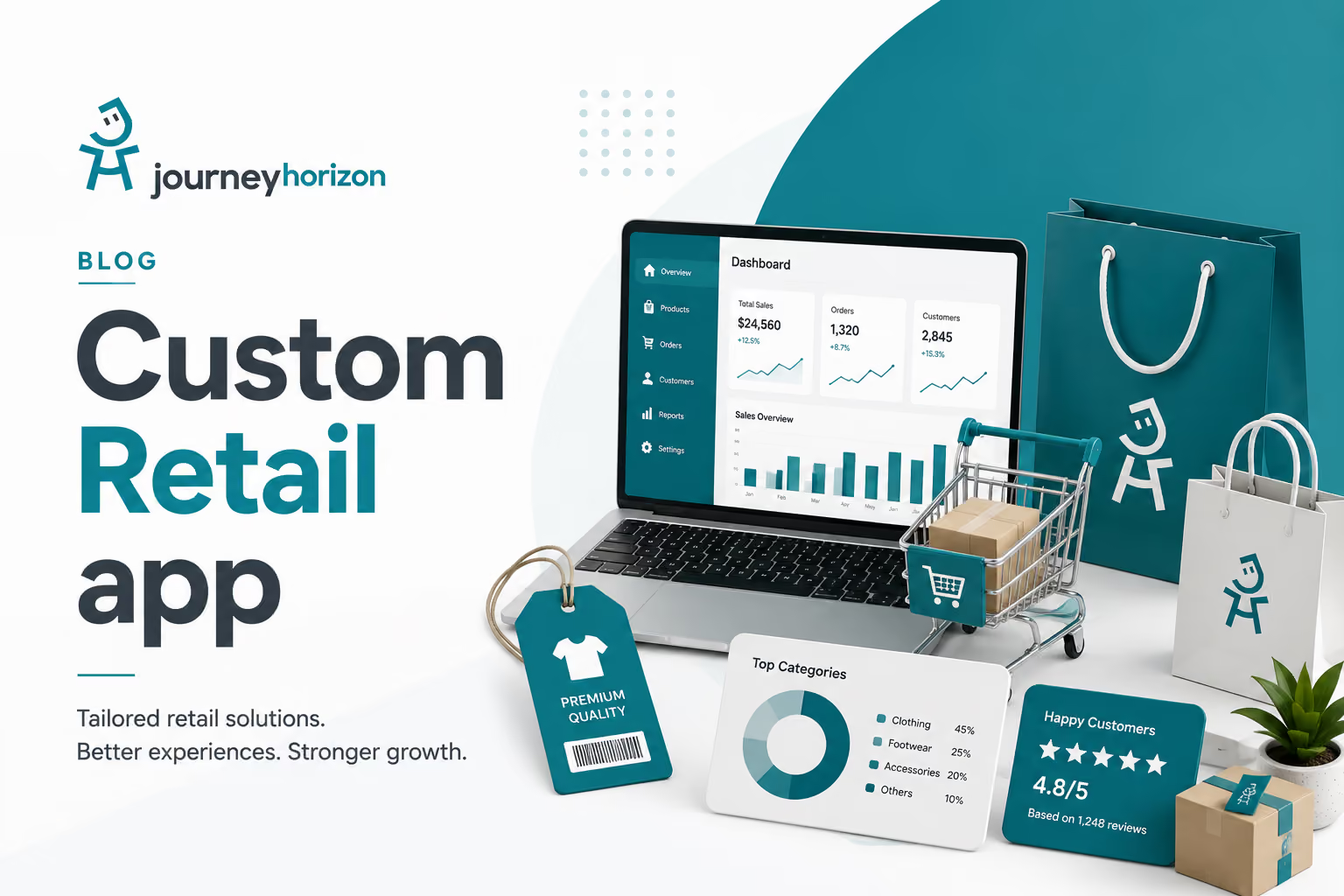
Integration with specialized systems. Many retail businesses use point-of-sale systems, accounting software, email marketing platforms, and analytics tools that don't talk to each other. A custom app can sit between these systems, syncing data automatically, creating unified reporting, and reducing manual work. For example, a custom dashboard that pulls sales data from your POS, inventory from your warehouse system, and customer behaviour from your analytics tool gives you visibility that generic tools cannot provide.

When Custom Retail App Development Makes Financial Sense
The question every retail owner asks is: will building a custom app actually save us money, or is it just another expense?
The answer depends on the scale and nature of your operational friction. If you are a small retailer with simple needs, off-the-shelf tools are the right call. But if you fall into any of these categories, custom retail app development usually delivers clear ROI.
High SaaS subscription costs. If your team pays for 8 or more software subscriptions specifically to run retail operations, and those subscriptions cost more than $500 per month combined, a custom solution often pays for itself within 12 to 18 months. The upfront development cost is real, but the long-term savings are significant. More importantly, when you consolidate fragmented tools into a single custom app, your team gains productivity that no off-the-shelf platform can match.
Manual workflows that consume significant time. If your team spends more than a few hours per week on manual data entry, spreadsheet management, or coordination between disconnected systems, that is lost productivity that compounds over time. A custom app that automates these workflows pays dividends not just in tool costs, but in time recovered. One retail business we've worked with was able to cut 12 hours per week of manual inventory work by replacing Trello and multiple spreadsheets with a custom task management and inventory system.
Unique business model or workflow. Some retail businesses have competitive advantages that depend on how they operate. A subscription box retailer might have custom packaging workflows. A marketplace might have unique vendor dynamics. A franchise might need centralised control with local customisation. Generic platforms force compromises. A custom app builds competitive advantage into your operations.
Scaling challenges with existing platforms. As your retail business grows, off-the-shelf platforms often become bottlenecks. Slow performance. Limited customisation. Expensive add-ons for basic features. Vendor lock-in. A custom app built with modern architecture from the start scales with your business and costs less to operate at scale than cobbling together multiple expensive SaaS tools.
What Makes Custom Retail Apps Different
Building a custom app for a retail business is not the same as building any other software. Retail apps must handle real-time operations, process transactions securely, manage complex data relationships, and often support high volume or integration with external systems.
The foundation matters. A well-built custom retail app should be designed from the start to scale. It should integrate cleanly with your existing systems (POS, accounting, email, analytics). It should separate the data from the interface, so that as your business evolves, you can adapt the interface without rebuilding the system. It should be secure (payment data, customer data, vendor data all need protection). It should be maintainable, so that as your team or technology landscape changes, the app doesn't become a burden.
This is why retail app development is different from consumer app development. A consumer app might prioritise user engagement or growth. A retail operations app prioritises reliability, data accuracy, and integration. It should not require constant maintenance. It should scale without proportional cost increases. It should work reliably, because downtime directly costs money.
Real Retail Operations That Benefit From Custom Apps
Vendor management and marketplace operations. A marketplace operator managing hundreds of vendors needs custom tools that generic platforms cannot provide. A custom vendor management system handles vendor onboarding, listing management, commission tracking, payout processing, and analytics. Vendors get a clean portal. You get centralised control and real-time data. Integration with payment processors means automated payouts.
Booking and appointment systems. Some retail businesses need to book appointments, manage time slots, handle deposits, and manage cancellations. A custom booking system integrates with your retail app, pulls customer history automatically, processes payments through your existing gateway, and updates inventory or staff schedules in real time.
Subscription and loyalty workflows. A custom app can handle recurring billing, automatic renewals, tiered rewards, and segment-specific offers with integration to email or SMS systems. When a customer subscribes, their tier is set automatically. When they reach a milestone, a notification goes out. When their subscription renews, payment is processed with no manual work.
Internal operational tools. Many retail teams use disconnected tools for scheduling, inventory counts, and approval workflows. A custom internal app consolidates all of this. Staff can check schedules or request time off in one place. Inventory teams conduct counts through a mobile app that syncs automatically. This is the kind of team productivity tool that directly impacts profitability.
Key Considerations When Building Custom Retail Apps
The most common mistakes in custom retail app development are starting without clarity on what problem the app solves, underestimating integration complexity, and treating the app as a one-time delivery rather than a long-term asset. Before development starts, define the specific workflow it supports and the measurable business outcome it enables. Integration should be architected from the foundation, not added later. And a custom app should be built for evolution. Retail operations change. Your business model evolves. A well-built app grows with your business; a poorly built one becomes a burden.
Related Solutions for Retail Growth and Operations
For many retail businesses, custom retail app development is one piece of a larger growth and operations system. A custom app might manage vendor workflows, but those vendors also need a marketplace platform that showcases their products. An internal operations app might streamline team productivity, but your customers also need a clean, fast website or mobile experience. A custom inventory system might integrate with your backend, but you also need SEO and content strategy to attract customers in the first place.
This is where the scope of retail growth becomes more complex. A custom app development project works best when it connects with your broader business infrastructure. If you are running a marketplace, you might also benefit from marketplace app development expertise. If you need to scale vendor management or technical infrastructure, Sharetribe development might be part of your foundation. And if your custom app is built, but customers do not know about it, your growth will plateau. This is where SEO services and content strategy become valuable investments alongside product development.
The principle is simple: do not build software in isolation. A custom retail app should work as part of a larger system that includes marketplace infrastructure, customer acquisition, team operations, and long-term growth. Journeyhorizon helps retail businesses connect these pieces. Rather than treating custom app development, marketplace growth, and SEO as separate projects, we work with retailers to design a system where product, operations, and growth work together.
Getting Started With Custom Retail App Development
If your retail business has reached the point where off-the-shelf tools are limiting growth or creating operational friction, custom app development is worth exploring.
The first step is honest assessment. What specific operational challenge would a custom app solve? How much time, cost, or productivity would it recover? Who in your business would use it? What systems does it need to integrate with? If you can answer these questions with clarity, you likely have a strong case for custom development.
The second step is technical design. A custom retail app needs to be designed with the right architecture, security standards, and integration approach from the start. This is not something to cut corners on. Work with a partner who understands retail operations and has built similar systems before. They can help you avoid common pitfalls and ensure the app serves your business for years, not months.
The third step is realistic expectations about timeline and cost. A custom retail app is an investment. It usually takes 2 to 6 months to build, depending on complexity. It requires upfront capital. But if it solves a real operational problem, the ROI often appears within 12 to 18 months. And the strategic value of having software that fits your business, rather than forcing your business to fit the software, is something most retail leaders understand once they have experienced both.
Custom retail app development is not for every retail business at every stage. But when your operations have grown beyond what generic platforms support, when tool sprawl is creating friction, or when your competitive advantage depends on how you operate, a custom solution becomes not just an option, but a necessity. The question is not whether you can afford to build a custom app. The question is whether you can afford not to.
Frequently Asked Questions
How much does custom retail app development cost?
Cost varies based on complexity, features, and integration requirements. A simple internal tool might cost $15,000 to $40,000. A more comprehensive system with multiple integrations might range from $50,000 to $150,000 or more. The key is to define the problem you are solving and the specific workflows the app will support. A partner with retail experience can help you scope the project and estimate cost accurately. Remember that the lowest price is not always the best value. A custom retail app is an investment that should serve your business for years.
How long does it take to build a custom retail app?
A straightforward custom app with 2 to 3 core features typically takes 2 to 4 months. A more complex system with multiple integrations or advanced features might take 4 to 8 months. Speed depends on clarity of requirements, your availability for feedback, and the complexity of integration with existing systems. Starting with a clear scope and working with an experienced partner reduces timeline risk.
Can a custom retail app integrate with our existing systems?
Yes, and this should be a core part of the design. A good custom app is built to integrate with your POS, accounting software, email platform, analytics tools, and payment processors. The integration approach should be planned from the start, not added later. Some integrations use APIs. Others use data syncing. The specific approach depends on how your existing systems are designed. This is why working with a partner who understands retail operations is valuable.
What happens after the app is built? Do we need ongoing support?
Yes. Like any software, a custom retail app benefits from ongoing monitoring, maintenance, and support. Security patches need to be applied. Your business processes evolve and the app should evolve with them. New integrations become valuable. A good partner offers ongoing support as part of a long-term relationship, not as a one-time delivery project.