B2B Marketing Automation: Tools, Strategies & Platforms (2026)
Generating leads is great, but it is better to earn profits from them.
In 2026, the real challenge for most B2B teams is not finding new prospects, but keeping them engaged throughout long, complex buying cycles, and making decisions to make a deal. When teams rely on manual follow-ups, qualified opportunities are often missed when you have a ton of leads to take care of.
B2B marketing automation solves this problem by enabling intelligent workflows that automatically capture, score, and nurture leads at scale. This guide explains the core frameworks and leading marketing automation tools, and shows how Journeyhorizon helps B2B companies turn automation systems into a predictable growth engine.
1. What is B2B marketing automation?
B2B marketing automation is the use of software platforms and structured workflows to automate, manage, and optimize marketing activities across the B2B buyer journey. It combines customer data, predefined rules, and performance analytics to deliver relevant messages to the right stakeholders at the right time.
In practice, marketing automation for B2B helps organizations move beyond one-off campaigns. It enables continuous engagement with prospects, supports long and complex sales cycles, and ensures that marketing and sales teams operate using the same data.
In today's competitive landscape, a marketing team for hire is essential for businesses looking to accelerate growth without the time and cost associated with recruiting, training, and managing an in-house team. It provides immediate access to experienced strategists, content creators, SEO specialists, and digital marketers who can drive measurable results while allowing business leaders to focus on operations and revenue generation.
=>>> Explore our guide to B2B marketing services and building a strong foundation for scalable growth.
2. The core components of a powerful B2B automation system
A powerful B2B marketing automation system is built on four core components. Each component plays a distinct role, and the absence of any one of them significantly reduces overall effectiveness.
2.1. Centralized database and CRM
The centralized database, typically a CRM, serves as the foundation of marketing automation. It stores contact, company, and interaction data in a single system, ensuring that marketing, sales, and leadership teams operate with a shared and consistent view of each lead and account.
Most modern B2B marketing automation platforms either include a native CRM or integrate with tools such as Salesforce or HubSpot.
2.2. Workflow engine and automation logic
The workflow engine defines how automation operates by controlling triggers, conditions, and actions. For example, when a prospect downloads a whitepaper, the system can automatically assign a lead score, send a follow-up email, and alert the sales team based on engagement. This logic layer enables personalization at scale without manual effort.
2.3. Analytics and attribution layer
Analytics transform marketing automation from a tactical tool into a strategic system. This layer tracks engagement, conversion rates, pipeline contribution, and revenue attribution, allowing teams or a B2B marketing automation agency to identify what drives performance and continuously optimize campaigns.
2.4. Omnichannel execution layer
Modern B2B marketing automation extends beyond email. It includes website personalization, in-app messaging, retargeting, and social channel integration. Omnichannel execution ensures a consistent experience across all touchpoints where prospects interact with the brand.
In practice, social channels play a critical role in reinforcing automation-driven journeys - supporting awareness, nurturing consideration, and re-engaging inactive prospects. For a deeper look at how social fits into a modern B2B growth system, see our guide on B2B Social Media Marketing: The Ultimate Strategy Guide for 2026.
3. How B2B marketing automation works step by step
To understand how B2B marketing automation creates value, it is helpful to view the process as a sequence of clear, connected stages.
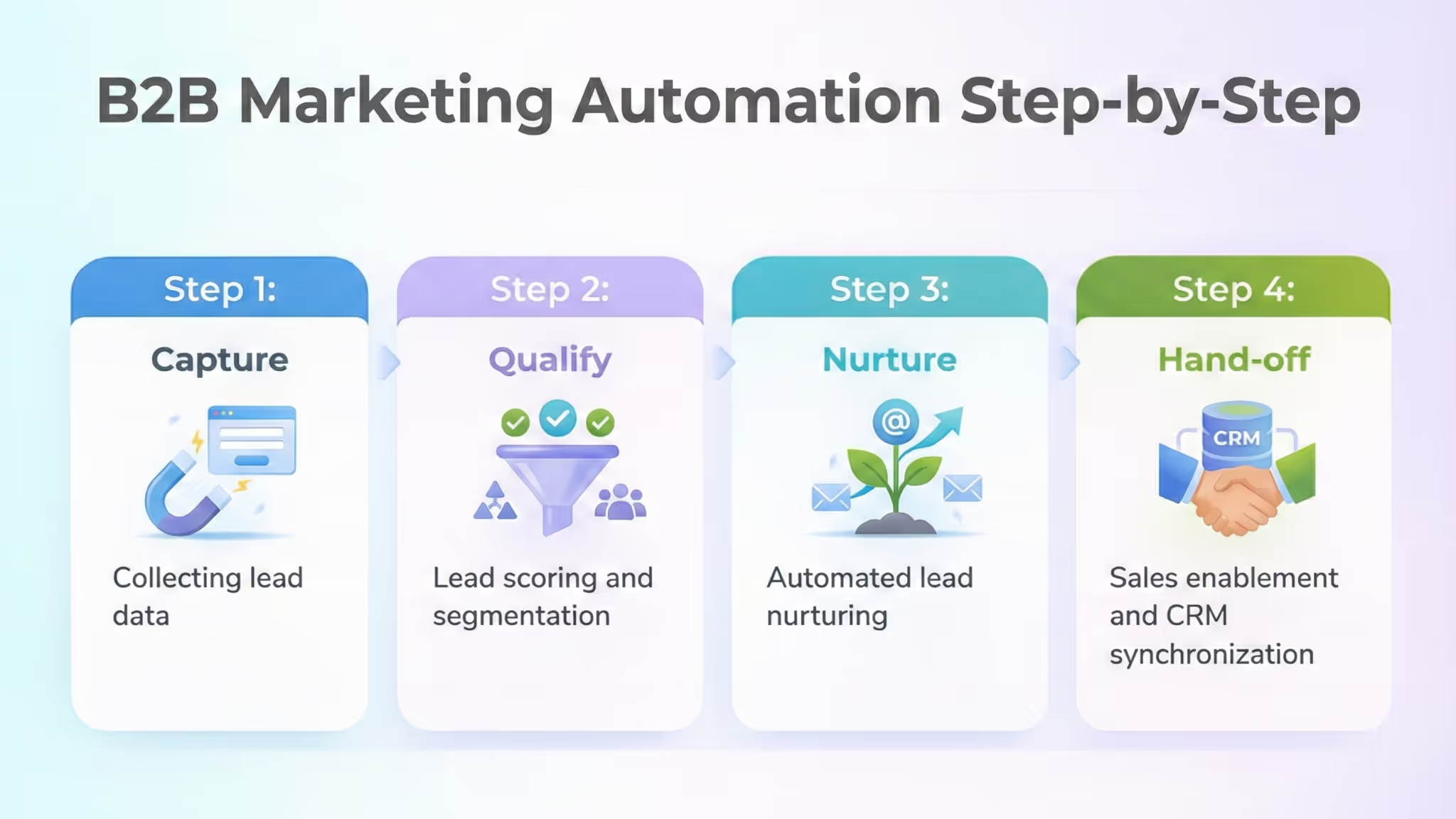
3.1. Capture: Collecting lead data
Leads enter the system through forms, landing pages, gated content, events, and website interactions. Marketing automation platforms automatically store this information in the CRM and enrich it with behavioral data, such as page visits and email engagement.
3.2. Qualify: Lead scoring and segmentation
Lead scoring assigns numerical values to contacts based on factors such as job role, company size, and behavior. This process helps teams prioritize high-intent prospects while filtering out low-quality leads. More advanced platforms use predictive models to improve scoring accuracy.
3.3. Nurture: Automated lead nurturing
During the nurturing stage, prospects receive relevant, educational content through automated email sequences and personalized experiences. The objective is to build trust, address key questions, and prepare the lead for a meaningful sales conversation.
3.4. Hand-off: Sales enablement and CRM synchronization
When a lead meets predefined qualification criteria, the system automatically transfers it to the sales team as a sales qualified lead. This structured hand-off improves efficiency and reduces friction between marketing and sales.
4. B2B marketing automation strategies
B2B marketing automation delivers the strongest results when it is applied through clear, proven B2B marketing strategies rather than isolated campaigns.
4.1. Lead warm-up automation flows
Lead warm-up flows use short, structured email sequences to educate cold leads over time. Each message builds familiarity and credibility, increasing the likelihood of meaningful engagement. This approach improves the transition from cold leads to marketing qualified leads.
4.2. Re-engagement and lifecycle automation
Re-engagement workflows target inactive leads or existing customers with tailored B2B content, product updates, or relevant offers. These campaigns are particularly effective for upselling and cross-selling, helping extend customer lifetime value without increasing acquisition costs.
4.3. Account-based marketing automation
Account-based marketing automation focuses on high-value accounts instead of individual leads. Personalized workflows engage multiple stakeholders within the same organization, aligning marketing and sales efforts around shared revenue targets. This strategy is especially effective for enterprise B2B sales.
When executed correctly, these B2B marketing automation strategies transform disconnected campaigns into a scalable system that consistently moves prospects from interest to revenue.
5. Top B2B marketing automation platforms in 2026
Choosing the right platform is one of the most important decisions in marketing automation for B2B. There is no single best solution for every organization. In practice, B2B marketing automation platforms can be grouped into three categories based on business maturity, operating model, and technical requirements.
5.1. All-in-one marketing automation platforms (enterprise and scaling teams)
Best for: Organizations that require strong sales and marketing alignment, centralized data, and advanced reporting.
Platforms such as HubSpot and Adobe Marketo provide comprehensive, all-in-one ecosystems that combine CRM, marketing automation, analytics, and content management into a single system. These platforms are designed to support complex B2B sales cycles and large volumes of lead and account data.
Pros:
- Unified view of marketing and sales data
- Advanced lead scoring and reporting capabilities
- Strong scalability for growing organizations
Cons:
- Higher licensing and implementation costs
- More structured setup and longer onboarding period
5.2. Growth-focused marketing automation platforms (SME and mid-market)
Best for: Growing B2B teams that need speed, usability, and cost efficiency.
Tools like ActiveCampaign and GetResponse focus on making automation accessible without sacrificing core functionality. They allow smaller teams to build and manage automated workflows quickly, making them a popular choice for organizations adopting marketing automation for the first time.
Pros:
- Intuitive workflow builders and faster deployment
- More affordable pricing compared to enterprise platforms
- Suitable for lean marketing teams
Cons:
- Lighter CRM and reporting capabilities
- Limited customization for complex enterprise use cases
5.3. Product-led and lifecycle-based automation platforms (SaaS and tech)
Best for: SaaS and technology companies using product usage data to drive growth.
Customer.io and Intercom specialize in behavior-driven automation. Instead of relying primarily on forms or static campaigns, these platforms trigger messages based on how users interact with a product, such as feature usage or in-app events. This approach supports highly personalized lifecycle communication.
Pros:
- Real-time, behavior-based messaging
- Strong support for product-led growth strategies
- High flexibility for advanced use cases
Cons:
- Requires engineering resources for data integration
- Less suitable for non-technical teams
6. How to choose the right B2B marketing automation platform
The right platform depends on your business model, team size, and growth stage. Enterprise organizations often benefit from all-in-one systems, growing teams prioritize speed and simplicity, while B2B SaaS companies typically require product-led automation capabilities. Evaluating platforms through this lens helps avoid costly mismatches and accelerates long-term ROI.
7. The future of B2B marketing automation
B2B marketing automation is increasingly shaped by artificial intelligence (AI). According to Forrester’s analysis of over 1,000 B2B marketing leaders, AI adoption in B2B marketing has moved beyond hype, with many organizations actively implementing AI-powered capabilities to improve efficiency and scale.
However, from our experience supporting B2B companies with marketing strategy, content, and demand generation, AI alone does not guarantee better automation outcomes. Forrester also emphasizes that leading adopters combine AI with strong data foundations, clear governance, and close alignment between marketing and IT.
When these elements are in place, AI enables more relevant and scalable marketing experiences without adding operational complexity.
To understand how these AI-driven shifts translate into effective growth planning, explore our guide of B2B Marketing Strategies 2026: How to rank in AI overview & raise business conversion.
8. Journeyhorizon: A strategic B2B marketing partner for scalable growth
Journeyhorizon is a B2B marketing and growth consultancy that helps companies build scalable demand and content foundations so marketing automation systems can perform effectively.
Rather than implementing automation tools directly, Journeyhorizon focuses on the strategic inputs that determine automation success, including:
- B2B SEO and content strategy, attracting qualified, high-intent traffic that feeds marketing automation workflows
- Demand generation and funnel design, ensuring leads enter automation systems with clear intent and context
- Messaging and content frameworks, supporting lead nurturing, education, and long B2B buying cycles
- Growth strategy for B2B companies, aligning acquisition, conversion, and retention efforts
- Collaboration with internal teams or automation partners, helping ensure marketing strategy and execution are aligned
Discover our full range of marketing services.
9. Conclusion
B2B marketing automation is not a one-time initiative but a system that evolves with your business, data, and customers. When built on the right strategy, supported by appropriate platforms, and continuously optimized, it enables B2B teams to engage prospects more effectively and convert demand into revenue at scale.
While automation tools handle execution, long-term success depends on strong demand foundations, clear messaging, and high-quality inputs. Journeyhorizon helps B2B companies build these foundations through strategic marketing, content, and growth initiatives, ensuring marketing automation delivers real business impact rather than isolated technical wins.
Build stronger marketing foundations to unlock the full impact of B2B marketing automation with Journeyhorizon.
10. FAQs
1. What is B2B marketing automation and how does it work in practice?
B2B marketing automation uses software and workflows to automatically capture, score, and nurture leads across long B2B buying journeys. It connects data, content, and timing to move prospects from interest to sales readiness at scale.
2. Which B2B marketing automation platforms are best for different business sizes?
The best B2B marketing automation platforms depend on business maturity and model. Enterprise teams often choose all-in-one platforms, growing teams prioritize usability and cost efficiency, while SaaS companies benefit from product-led, behavior-based tools.
3. When should a B2B company invest in marketing automation?
A B2B company should invest in marketing automation for B2B when lead volume increases, sales cycles become complex, and manual follow-ups no longer scale. Automation is most effective once clear messaging and demand foundations are in place.
4. What are the most common B2B marketing automation mistakes to avoid?
Common mistakes include implementing tools without a clear strategy, relying on poor-quality data, and over-automating without personalization. These issues often prevent automation from delivering meaningful ROI.
5. How does B2B marketing automation improve sales and marketing alignment?
B2B marketing automation aligns sales and marketing by using shared data, consistent lead definitions, and automated hand-offs. This ensures both teams work from the same view of leads and focus on the highest-value opportunities.