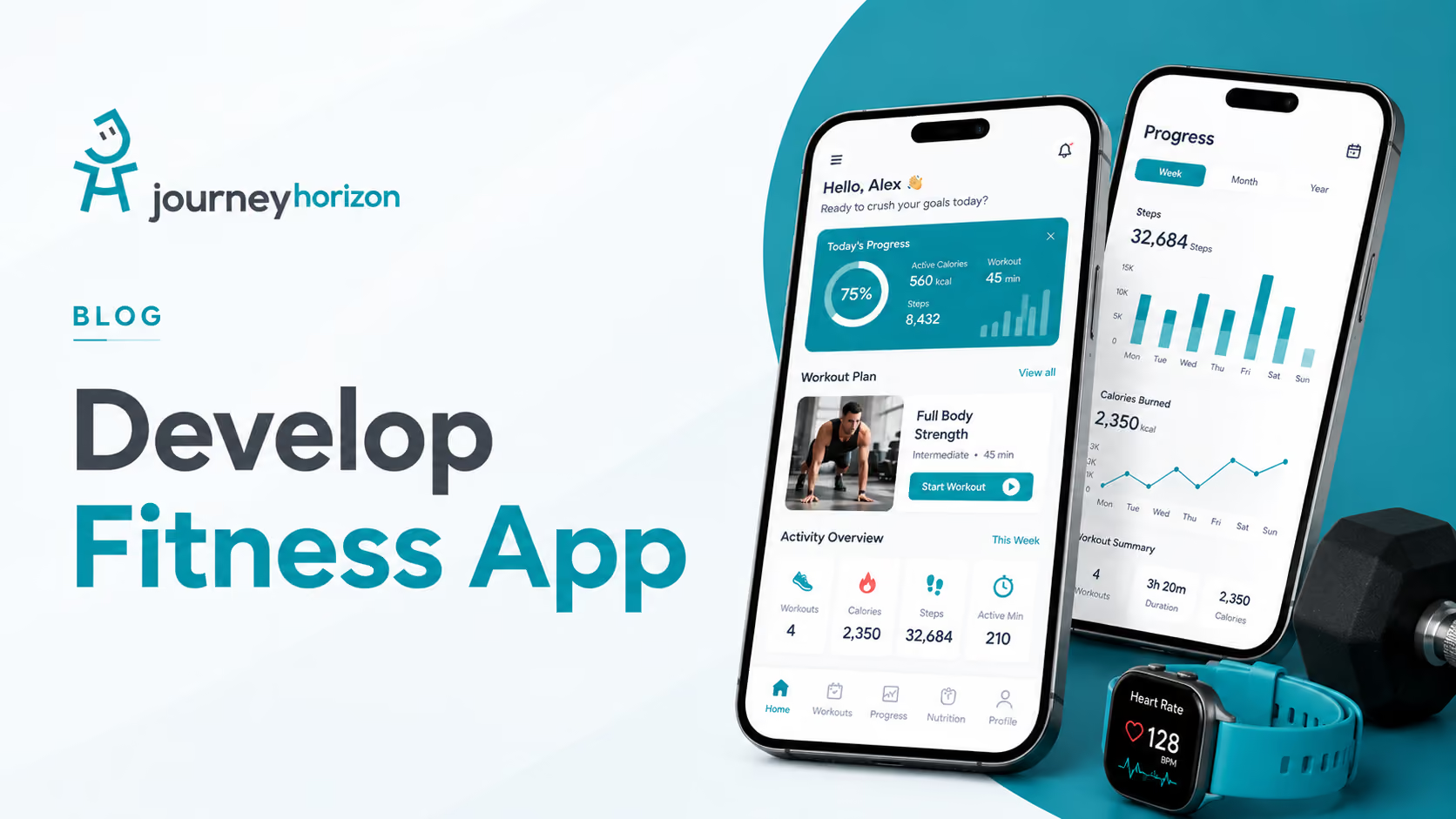
Custom Fitness App Development for Growing Fitness Teams
.avif)
Growing fitness businesses face a hidden problem that most off-the-shelf platforms simply cannot solve. A personal training studio expands, adding 20 staff members. A boutique gym launches corporate wellness programs. A fitness coach begins managing group coaching, nutrition tracking, and client billing simultaneously. Each step forward reveals a gap: the software you're using doesn't fit your actual operations. This is where Journeyhorizon comes in. Many successful fitness businesses eventually reach a point where they stop asking "Which existing app should we use?" and start asking "Should we build our own?" Understanding that shift is critical.
Custom fitness app development is not about ego. It is not about having something "unique" for vanity. It is about building software that solves the specific operational problems your fitness business faces—problems that generic platforms were never designed to handle. This article explores why growing fitness companies invest in custom fitness app development, what it actually solves, and how to think about it as a strategic business decision rather than a technical one.
The Hidden Cost of Tool Sprawl in Fitness Operations
Most fitness businesses do not start with a custom app. They start with what is available: a booking system here, a billing platform there, a CRM somewhere else, a content delivery tool on another tab. For the first 50 members or the first year, this works. Each tool does one thing reasonably well.
But as your fitness business grows, fragmentation becomes a cost. Your members' data lives in four different systems. Your coaching team has to manually copy workout information between platforms. Your billing system does not talk to your member app. You cannot see which members who booked a session also viewed your nutrition content. Your trainers waste 90 minutes per week managing administrative handoffs instead of coaching.
This is where the real cost of off-the-shelf tools emerges. Not in the feature set. Not in the interface. But in the gap between how software companies think fitness should work and how your business actually works.
When Custom Fitness App Development Becomes Strategic
The decision to pursue custom app development typically arrives when one of three things happens. First, your team is paying so much in SaaS subscriptions—often $3,000 to $8,000 per month across different platforms—that a custom solution starts to look financially sensible. Second, you have specific workflows that no existing platform handles well, and your team is working around the software instead of the software working for you. Third, you need to integrate systems in ways that off-the-shelf tools do not support, and custom app development becomes the only practical path forward.
For growing fitness businesses, custom fitness app development offers something that no SaaS platform can match: software designed around your actual business model, not a generic template. Your coaches need a different experience than your members. Your billing needs to reflect your pricing model, not someone else's. Your reporting should answer the questions your business actually asks.
Core Reasons Businesses Choose Custom Fitness App Development
Building a custom fitness app is not cheaper upfront. The initial investment is real. But businesses typically pursue custom fitness app development for five concrete reasons.
First: Consolidating Fragmented Systems. A boutique gym using a booking system, a separate billing platform, a CRM, a content tool, and a member app is paying for five subscriptions that do not talk to each other. Data entry happens multiple times. Reports require manual compilation. A custom fitness app brings these together. Members, billing, coaching, content, and reporting all live in one place. This is not about feature count. It is about coherence.
Second: Building Workflow Automation. Generic platforms offer automation, but usually within their own ecosystem. Fitness businesses need deeper integration. When a member signs up for a program, automatically trigger a welcome email, create a CRM record, generate an invoice, and enrol them in the first lesson. These workflows are simple in custom software; they range from impossible to expensive in off-the-shelf tools. Custom fitness app development lets you automate the operational sequences that are unique to your business.
Third: Improving Member Experience Without Compromises. Fitness is relational. Members want to see their progress, book sessions, access content, chat with their trainer, and track results—all without switching between apps. Generic platforms build generic experiences. Custom fitness app development means you design an experience that matches your coaching philosophy, your brand, and the way your team works.
Fourth: Gaining Data Ownership and Insight. When you use SaaS tools, your data lives in someone else's infrastructure. You can export it, usually in cumbersome formats. You cannot analyse it the way you want. You cannot build custom dashboards. You cannot easily use your data to fuel decisions. Custom fitness app development puts your data under your control, accessible for analysis, reporting, and strategic decisions.
Fifth: Scaling Without Per-Seat Pricing Penalties. Most SaaS fitness platforms charge per coach, per trainer, or per active user. At scale, this becomes expensive fast. A growing fitness business with 15 trainers, 500 members, and administrative staff can easily hit $5,000 to $10,000 monthly SaaS costs. A custom app has upfront development costs but scales without per-seat charges, making the long-term economics much more favourable.

Building for Your Workflow, Not Forcing Yours Into a Platform
The strategic advantage of custom fitness app development is simple: your software fits your business, not the other way around. This matters more than most business owners realise. A fitness coaching business that wants to offer both one-on-one and group programming needs flexibility in how members are billed, how content is assigned, and how progress is tracked. An online fitness education business needs different features than a gym with in-person classes. A corporate wellness provider needs integration with HR systems and employee benefits.
Generic platforms make trade-offs. They optimise for the 80 percent common use case and build workarounds for the 20 percent that diverges. Your fitness business is probably in that 20 percent. Maybe your coaches work on revenue share, not salary. Maybe you offer different membership tiers with different content access. Maybe you need vendor management because you partner with nutritionists. These are not exotic requirements. They are common in growing fitness businesses. But they are usually addressed through manual workarounds or feature hacks in off-the-shelf tools.
Custom fitness app development removes the friction. Your software is built to handle your business model directly. Billing reflects your actual pricing. Access controls match your membership structure. Reporting shows the metrics that matter to your operation.
Real Impact: Custom Fitness App Development for Growing Teams
The benefits of custom fitness app development are not theoretical. Fitness businesses that have made the investment report concrete improvements. One boutique gym that consolidated four different tools into a custom platform reduced administrative overhead by roughly 12 hours per week. A coaching platform that built a custom app with integrated payment processing increased client retention by improving the experience and reducing friction points. A fitness education company that moved to a custom solution was able to add new features—such as advanced progress tracking and peer community features—in weeks instead of quarters.
These outcomes matter because they are not about technology. They are about operational efficiency and member experience. A custom fitness app development project is fundamentally an investment in how your business runs.
Avoiding Common Pitfalls in Fitness App Implementation
Not all custom fitness app development projects succeed equally. Fitness businesses often make the same mistakes.
Building features instead of solving problems is the first mistake. A fitness app does not need every possible feature. It needs the features that solve your specific operational problems and member experience gaps. Custom app development that starts with a clear understanding of the workflow you want to support—and builds only what is necessary to support that workflow—is more likely to succeed than one that tries to be everything.
The second mistake is underestimating the importance of ongoing support. A custom fitness app is not a static product. As your business grows, as member expectations change, as you add new services, your app needs to evolve. Choosing a development partner who understands fitness operations and can provide ongoing support, improvements, and maintenance is critical.
The third mistake is building in isolation. The best custom fitness app development projects connect with the rest of your business systems—your CRM, your analytics, your payment processing, your email marketing, your content management. An app that lives in isolation is powerful but incomplete. An app that connects with your broader tech ecosystem multiplies its impact.
Bringing Custom Fitness App Development Into Your Growth Strategy
For many fitness businesses, custom fitness app development is only one part of a larger growth system. A custom member app might need to integrate with a CRM to manage lead follow-up and relationship building. It might connect with your email marketing to deliver personalised content sequences. It might feed data to your analytics platform so you can understand member behaviour and optimise your coaching. This is where Journeyhorizon's broader experience becomes valuable. The strongest custom fitness app development projects are those that connect operational workflows, technical implementation, and long-term growth strategy into one coherent system.
Final Thoughts
The decision to invest in custom fitness app development is not made lightly. But for many growing fitness businesses, it is the right one. When tool sprawl becomes expensive, when generic platforms force workarounds, when your team is manually managing handoffs between systems, custom fitness app development stops being a luxury and starts being a necessity.
The businesses that succeed are those that approach it strategically. They understand the problem they are solving. They choose partners who understand fitness operations. They connect their app with broader systems instead of building in isolation. They invest in ongoing support and evolution. If you are managing a growing fitness business and wondering whether custom development is right for you, Journeyhorizon can help you evaluate the right approach for your situation.