Freelance Content vs Agency: What Marketplace Founders Need

The choice between hiring freelance content vs agency services is one of the first critical decisions marketplace founders face when scaling their online presence. Unlike generic businesses, marketplaces operate on fundamentally different growth mechanics: your success depends not just on great content, but on how that content connects with your platform's technical architecture, user experience, and long-term visibility strategy.
This is where many marketplace builders stumble. They hire a freelance writer to pump out blog posts, only to find those pieces generate minimal traffic or fail to support their marketplace's actual growth goals. Or they work with a generic content agency that doesn't understand the unique SEO and authority-building needs of multi-sided platforms. The question isn't simply "freelance vs agency"—it's whether the person or team you hire truly understands marketplace growth.
Understanding Freelance Content vs. Agency Fundamentals
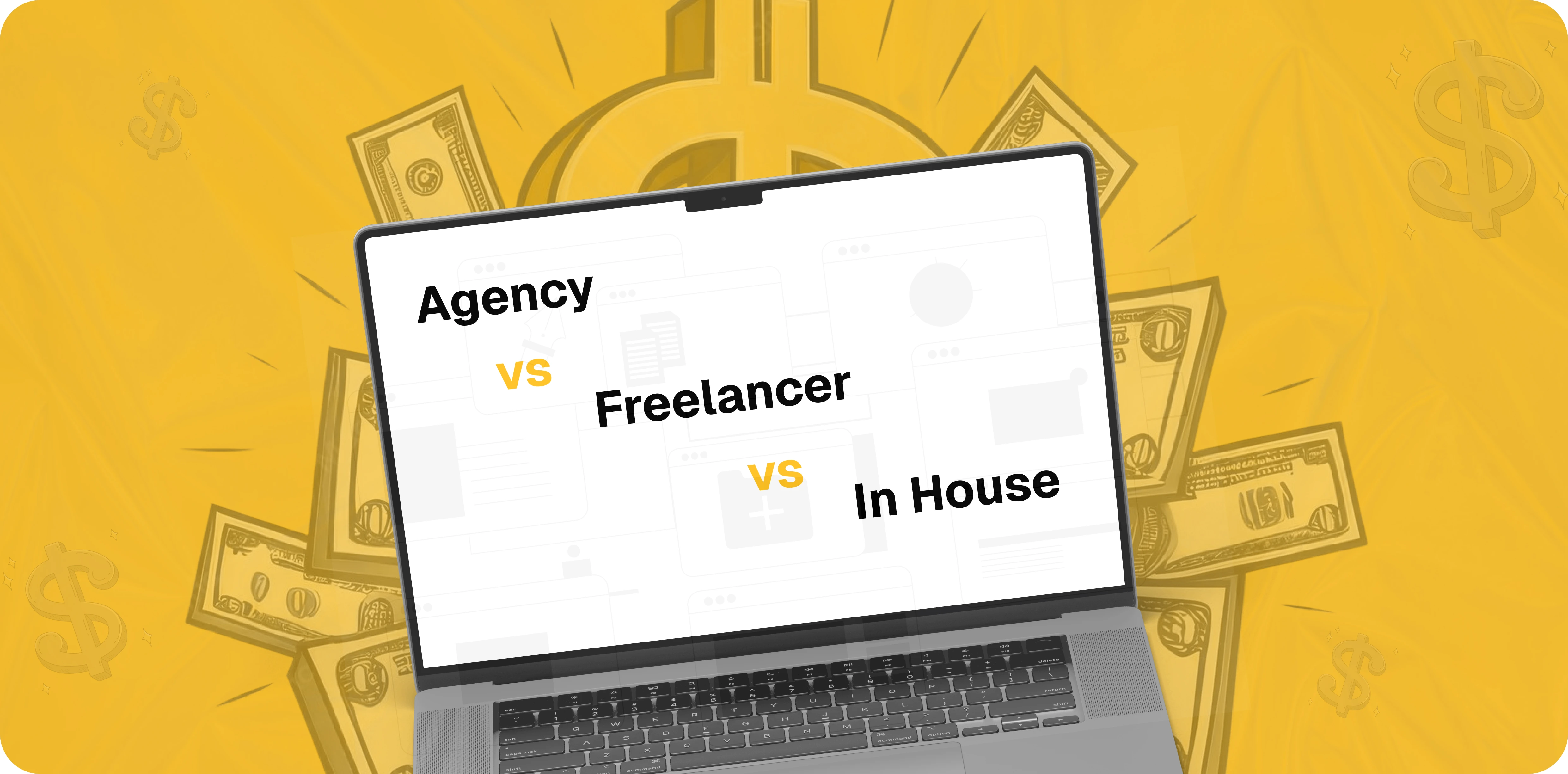
At the surface level, the difference is structural. A freelance content creator works independently, usually on a per-project or hourly basis. An agency is a team with multiple roles—strategists, writers, editors, designers, project managers—all working under one contract.
For marketplace founders, this structural difference matters, but it's not the whole story. A freelancer might be incredibly skilled in your specific niche. An agency might lack any understanding of how marketplace platforms actually work. The real decision is about what your growth actually requires.
Cost is always the first consideration. Freelancers typically charge less because they have lower overhead. An agency bundles services and expertise, so you pay more upfront, but you also get multiple specialists contributing to each piece of content. For a marketplace just launching content, a skilled freelancer can deliver value quickly. But as your content strategy grows, the gaps become apparent.
Here's how the two models compare at a glance:
- Cost model: Freelancers usually charge per word, per article or by the hour. Agencies usually charge a monthly retainer or a project fee.
- Strategy: Freelancers are usually focused on execution. Agencies bundle research, planning and execution.
- Scalability: A freelancer is limited by one person's capacity. An agency can add writers and specialists as volume grows.
- Management effort: With a freelancer, you brief, edit and coordinate the work yourself. With an agency, an account manager coordinates it for you.
- Best for: Freelancers suit early-stage marketplaces that need a few focused pieces a month. Agencies suit marketplaces scaling content across categories, both sides of the platform and SEO.
When Marketplace Founders Should Hire Freelance Content Creators
Freelance content makes sense in specific scenarios. If you're producing a small number of highly specialised pieces—say, technical guides or deep-dive case studies about your specific marketplace model—a freelancer with expertise in your niche can be your best option.
Freelancers also work well for ongoing, single-focus content needs. If you need consistent blog posts on a fixed schedule and you find a freelancer who understands your marketplace, they can become a reliable long-term partner. Many marketplace founders work with freelancers for years, building deep familiarity with their platform's value proposition and audience.
The economics are compelling, especially early on. You avoid paying for layers of management and overhead. You build a direct relationship. And if the freelancer is good, they can produce quality work without needing a full team behind them.
However, freelance content models break down when you need integrated strategy. A freelancer can write a blog post, but they might not conduct the SEO research that makes it actually rank. They won't coordinate that post with your marketplace's technical implementation or your growth strategy. When the freelance model becomes a bottleneck, it's usually because the freelancer is working in isolation from the broader platform and marketing strategy.
Why Agencies Excel at Complex Marketplace Growth
Agencies bring something freelancers can't: integrated capability. An agency can conduct serious keyword research, understanding not just search volume but search intent and competitive landscape. They can plan content that builds authority over time, not just drive traffic to individual posts. They can coordinate content with design, social media, and technical implementation.
For marketplace platforms, this integration is essential. Your content strategy isn't separate from your product strategy. A marketplace blog should build trust with both sides of your platform—your supply side (sellers, service providers) and demand side (buyers). It should support your SEO strategy with proper category page optimization and content hubs. It should demonstrate that you understand the specific problems your marketplace solves.
A quality agency brings specialisation across multiple disciplines. Keyword research, competitive analysis, content structuring, SEO optimisation, editing, design integration. Each of these contributes to content that actually performs. A freelancer doing all of this alone will inevitably sacrifice depth in some areas.
The cost is higher, yes. But if the agency understands your marketplace and has a data-driven process, you're paying for outcomes, not just output. You're paying for content that ranks, converts, and supports sustainable growth.
Agencies have trade-offs too. A retainer locks you into a monthly commitment, the senior people who pitched you may hand the work to junior writers, and every request passes through an account manager. An agency is also only as good as its understanding of your market: a polished process won't make up for not knowing how marketplaces grow.
Expertise Matters More Than You Think
Here's where the decision gets more nuanced: expertise and niche specialisation.
Some freelancers are genuinely exceptional in specific areas. A freelancer who has spent years writing about SaaS, fintech, or marketplace economics might be more valuable than a generalist agency. They understand the language, the problems, the buyer psychology.
But the question is whether that expertise extends to understanding how to build authority and visibility. A skilled SaaS writer might produce good copy, but if they're not coordinating with SEO strategy, doing proper research, and thinking about how each piece of content supports your larger market position, you're still missing something critical.
This is especially true for marketplaces. The best content creators for your platform should understand not just your niche, but how marketplaces operate—network effects, two-sided growth, category strategy, trust and reputation. Few freelancers have this knowledge. Most agencies don't either. This is why many marketplace founders end up working with Journeyhorizon and similar partners who combine deep marketplace expertise with marketing execution.
Scalability and Volume: A Hidden Challenge
Early on, you might only need five or ten pieces of content. A freelancer handles this easily. But successful marketplaces require consistent, ongoing content production. You need pieces that target different buyer journey stages, support your category pages, establish thought leadership, and keep your platform's visibility growing.
This is where freelance content starts to strain. A single freelancer can only take on so much work before quality drops or deadlines slip. You could hire multiple freelancers, but then you're managing multiple relationships, ensuring consistent quality and brand voice, coordinating strategy across different writers.
An agency scales more naturally. They have capacity. They can pull in different specialists as needed. They can maintain consistent quality and voice across a large volume of work. For marketplace founders who want to build momentum and stay competitive, this scalability becomes critical.
That said, scalability without strategy is just noise. You can produce enormous volumes of mediocre content. The goal is to scale good content—content that builds your marketplace's authority, attracts the right users, and supports your growth goals. This requires both capacity and expertise, which is why the best solution often combines elements of both approaches.
Integration With Development and Product Strategy
This is where marketplace growth gets interesting. Your marketplace's content strategy can't exist separately from your technical strategy. If you're building custom features, optimising your platform's architecture, or implementing AI features to improve user experience, your content should reflect and support these changes.
A freelancer working purely on content won't naturally coordinate with your development team. An agency might, if they have that capability. But most content agencies don't have deep technical expertise. They don't understand marketplace architecture, Sharetribe customisations, plugin ecosystems, or the technical side of SEO implementation.
This is why marketplace founders increasingly work with partners who combine marketplace development services with marketing execution. When your content team understands how your marketplace actually works—your technical constraints, your plugin architecture, your SEO infrastructure—the content becomes more strategic and effective.
For example, if you're implementing category page optimisation, your content team should work closely with your development team to ensure the technical foundation supports the content strategy. If you're building a content hub to establish authority, your team should understand your marketplace's information architecture and how it connects to your product experience.
SEO and Long-Term Authority Building
One of the most common mistakes marketplace founders make is treating content as a one-off tactic rather than a strategy for building lasting authority. This is where the choice of partner matters most.
A freelancer might write good individual pieces. But lasting SEO authority—the kind that powers sustainable growth—requires strategic, coordinated effort. You need content that builds on itself, that establishes expertise across related topics, that creates a content ecosystem your target audience keeps returning to.
This requires keyword research that goes beyond finding high-volume terms. It requires understanding your marketplace's competitive landscape, finding the gaps where you can build authority, and creating content that addresses those gaps. It requires thinking about content clusters, pillar pages, and how pieces connect across your site to build topical authority.
Many freelancers focus on execution rather than this level of strategic planning. It requires tools, processes, and time investment that make sense for an agency but don't fit a freelancer's business model. An agency with a strong SEO process will think this way by default. A freelancer can too, but only if they've specifically built this capability.
For AI-driven search and answer engines, this becomes even more critical. These systems reward sites with clear expertise, comprehensive coverage of topics, and structured, trustworthy information. Building this kind of authority requires the kind of integrated strategy that freelance content creators rarely provide, but good agencies can deliver.
Making the Decision: What Marketplace Founders Actually Need
The reality is that the choice between freelance content vs agency isn't binary. Some marketplace founders successfully work with freelancers. Others need agency support from day one. Many use a hybrid approach—a core team handling strategy and coordination, with freelancers contributing specialised pieces.
The key is honest assessment of your needs. Ask yourself:
Do you need integrated strategy or just content production? If you're outsourcing just the writing, a freelancer works. If you need someone to think strategically about your marketplace's growth and how content fits into that picture, you need someone with broader capability.
How much volume do you actually need? Five pieces a month? A freelancer. Fifty pieces a month, across multiple content formats and platforms? You need agency capacity.
How critical is expertise in your specific niche? If you've found a freelancer who genuinely understands marketplaces or your specific vertical, that's valuable. If you're starting from scratch, an agency might get you there faster by combining research capability with writing skill.
Do you have technical and product alignment needs? If your content strategy needs to coordinate with your marketplace's technical implementation, SEO architecture, or product roadmap, you need a partner who understands that context. Most generic freelancers and agencies don't.
For marketplace founders building sustainable growth, the strongest approach combines the strengths of both. You want strategic thinking and integrated capability—that's where agencies excel. But you also want deep expertise in your specific marketplace problems and audience—that's where the right freelancer or specialist adds enormous value.
Partners like Journeyhorizon operate at this intersection. They combine marketplace development expertise with content and SEO strategy, understanding both the technical and the marketing side of platform growth. This integrated approach is increasingly where marketplace founders find the most traction—not because freelancers or agencies are bad, but because marketplace growth requires coordination across functions.
If you want content that's planned around how your marketplace actually grows, explore our SEO content creation services for marketplaces.
Frequently Asked Questions
Is freelance content always cheaper than agency content?
Per article, usually yes. Freelancers typically price per word, per article or per hour, while agencies more often work on a monthly retainer that bundles keyword research, competitive analysis, SEO optimisation and editing. Rates vary widely by experience and niche, so compare complete quotes rather than headline prices. If the agency content ranks better and drives more value, the price difference is justified. For marketplace founders, the comparison should be on return on investment, not just per-word or per-article cost.
Can a freelancer develop a long-term content strategy?
Some can, but it's less common. Most freelancers are hired to execute content production, not strategy. If you find a freelancer who has marketplace expertise and is willing to think strategically, that's valuable. But it's rare. Agencies are structured for this kind of planning and can more easily allocate time to strategic thinking alongside execution.
What should marketplace founders look for when choosing between a freelancer and an agency?
Look for evidence that they understand marketplaces. Ask about their process. Do they conduct SEO research? Do they think about content clusters and authority building? Can they coordinate with your technical team? Do they understand your specific marketplace model? References and case studies from similar platforms matter far more than big agency names.
Is it better to hire one freelancer or multiple freelancers?
One skilled freelancer is usually better than multiple mediocre ones, because you maintain consistency and relationship. Multiple skilled freelancers requires strong coordination and can dilute your brand voice. If you're at the volume where one freelancer isn't enough, that's often a signal to move toward an agency or a structured partner model.